










Want to bookmark your favourite articles and stories to read or reference later? Start your Independent Premium subscription today.
Subscribe
`;
document.body.appendChild(modal);
modal.addEventListener(‘click’, () => {
document.cookie=”mos-plan-select=; Max-Age=0; path=/; expires=Thu, 01 Jan 1970 00:00:00 UTC;”;
});
modal.querySelector(‘.subscribe-link’)?.addEventListener(‘click’, (e) => {
e.preventDefault();
document.cookie=”mos-plan-select=; Max-Age=0; path=/; expires=Thu, 01 Jan 1970 00:00:00 UTC;”;
setTimeout(() => {
window.location.href=”https://www.independent.co.uk/subscribe/app”;
}, 500);
});
});
Cancer may induce blood coagulation leading to stroke in some cases, an analysis of the largest body of evidence to date suggests.
Stroke is the most common neurological complication in cancer patients after brain metastasis, in which cancer from another body part spreads to the brain.
However, the mechanism tying cancer to stroke remains largely unclear.
Researchers in Spain reviewed as many as 82 studies carried out between 2000 and 2025 to arrive at a detailed picture of how cancer was linked to stroke.
They “systematically reviewed the epidemiological, clinical, radiological, and pathophysiological features” of stroke related to “cancer-associated coagulopathy” and found that it predominantly occurred within six months of cancer diagnosis.
Many patients had already reached metastatic disease by the time they got the stroke, the researchers noted in a review published in the Journal of Neurology.
Cancer affecting the inner lining of lungs and pancreatic tissues is most frequently linked to stroke, the study notes. In these cases, the interval between cancer diagnosis and stroke is often particularly short.
The researchers also found the incidence of clots forming in major arteries peaked in the first year after cancer diagnosis. In about 72 per cent of the cases, stroke was the most common outcome.
Although the risk of stroke declines after the first year of cancer diagnosis, it remains higher than in the general population for as long as a decade.
According to the study, there may be a number of complex biological processes that serve as the link between cancer and stroke.
The researchers suspect that the sticky molecule mucin produced by some cancer cells may trigger the formation of platelet clumps.
“Proposed mechanisms include mucin-mediated platelet aggregation,” they write.
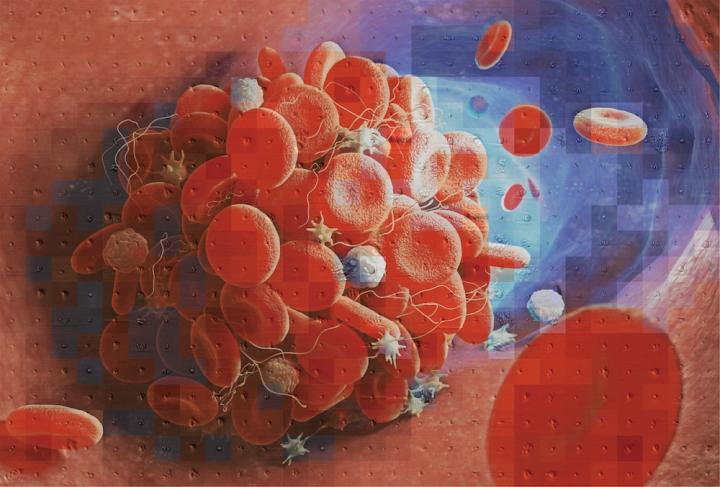
Membrane-bound particles circulating in the body, as well as immune-system cells called neutrophils, may also play a role in clot formation.
Signs of clotting in cancer patients can be spotted by measuring the levels of a small protein fragment called D-dimer, which is left in the blood when a clot dissolves.
“D-dimer is the biomarker most consistently associated with recurrence and mortality,” the researchers said.
In addition to this, an MRI pattern showing lesions in three separate brain regions can be highly specific for cancer-related stroke.
“Given the expected worldwide increase in cancer incidence and improvements in cancer survival,” the researchers noted in the latest study, “burden of CAC-related stroke is likely to rise substantially in the coming years, highlighting the importance of improving its recognition and management.”