










Want to bookmark your favourite articles and stories to read or reference later? Start your Independent Membership today.
Join today
Already a member?
Log in
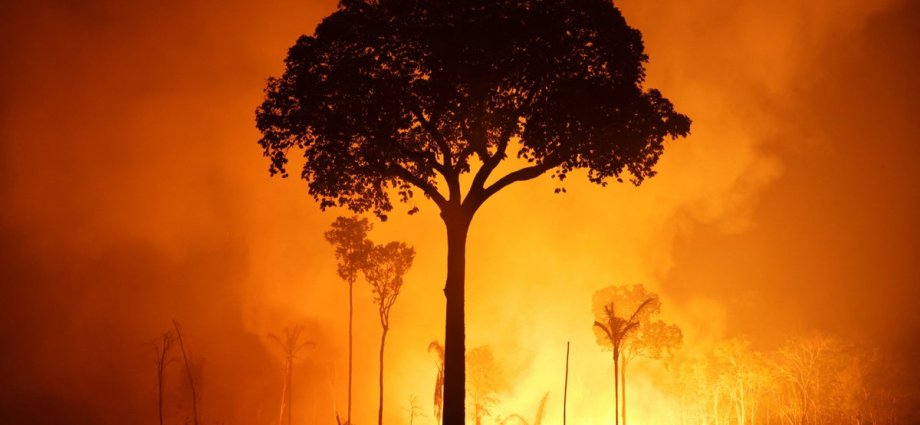
For Turkey, the Mediterranean host of the Cop31 conference, episodes of extreme heat are among the most obvious experiences of the climate crisis. The country faced an estimated 642.9 million working hours lost in 2024 due to heat stress, according to the Cop presidency – while a record temperature of 50.5C recorded in 2025 coincided with devastating wildfires that burned some 154,000 hectares.
“Extreme heat is becoming one of the most important drivers of fires,” Professor Okan Ürker, from Turkey’s Çankırı Karatekin University, tells The Independent at the conference in Antayla. “When heatwaves coincide with strong winds, low humidity, and continuous vegetation, relatively small ignitions can rapidly develop into extreme fires.”
The country is far from alone in facing increasingly dangerous heat, with much of the world facing soaring temperatures in 2026, and a number of heatwaves. Temperature records fell across European countries in this summer, with the UK notably experiencing five heatwaves. Multiple extreme heatwaves were also recorded across the US and Canada, with countries across Africa facing similar challenges.
“Extreme heat has been devastating for communities in our country this year. It is drying up water sources and creating so many challenges in people’s health and livelihoods,” says a member of Malawi’s delegation at Cop31. “The high cost of energy at the moment from the closure of the Strait of Hormuz also means that nobody can afford generators to power electric fans, so people feel doubly-trapped,” adds a member of Somalia’s delegation.
For Cop31’s organisers, the challenge is how to translate growing concern about extreme heat into progress in the climate talks.

On the ground in Antalya, this has meant emphasising the relationship between climate change and health. Health impacts are considered experiences that people can readily relate to, and they feel – according to a growing body of research – more accessible and is less politically contentious than debates over climate finance or phasing out fossil fuels.
“At the moment we are not winning the argument on climate change… So we are saying: Why don’t we bring in health? Why don’t we bring in families and communities into the conversation, instead of only concepts around carbon dioxide? That’s how you make this into a salient argument for governments to understand and which people will advocate for,” says Dr Alan Dangour, director of climate and health at philanthropic organisation the Wellcome Trust.
“Extreme heat is the most direct pathway between climate change and human health – not least because it literally kills people,” he continues – with researchers estimating that up to 50,000 people died from heat-related causes across European cities this summer.
The opening day of COP31 was designated “Health Day”, and included the announcement of a new knowledge-sharing platform, the Antalya Initiative for Health Resilience. It aims to encourage governments to more effectively plan for climate-related health risks, while also sharing practical ways to make healthcare more resilient to rising temperatures.
World Health Organisation director-general Tedros Adhanom Ghebreyesus has also warned at these talks that extreme heat and other climate impacts were placing growing pressure on emergency departments, stressing the need to prepare health systems for the effects of the “super” El Niño expected to bring further weather extremes to many developing countries.

Wildfire smoke, infectious diseases such as malaria, food insecurity and deteriorating mental health are among the other health threats being compounded by climate change. “There is also a huge amount of evidence pointing to the impact of extreme heat on pregnant women and their unborn children,” Dangour says. “And we are now beginning to say that this is not acceptable, that we should not be threatening the future of our society because we are not responding sufficiently to climate change.”
Health is increasingly been incorporated into national climate change adaptation plans as it has risen up the agenda at recent Cops, Dangour adds. Campaigners have spent years pushing the issue higher up the Cop agenda, ever since it first gained particular prominence at Cop26 in Glasgow in 2021.
The WHO released a special report in advance of Cop26, emphasising the need to ensure that health is at the forefront of the climate change agenda. At the time, it said that between 2030 and 2050, climate change was expected to cause approximately 250,000 additional deaths per year worldwide.
Dangour’s comments come as a growing body of evidence to support the argument that health can provide a more effective way of communicating the climate crisis. This includes a major Rockefeller Foundation-backed report examining how to improve climate communications, as well as other 2026 research pointing to strong public appreciation of arguments that relate climate action to extreme heat.
The ultimate aim for campaigners pushing the climate and health argument is that framing it in this way – rather than simply a question of carbon targets and emissions – will make the case for climate action more tangible to the public, and harder for governments to ignore.
“What we are really seeing is a significant realisation that the climate and health argument is coherent and cogent and one that will really drive people to demand the changes that they need from their governments,” says Dangour.
This article has been produced as part of The Independent’s Rethinking Global Aid project