







Want to bookmark your favourite articles and stories to read or reference later? Start your Independent Membership today.
Join today
Already a member?
Log in
Scientists have reported the strange case of a man who started seeing features of his cat on the faces of people he encounters after getting brain surgery, shedding more light on rare visual perception disorders.
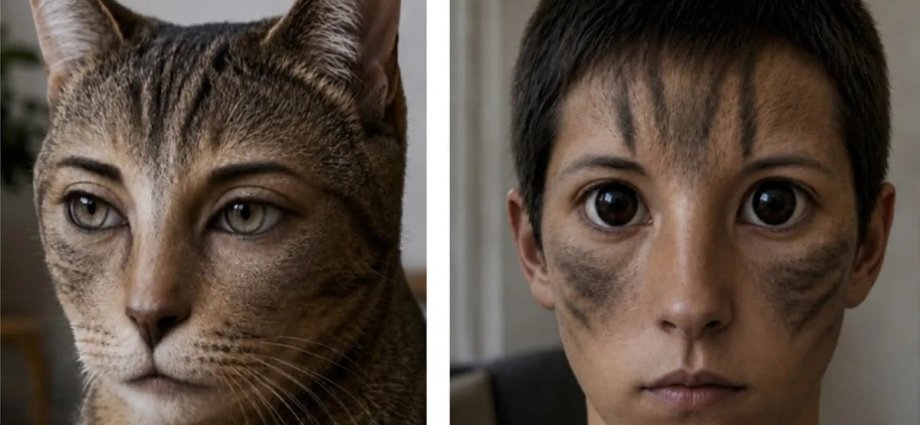
The 28-year-old man – who goes by Karl and lives in the US – sees almond-shaped eye sockets, enlarged pupils, and stripes – features of his grey tabby “Luna” on the faces of people he encounters if his cat is the first face he sees that day.
Alternatively, if he sees a human face at the start of his day, he tends to see that person’s pupils and eye shape in the faces of others, including on Luna’s face that day, he says.
The findings shed light on a form of palinopsia, a condition in which something seen earlier persists or reappears in later perception, according to a new case study published in the journal Cortex.
In Karl’s case, palinopsia causes face distortions, a condition called prosopometamorphopsia, or PMO, say researchers from Dartmouth College.
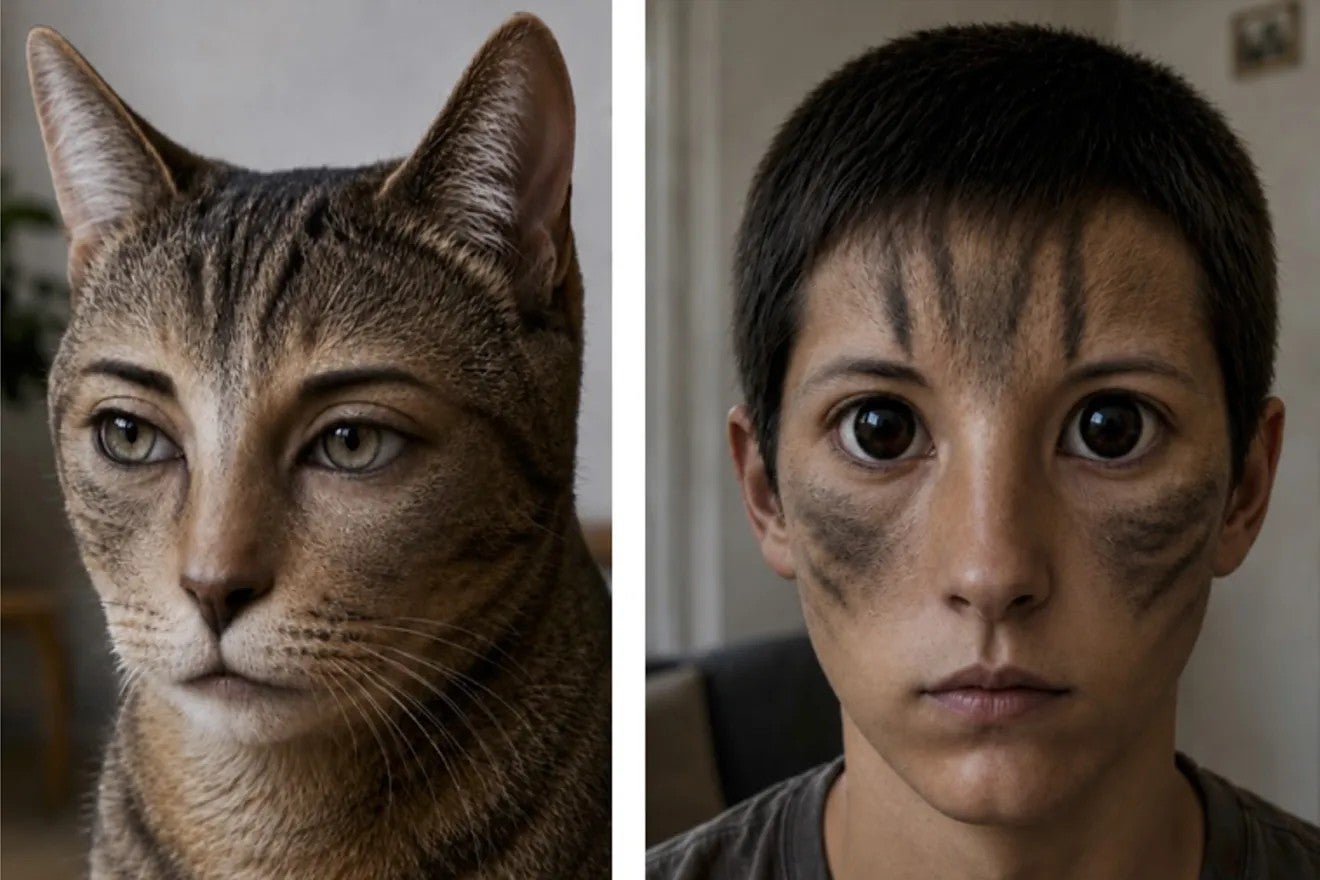
His palinopsia began two years ago after part of his right temporal lobe brain region was surgically removed due to malformation.
This brain region is known to play a key role in processing faces.
Karl’s case reveals fresh insights into how humans perceive faces.
It seems that the brain is able to pull individual features from our memory and influence ongoing perception.
A similar case was documented in the same journal in 1986, when a woman riding a bus saw a poodle on a passenger’s lap and then saw the poodle’s face on every passenger on the bus.
The woman had experienced a stroke nine months earlier.
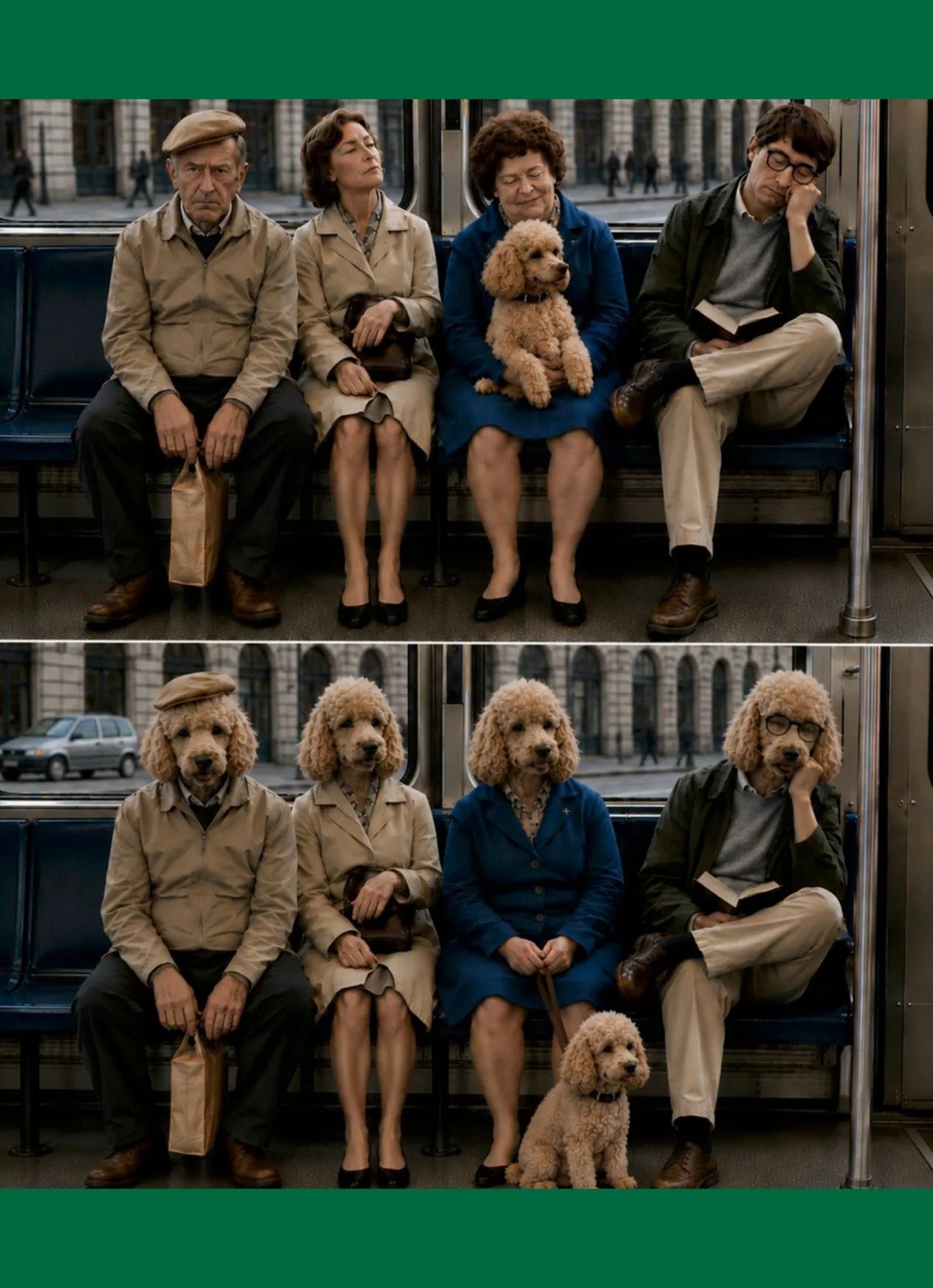
Compared to the woman’s case, Karl only saw components of faces transferred onto other faces, rather than an entire face.
In the latest study, researchers prepared a line-drawn sketch that was fed into an artificial intelligence model to make the image more realistic.
Scientists then shared the AI-generated image with Karl, and after a few rounds of back-and-forth, the modified set of images was included in the report.
“AI provides researchers like us with the ability to generate more accurate visualisations of what people are experiencing when they’re having distorted visual perceptions,” said study lead author Brad Duchaine from Dartmouth’s Social Perception Lab.
“If you know what the person is experiencing, you can much better research what they’re dealing with and try to figure out ways to control it. And now the patient can also take part in that process of creating those visualisations,” Dr Duchaine said.