









Want to bookmark your favourite articles and stories to read or reference later? Start your Independent Membership today.
Join today
Already a member?
Log in
U.S. medical professionals are raising alarms over infants being born with measles for the first time in decades.
Congenital measles occurs when an infected pregnant woman transmits the virus to her fetus in the womb, which can lead to severe health complications or prove fatal for newborns.
Between the start of 2025 and the end of September, 13 congenital measles cases were reported to the U.S. Centers for Disease Control and Prevention during major outbreaks, according to preliminary figures published in a medical journal on Monday.
“This is a brand new phenomenon,” said Michael Osterholm, who directs the University of Minnesota’s Center for Infectious Disease Research and Policy.
The arrival of the condition is driven by falling vaccination rates that have allowed the virus to spread widely.
Consequently, the Pan American Health Organization is expected to formally announce on Tuesday that the U.S. has lost the measles-free status it maintained since 2000.
Over the past two years, the CDC reports that more than 7,500 measles cases have occurred.
“We’re now seeing levels of measles that we haven’t seen in 30 years,” said Dr. Adam Ratner, a member of the American Academy of Pediatrics’ infectious diseases committee. “When you have measles under control,” congenital measles doesn’t happen.
These initial figures were published in a public health alert by NEJM Evidence in partnership with the research center Osterholm leads.
The alert, authored by CDC scientists, also documented 112 confirmed cases of measles during pregnancy, almost entirely among women who were not vaccinated beforehand or whose status was unknown.
It noted that getting vaccinated before pregnancy and maintaining high community coverage “are important to prevent measles and related complications.”
Guidance regarding congenital measles from the pediatric academy is already being provided to physicians.
Additionally, Pennsylvania’s health department released an advisory last month targeting healthcare providers, schools, childcare centers, and other entities in the state, which currently has the nation’s largest measles outbreak.
Emerging conditions enable congenital measles to surface
Immunity to measles is acquired either by contracting the disease or through vaccination.
Before vaccines were developed, the highly contagious virus infected many people during childhood. Widespread immunization later shielded the population.
However, a new reality, created by both the historical success of the shot and recent vaccine skepticism, has caused congenital measles to reemerge.
“What’s happening is we have so many women of childbearing age who were not vaccinated in the last 25 years, nor have they ever had exposure to measles because for the last 25 years we have beaten it back,” Osterholm said. “Now, this group is highly susceptible to measles.”
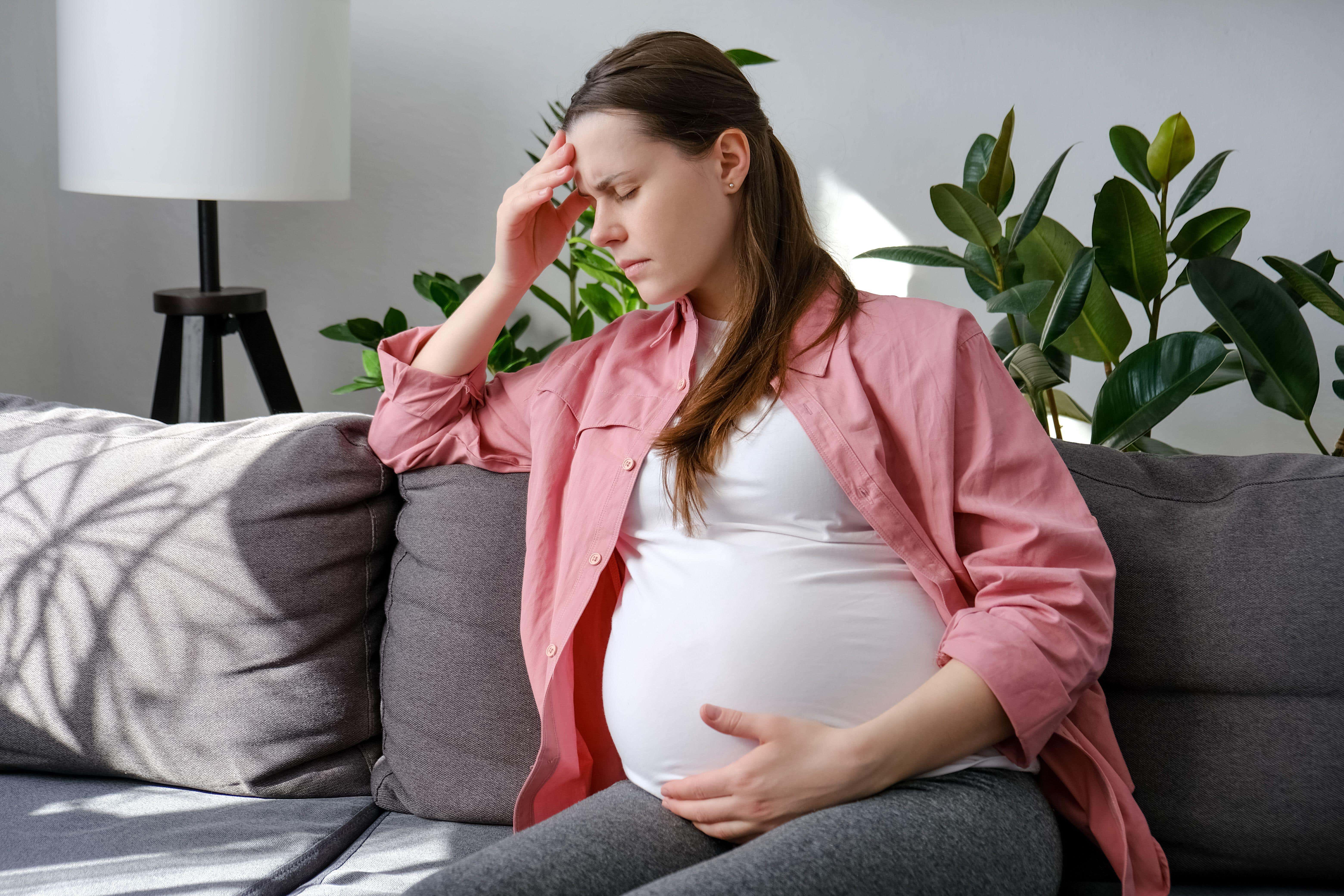
Healthcare providers emphasize that the most effective way to prevent the disease is for women to receive the measles, mumps and rubella (MMR) vaccine before becoming pregnant. This measure protects the fetus as well, given that antibodies cross the placenta from mother to child and can offer protection for several months post-birth.
The MMR shot cannot be administered during pregnancy.
Unvaccinated pregnant women without a history of measles who are exposed to the virus can receive an antibody treatment within six days to decrease the risk of infection and associated complications.
Congenital measles presents severe dangers to infants
Pregnant women who contract measles near the end of pregnancy face a high likelihood of passing the infection to the baby.
The pediatrics group estimates that 25% to 30% of infants born to mothers infected shortly before delivery may contract the virus.
Babies exposed in the womb are diagnosed with congenital measles if medical testing confirms the virus shortly after birth. Typical symptoms include fever, jaundice, and a measles rash.
Severe complications include pneumonia, encephalitis, and subacute sclerosing panencephalitis (SSPE), a rare brain disorder that usually appears years after infection and is almost always fatal.
Ratner, who authored a book on measles, stated there is evidence that children born with congenital measles face a greater risk of SSPE and may develop the disorder earlier than other infected children. “That’s something that sadly we’re learning more about,” he said.
Doctors worry the situation could deteriorate if vaccination coverage continues to decline. Communities generally avoid outbreaks if 95% of residents receive the MMR vaccine, but levels in many areas have fallen below that benchmark. On a national level, the CDC reported that 92.4% of U.S. kindergarteners in 2025-26 received their required MMR doses.
This leaves many vulnerable individuals at risk, particularly infants who are too young to receive immunization. The initial MMR dose is routinely given at 12 to 15 months of age, though infants in outbreak zones can receive shots as early as 6 months.
“We need to get back to the point where everybody who can get vaccinated is getting vaccinated, and that’s gonna take some doing,” Ratner said. “It’s going to be a lot of work on the part of pediatricians and public health institutions and lots of others. But it’s an important thing for us to do.”