









Want to bookmark your favourite articles and stories to read or reference later? Start your Independent Membership today.
Join today
Already a member?
Log in
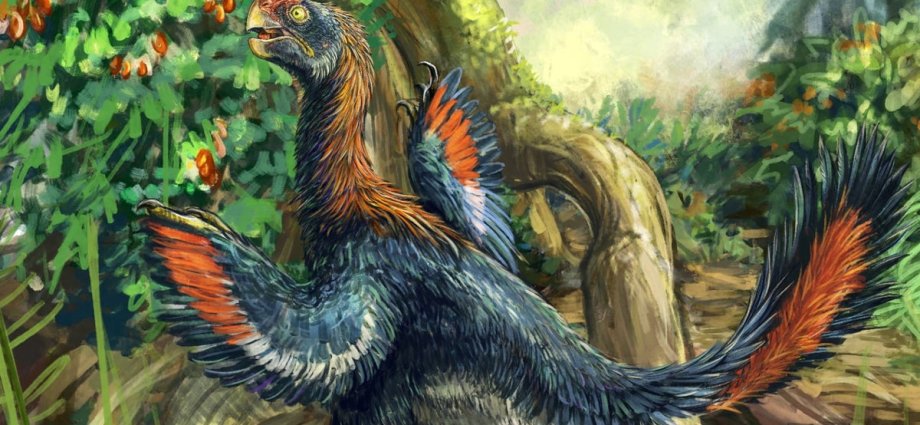
Dinosaurs consumed a wide variety of foods, even preying on one another, yet fruit appeared to be entirely missing from their diets. Now, researchers have identified fossils of a toothless, turkey-sized creature with a parrot-like skull that possessed distinct anatomical traits suited specifically for eating fruit.
The species, named Infernogallus jamesi, marks the first documented frugivorous dinosaur. Existing approximately 66 million years ago near the end of the Cretaceous Period, its beak and jaw structures were specifically built to crush soft vegetation and fruits. Its remains were discovered in North Dakota and Montana.
Translating to “hell chicken,” the name Infernogallus references both its avian traits and the Hell Creek rock formation where it was unearthed.
Extending across Montana, North Dakota, South Dakota, and Wyoming, this geological zone is renowned for producing some of history’s most prominent dinosaur discoveries.
The creature likely consumed soft plants and fruit within a subtropical coastal floodplain. This habitat was shared alongside notorious species such as the predatory Tyrannosaurus, the three-horned Triceratops, and the heavily armored herbivore Ankylosaurus.
Measuring roughly 5 feet (1.5 meters) in length and weighing close to 25 pounds (11.3 kg), the dinosaur’s recovered remains include an almost complete skeleton alongside separate palate and jaw bones. Although no direct skin or plumage impressions were preserved, scientists suspect Infernogallus was feathered due to evidence from related species.
It was classified as a theropod, placing it within the broader group containing T. rex, all carnivorous dinosaurs, several plant-eating offshoots, and the ancestors of modern birds.
“This definitely expands the range of lifestyles we thought dinosaurs had, and it shows how adaptable theropods were,” said paleontologist Greg Funston of Stony Brook University in New York, lead author of the research published in the journal Nature Communications.
Fruits represent the reproductive elements of flowering plants, or angiosperms. Having first emerged during the earlier Cretaceous roughly 130 to 140 million years ago, these plants gradually dominated environments once ruled by gymnosperms such as ginkgoes and conifers.
The discovery indicates that certain dinosaurs may have maintained an intertwined ecological relationship with these emerging flowering plants.
“It has been proposed before that some groups of dinosaurs ate fruits, but there was never evidence to back it up,” said study co-author Thomas Dudgeon, a postdoctoral researcher at the Royal Ontario Museum in Toronto.
“The discovery of Infernogallus shows that dinosaur diets were likely far more diverse than we previously thought. Prior to this discovery, there was a bit of a mystery in dinosaur evolution. The evolution of flowering plants introduced a brand-new food source that undoubtedly had consequences for the animals living alongside them,” Dudgeon said.
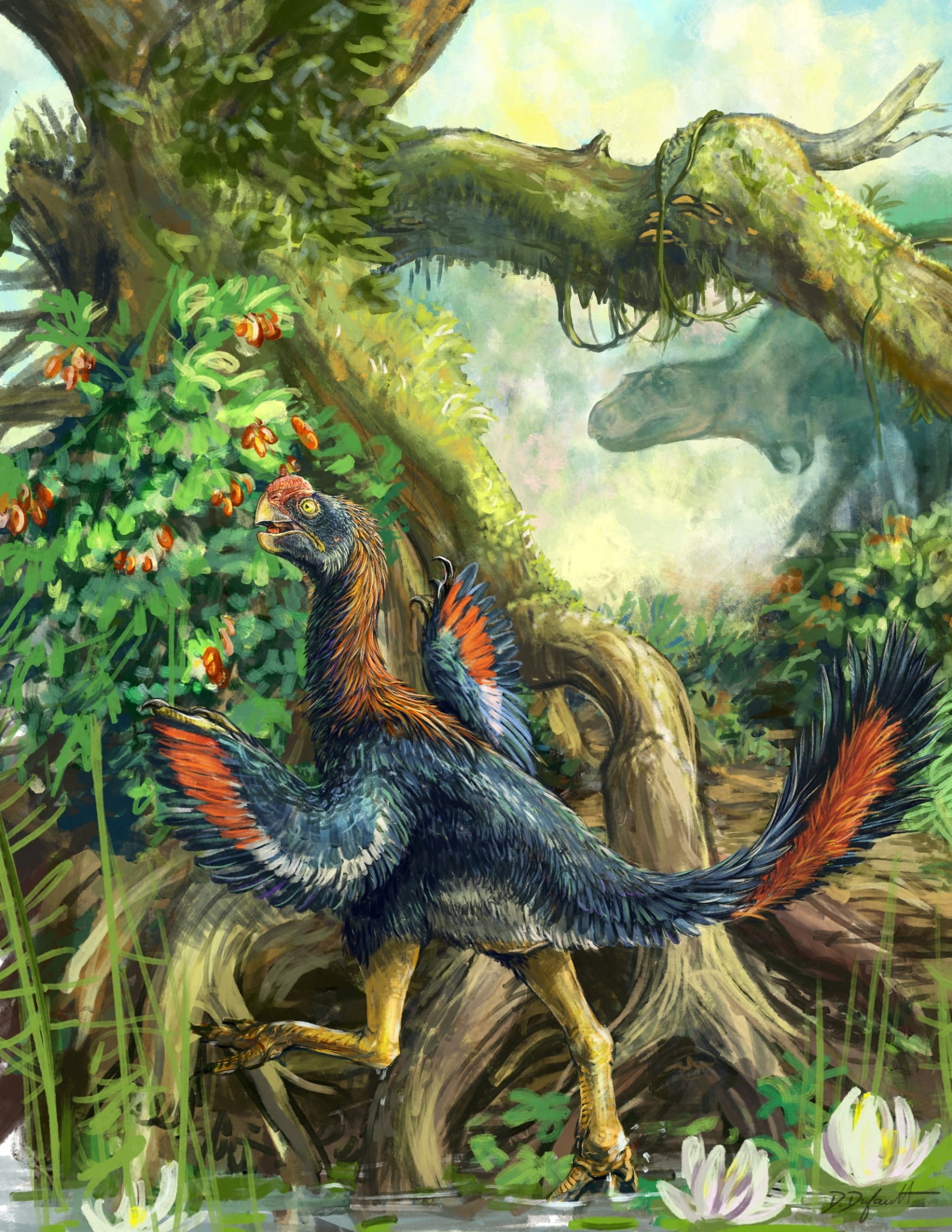
Potential food sources for Infernogallus included diverse berries and drupes—a category of fruit containing central stones, such as modern peaches, cherries, olives, and mangoes.
THREE KEY FEATURES
Researchers identified three main structural traits confirming the frugivorous diet of Infernogallus, according to Funston. These included jaw muscle arrangements designed for back-and-forth chewing, a flexible joint allowing forward jaw sliding, and a complex system of beak ridges and grooves tailored to shear and mash soft vegetation.
“We see these features separately in birds and turtles today that eat soft foods, like the fig-eating vulturine parrot or green sea turtles that chew soft sea grass. But no living animal has all three adaptations, showing just how specialized Infernogallus was,” Funston said.
The specimen demonstrates the versatility of beaks over traditional teeth.
“Once you’ve lost your teeth and developed a beak instead, the range of foods available dramatically increases, including plants, as long as you have some way to digest them,” Funston said.
Unlike most plant-eating theropods that relied on swallowed stomach stones, known as gastroliths, to break down food, Infernogallus and its fellow caenagnathids ground their food through active chewing.
Frugivorous creatures perform a vital function for angiosperms through seed dispersal.
“Mammals and birds would probably also have eaten fruit, but they didn’t show the same kinds of specializations for a frugivorous diet that Infernogallus does, so it might have been a less important resource for them. Mammals and birds also were quite small in the Cretaceous, so it’s unlikely that they were spreading very large seeds, or that they were spreading them big distances,” Funston said.
“We know that these big-seeded fruits were proliferating and spreading, and it seems like caenagnathids could have fit this role — although we feel more evidence is needed before drawing that link confidently,” Funston said.