










Want to bookmark your favourite articles and stories to read or reference later? Start your Independent Membership today.
Join today
Already a member?
Log in
Scientists have uncovered a fossil of the first amphibian to have lived in the oceans – Gerrothorax maritimus.
The armoured animal, roughly the size of a modern giant salamander, is believed to have lived around 237 million years ago, during the Late Triassic period.
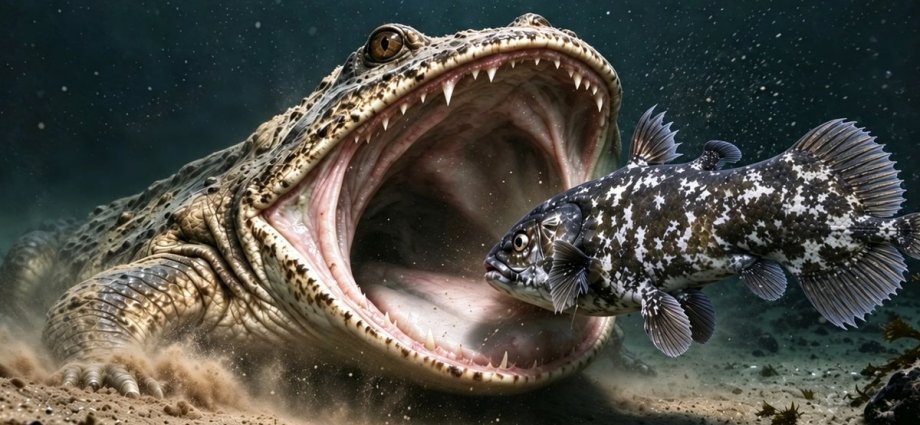
Gerrothorax maritimus is thought to have inhabited the ocean floor, using suction to capture its prey. The fossil record had previously provided no evidence of a modern amphibian species living in a fully marine environment.
Published in Nature Ecology & Evolution, the findings come from researchers at the University of California, Davis, Peking University and the Geological Museum of Guizhou.
“This area is part of an ecosystem that we’ve been looking at and trying to reconstruct,” said study corresponding author Ryosuke Motani, a professor in the Department of Earth and Planetary Sciences at the University of California, Davis.
“We’ve been mostly studying marine reptiles and the fish from this place, but now we also have this amphibian and it’s a sort of very unusual member of the lineage.”
Researchers were able to reconstruct the creature’s appearance and analyse how it might have lived due to the well-preserved skeletons.
Gerrothorax maritimus had a flattened, disc-shaped body covered in bony armour. It measured almost 90cm in length and may have used its protective covering to defend itself against predators such as ichthyosaurs.
“If you think about today’s amphibians, this animal is unusual because it’s big,” Motani said.
“It’s probably, body mass-wise, about the same as the giant salamander, but what’s different is that giant salamanders are elongated whereas this animal is really chunky.”
The shape of its skull and the presence of bony armour led the researchers to suggest that the animal was a bottom-dwelling suction feeder.
“They would probably just wait at the bottom and then when prey comes around, they would just suck it in,” said Motani, who compared the feeding method to that of the modern wobbegong, a bottom-dwelling carpet shark.
Of the more than 8,000 known species of modern amphibians, none is known to inhabit fully marine environments. Fewer than 2 per cent have some degree of tolerance to salt water.
Researchers say this is largely because amphibians have permeable skin, which allows them to absorb water and exchange gases but also makes it difficult for them to regulate the movement of salt into their bodies.
“That skin is permeable, and that allows the animals to use it for multiple purposes,” Motani said.
“They use it for respiration and water intake, so amphibians don’t drink or breathe through the mouth because they can do both through the skin.”
This biological adaptation generally requires amphibians to live in or near freshwater habitats.
Some modern species, including the crab-eating frog, can tolerate a degree of salinity. However, they can lose weight in brackish water and need to return to freshwater to recover.
The researchers suggest that Gerrothorax maritimus overcame these limitations through a combination of bony armour and adaptations that made it more similar to marine animals such as fish.
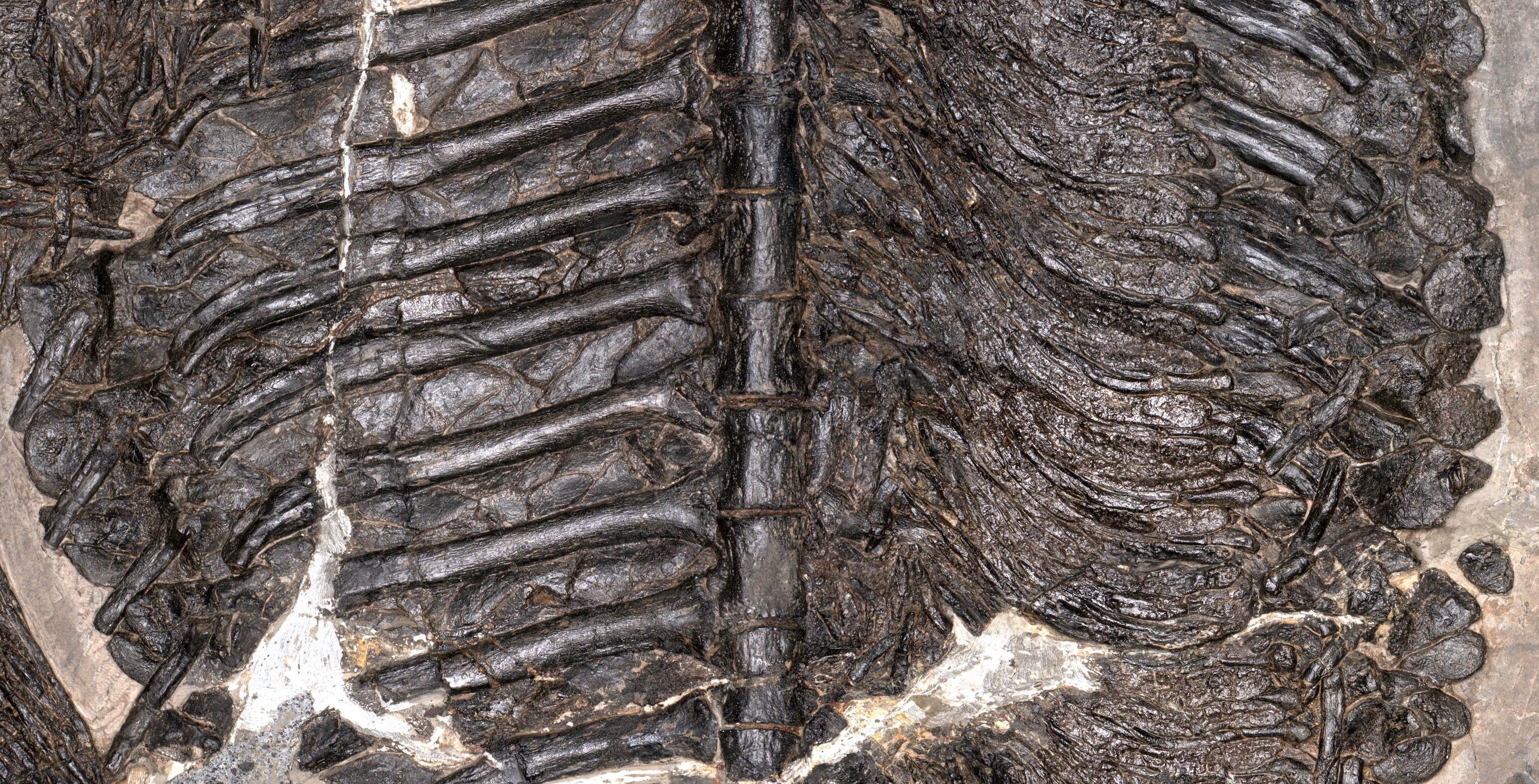
Its armour may have reduced water absorption through the skin, meaning it would have needed to take in seawater through its mouth and absorb water through its digestive system.
The researchers also suggest that gills associated with the Gerrothorax genus may have helped the animal remove excess salt.
These explanations remain hypotheses about how the creature adapted to its marine environment.
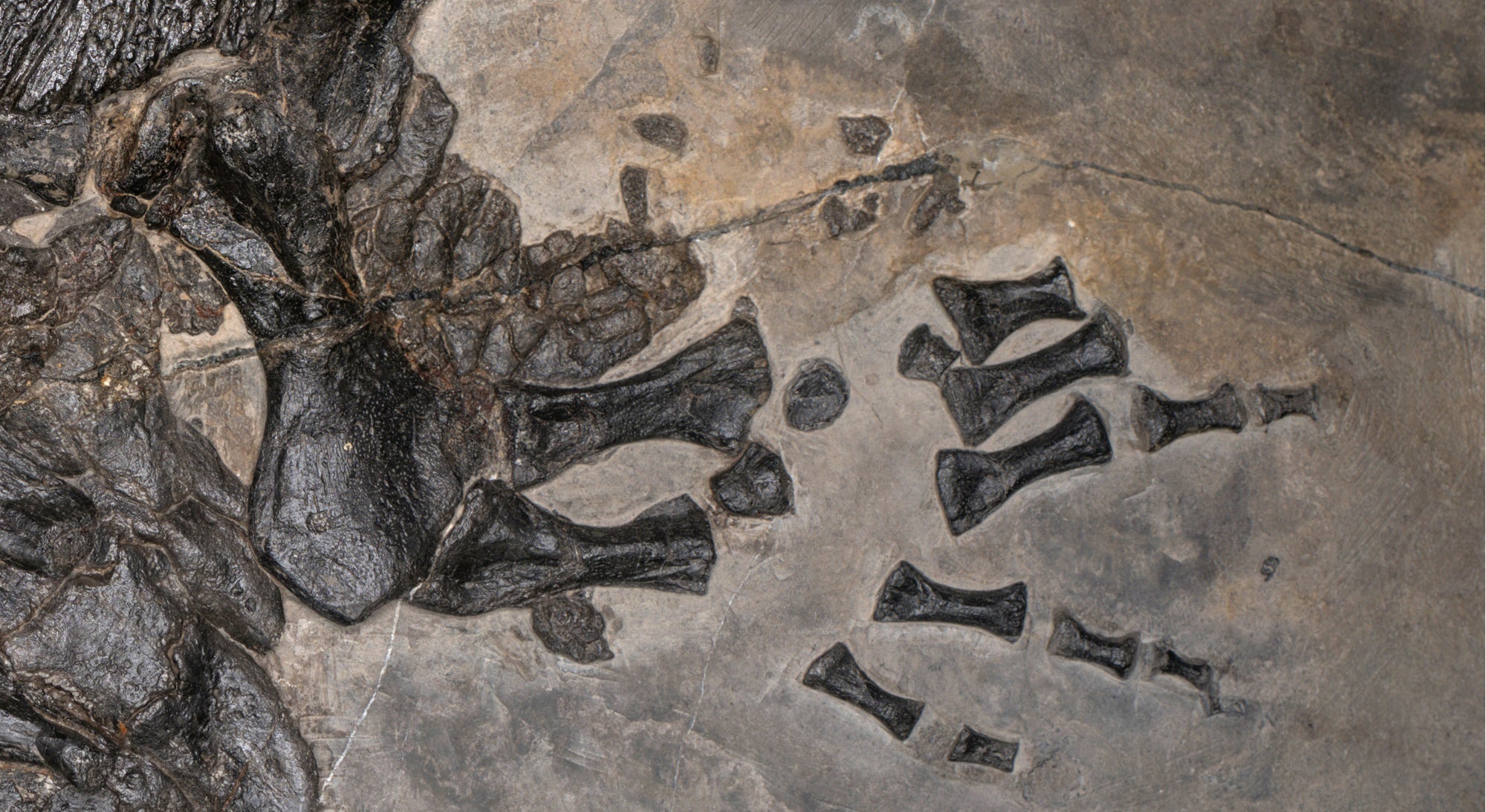
Meanwhile, the location and condition of the fossils provided important clues about the animal’s habitat. Both skeletons were found in deep-sea sediments and were nearly complete, including their fingers and limbs.
Motani said this suggested the animals had died close to where they lived, rather than their remains being carried far out to sea from land.
“Carcasses at sea, unless they sink to the bottom right away, tend to dry out and lose limbs prior to sinking to the bottom,” Motani said.
“But these animals had their fingers preserved, so that means they probably died near where they lived.”
The team also carried out geochemical analyses of the fossils. These revealed that the proportions of strontium isotopes closely resembled those found in the oceans during the Late Triassic.
Together, the geological and chemical evidence supports the interpretation that Gerrothorax maritimus lived in a marine environment.
The discovery offers a rare insight into the evolutionary history of amphibians and raises new questions about how some ancient members of the group adapted to habitats that modern species have largely been unable to occupy.
The research was supported by the National Natural Science Foundation of China.