







Want to bookmark your favourite articles and stories to read or reference later? Start your Independent Membership today.
Join today
Already a member?
Log in
Artificial intelligence (AI) could help “supercharge” the fight against cancer, the head of a leading charity has said.
As Cancer Research UK (CRUK) marks 50 years since the founding of its Scotland Institute in Glasgow, it said AI is already transforming the work of its scientists.
By enabling them to analyse vast amounts of data, it is helping uncover hidden patterns in tumours and accelerate discoveries that could lead to earlier diagnosis and more effective treatments for patients.
Some 34,800 people are diagnosed with cancer in Scotland each year.
Professor Owen Sansom, director of the CRUK Scotland Institute, said: “For 50 years, scientists at this institute have pushed the boundaries of what we know about cancer.
“Our discoveries have helped lay the foundations for progress that is benefiting patients around the world.
“Over the next five decades, AI could help us make discoveries at a pace we could only have imagined before.
“The next generation of breakthroughs will increasingly be powered by the partnership between human ingenuity and AI, helping us bring better outcomes to patients faster than ever before.”
Founded in 1976, the CRUK Scotland Institute can trace its roots to a research department founded by pioneering surgeon Sir George Beatson in 1912, before moving to the Garscube Estate at the University of Glasgow.
Previously called the Beatson Institute, it was given its current name in 2023 in recognition of its status as a national centre of excellence and to strengthen its global profile.
Today it is home to around 300 researchers working across 30 research groups, and it has become one of the world’s leading centres for cancer discovery science.
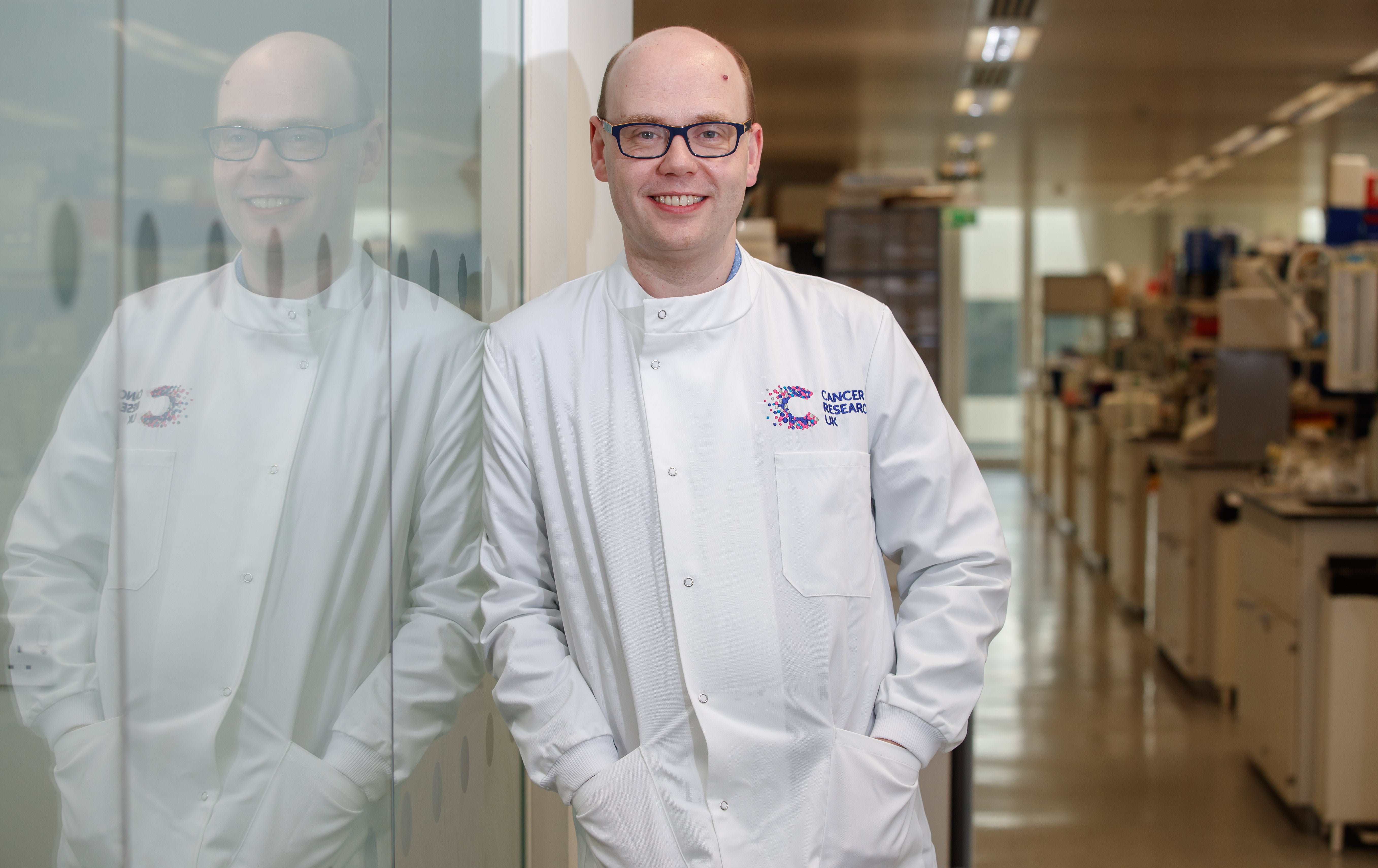
Dr Iain Foulkes, CRUK executive director of research and innovation, said the institute played a “vital role in some of the most important advances in cancer biology over the past half century”.
He continued: “Our researchers have repeatedly delivered discoveries that have changed how scientists think about cancer and opened up new avenues for treatment.
“Cancer is one of the most complex diseases we face, but AI has the potential to unlock this complexity on a scale and at a speed never seen before.
“We are entering a new era where AI could turn decades of research into new breakthroughs transforming how we prevent, detect and treat the disease and enabling us to develop smarter treatments and ultimately save more lives.”
Over its history, institute researchers have advanced understanding of the genetic changes that drive cancer, as well as undertaking pioneering work into the body’s immune response to the disease.
It has attracted some of the most influential cancer scientists in the world, including internationally recognised leaders in cancer biology, metabolism and tumour suppression.
Their work has helped establish Scotland as a global centre of excellence for cancer research and innovation.
Michelle Mitchell, CRUK chief executive, said: “With around 34,800 people diagnosed with cancer in Scotland each year, finding new ways to tackle the disease is vital.
“Artificial intelligence won’t replace scientists, but it has the potential to supercharge discovery by helping researchers uncover insights hidden within vast amounts of data and accelerate progress against this complex disease.
“From understanding how cancers develop to identifying new ways to diagnose and treat them, AI could help unlock breakthroughs that ultimately save more lives.
“That’s why Cancer Research UK is committed to investing in the people, technologies and ideas that will drive the future of cancer research.”