




Want to bookmark your favourite articles and stories to read or reference later? Start your Independent Membership today.
Join today
Already a member?
Log in
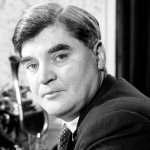
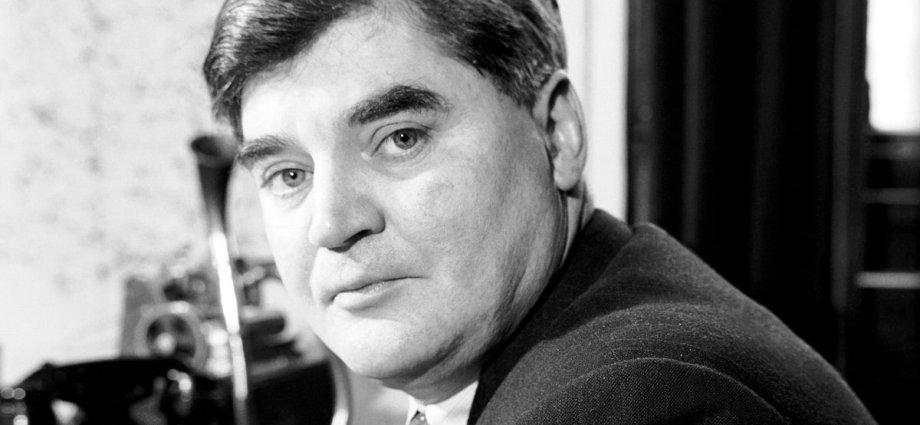
Aneurin “Nye” Bevan, the Labour icon who founded the NHS, was subjected to surveillance by MI5 for over two decades, newly released official records reveal.
Files made public at the National Archives indicate he initially drew the attention of security services during the 1930s as a prominent left-winger tied to key communists.
The monitoring continued throughout his time as a minister in the post-war Labour administration, during which he established the NHS despite fierce opposition from doctors.
At one point, the director general of MI5 was so alarmed by his contacts with a known Russia spy that he raised the matter directly with prime minister Clement Attlee at No 10.
However, members of the security service questioned the operation, highlighting that his activities were carried out entirely in the open on the floor of the House of Commons.

In a review conducted after his death in 1960, an MI5 officer observed: “Considering what a controversial character Nye Bevan was, the file is remarkably tame.”
The documents reveal that MI5 first set up a personal file on Mr Bevan – then serving as backbench Labour MP for Ebbw Vale in South Wales – back in 1933.
Early entries include a report covering a Canadian anti-Nazi rally in Montreal, which Mr Bevan addressed in 1934.
“Bevan has inherited the evangelical fervour of his Welsh forebears and knows how to use it in the Communist cause,” it stated.
“He pictured the overthrow of the Nazi regime as meaning the commencement of a united Europe under Soviet rule.”
In 1943, Roger Hollis, a future director general, complied a summary of what they knew of Mr Bevan’s activities up to that point.
In 1933, he noted, the MP had been “in close touch” with Harry Pollitt, general secretary of the Communist Party of Great Britain, and others in the party who backed his plan to organise “workers’ freedom groups” to defend against the “capitalists”.
Against a background of mass unemployment and the Great Depression, he had been closely associated with the hunger marches of 1934, entertaining deputations of marchers in the House of Commons.
He soon fell out, however, with his communist allies, who complained he was not interested in workers’ unity and was intent on building “a movement of his own” – now named The Sons of Freedom – with “all the elements of a fascist organisation”.
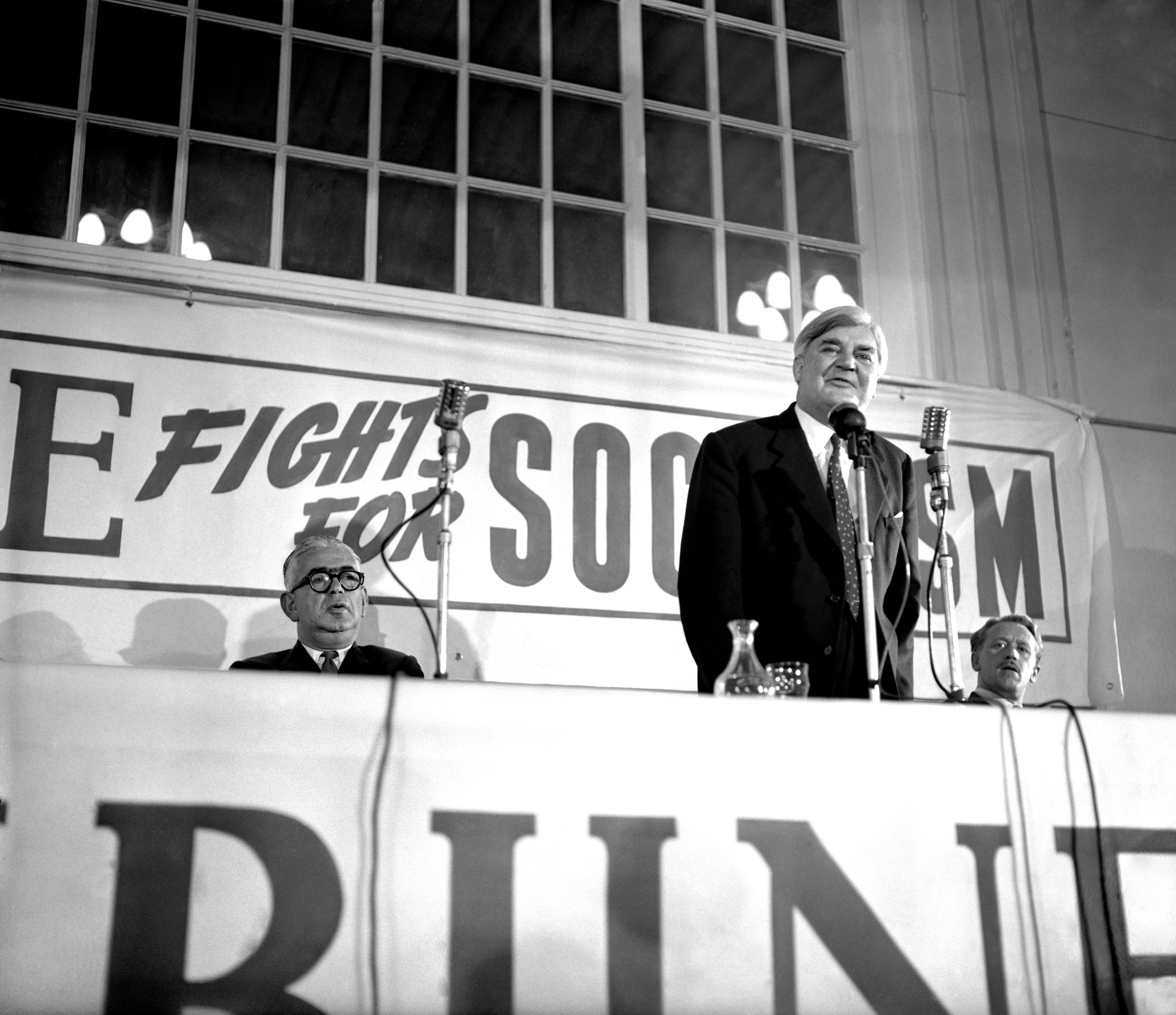
By 1936 they had patched up their differences sufficiently for Mr Bevan to support an application by the Communist Party to affiliate to the Labour Party.
With the outbreak of the Second World War in 1939 he was said to have adopted a policy of “war on two fronts” – attacking the Germans abroad and Neville Chamberlain’s Conservative government at home.
That continued with formation of Winston Churchill’s coalition government – sharply criticising the prosecution of the war while accusing Labour ministers of “leaning too much to the right”.
Although there is nothing in the files to indicate that MI5 ever tapped his phone or intercepted his mail, some wondered why they were bothering with him at all.
“I do not think that Bevan’s activities are a matter in which we, the security service, should be involved,” one officer wrote in 1943.
“In fact he makes exactly the same remarks in the Houses of Parliament pretty frequently, as any copy of Hansard will show, and it would not therefore be possible to do anything positive.”
Nevertheless, the reporting continued after the war – albeit less frequently – when Mr Bevan was appointed minister of health in Mr Attlee’s new government.
In 1949, MI5 was becoming increasingly concerned about Mr Bevan’s friendship with Wilfred Macartney, “an unsavoury, unscrupulous character” who had been convicted of spying for Russia in 1928.
Recordings of his conversations suggested he was passing on information obtained by Mr Bevan to Mr Pollitt, the Communist Party leader.
In May of that year, the director general Sir Percy Sillitoe took the evidence to Mr Attlee – who dismissed Mr Macartney’s claims as a “tissue of lies” but agreed to “warn Bevan about Macartney in general terms without, of course, making any allusion to the conversation”.
One of the final reports dates from 1954 when Mr Bevan, by now back in opposition, was invited to meet the Soviet ambassador, Yakov Malik, over lunch at the Polish embassy in London.
The event “went off very badly” in part because the Russian had difficulty in understanding Mr Bevan’s Welsh accent leading to a bad-tempered misunderstanding.
“A great deal of drink was consumed, but the party broke up in a none too friendly atmosphere,” the report stated.
The file was not finally closed however until 1975 – 15 years after Mr Bevan had died.