









Want to bookmark your favourite articles and stories to read or reference later? Start your Independent Membership today.
Join today
Already a member?
Log in
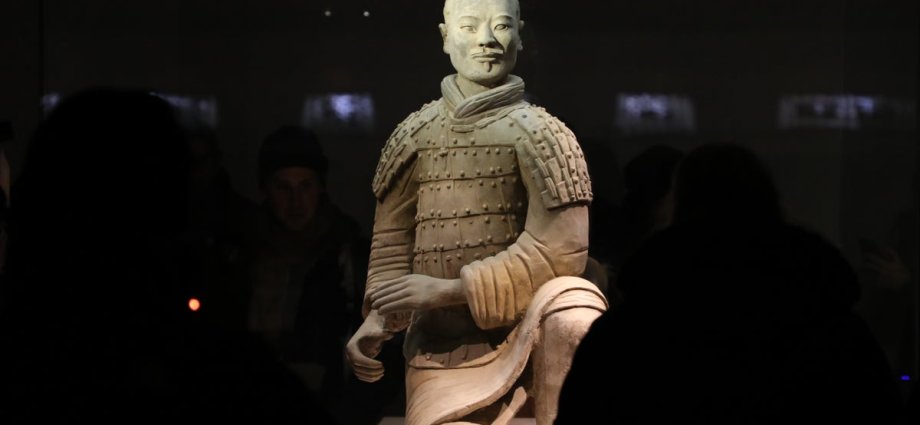
China’s famous Terracotta Army figures, dated to the third century BC, were likely built by artisans who included women and children, according to a new analysis of fingerprints found on the statues.
The thousands of life-size figures were created to guard the tomb of Emperor Qin Shihuang near Xi’an. It was assumed the army, along with its chariots, horses and weapons, were built exclusively by men.
Literature from the time suggested that women and children participated in other forms of production under state supervision. For instance, inscriptions on Qin dynasty lacquerware include titles like da nüzi (adult woman), xiao nüzi (young girl), and xiao nanzi (young boy), indicating the participation of women and children in lacquer production.
But whether their participation extended to the massive Terracotta Army remained an unanswered question.
Previous studies of fingerprints found on the figures could not differentiate between those made by adult women and teenage boys.
In the latest study, researchers led by Xiaoxi Li at the Mausoleum Site Museum in Xi’an used a mathematical technique to analyse a group of prints at once instead of trying to classify them individually.
Their findings challenge the assumption that the Terracotta Army is a product of exclusively adult male labour.
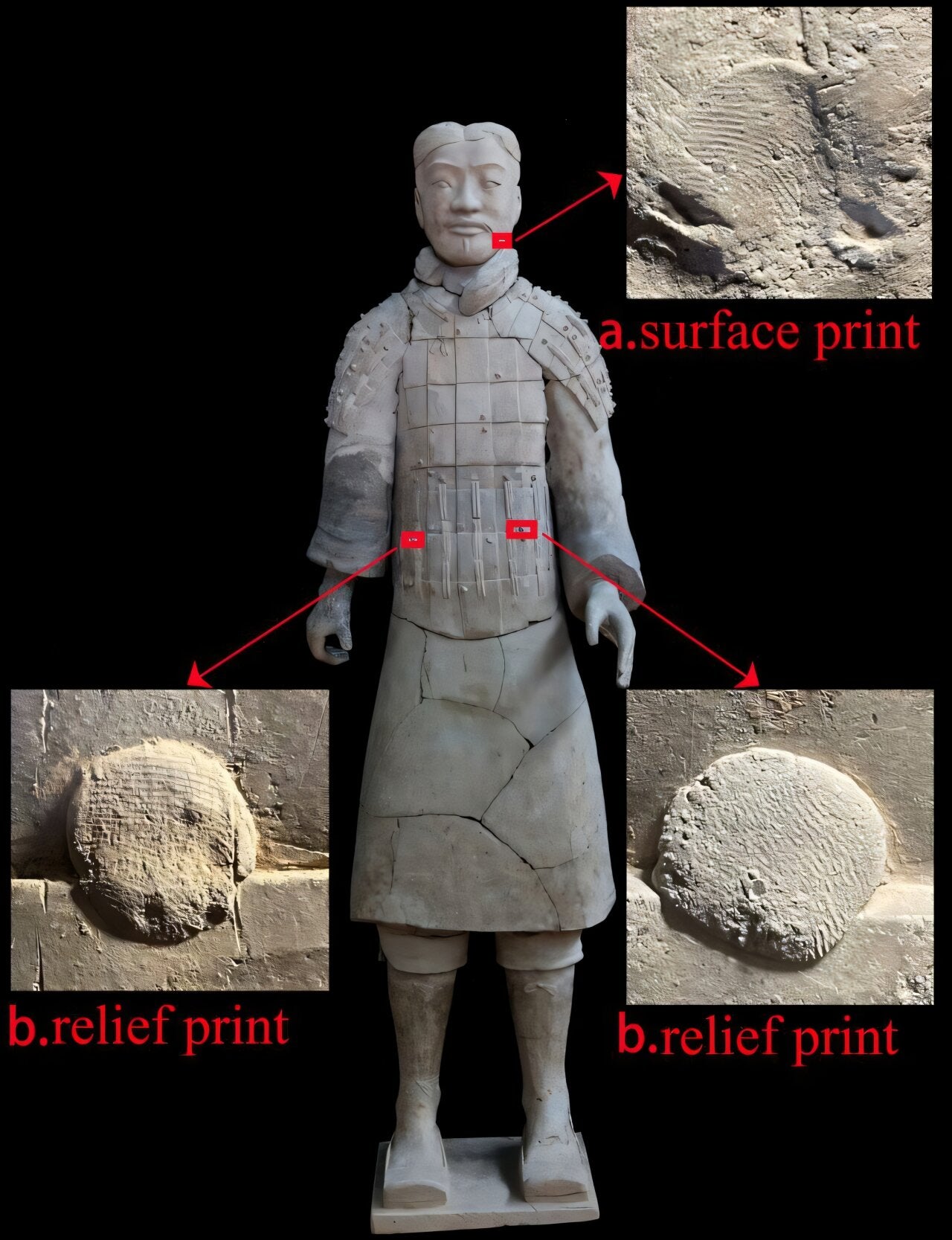
Overall, researchers analysed 79 fingerprints from 36 figures from a single site labelled Unit T23 at Pit 1.
The prints were found on the clay, pressed into different parts of the terracotta figures, including arms, body armour and heads.
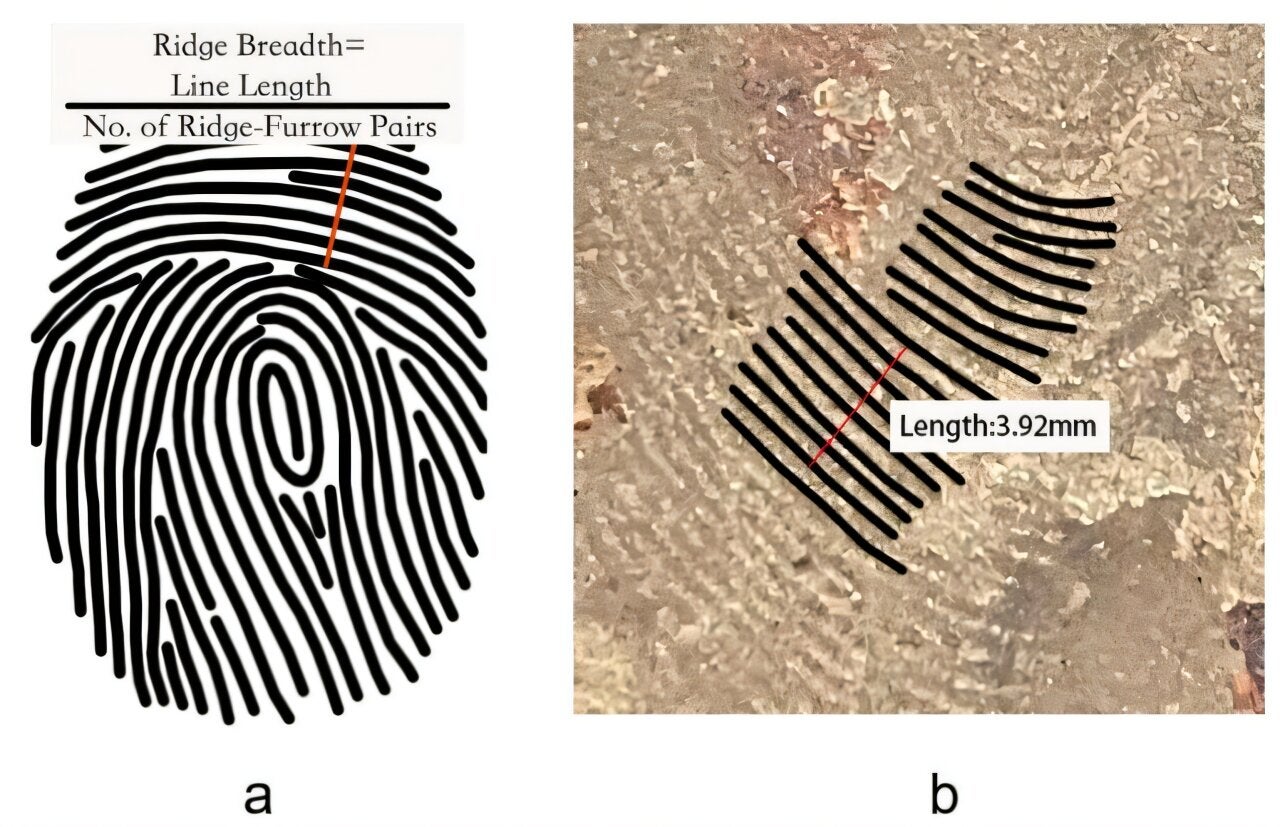
Researchers measured the distance between the fingerprint ridges – which increases as children grow older – finding clues to the ages of the makers. “The model results indicate that the artisan community was not exclusively composed of adult males,” scientists wrote in the study published in the Journal of Cultural Heritage.
The analysis suggested that adult men likely accounted for only about 45 per cent of the fingerprints.
Women, on the other hand, provided nearly a third of the prints and juveniles under 15 about 22 per cent.
“The model estimates the assemblage comprises 45 per cent adult males, 32.7 per cent adult females, 22.3 per cent juveniles less than 15 years old, an age threshold inferred from Qin dynasty’s legal texts defining age-based legal responsibility,” the study noted.
“Our results provide the first biological evidence for a diverse workforce including adult females and juveniles, challenging long-held assumptions about Qin imperial labour organisation.”
Researchers hope to analyse more Terracotta Army sites to find out if this pattern holds. “Unit T23 represents only a localised area of Pit 1, so the results may reflect the labour structure of a specific phase or production group rather than the entire project,” they said.