







Want to bookmark your favourite articles and stories to read or reference later? Start your Independent Membership today.
Join today
Already a member?
Log in
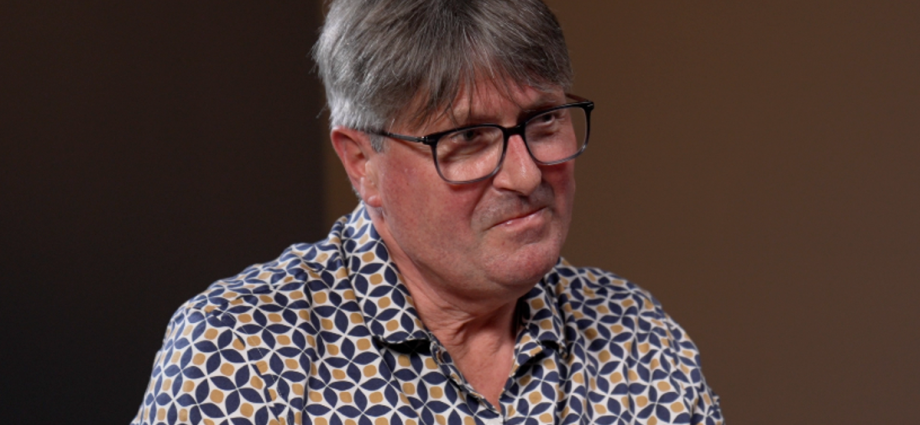
If Disney are listening, give me a call,” says Simon Armitage, grinning. The Poet Laureate is pitching his latest volume of verse as a blockbuster. There is an arrogant king, a supernatural rival made from clay, battles in a cedar forest, terrifying monsters, the wrath of the gods and a desperate quest for eternal life. Friendship, adventure, spectacular violence – and, finally, grief.
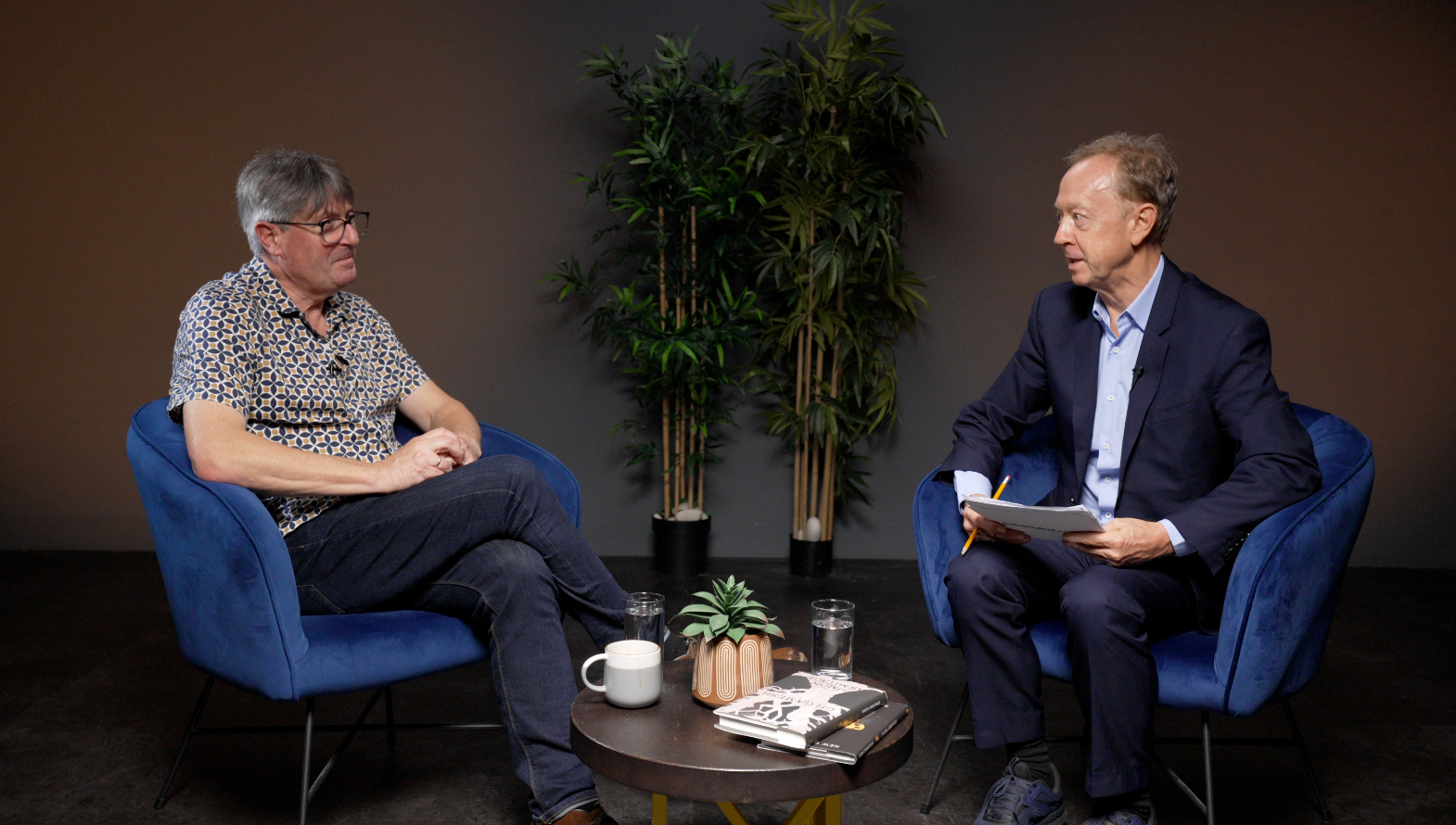
In an interview on The Independent’s The Talk Show with editor-in-chief Geordie Greig, Armitage also opens up about the agony of his own grief in losing his father, why poetry has never mattered more and why he will always fight the enemy of poetry: sentimentality and righteousness.
The story he has translated is 4,000 years old. Its hero is Gilgamesh, and Armitage has spent four or five years bringing this quixotic Mesopotamian epic back to life as startlingly modern English poetry, published this year by Faber & Faber.
Watch Geordie Greig’s interview with Simon Armitage for The Talk Show in full here
“It’s an amazing quest poem,” he says. “Gilgamesh is left with the one thing that he cannot deal with as a powerful person, and that is grief.” When his companion Enkidu dies, the mighty king discovers the one enemy he cannot defeat: mortality.
The story was inscribed in cuneiform on clay tablets, in what is now Iraq, fragments of which survived while the civilisation that produced them disappeared. For centuries, the epic was lost to the world, its language and meaning beyond the reach of ordinary readers. Its rediscovery in the 19th century was one of the great adventures of scholarship.
In his prologue, Armitage recounts the over-excitement of the British Museum scholar George Smith, who recognised the significance of a fragment describing what was possibly Noah’s flood. So overcome was Smith by his discovery that, according to the account Armitage relates, he ran around the Museum in a state of ecstasy, stripping off all his clothes.
This makes Armitage chuckle: the dusty academic so thrilled by words on a piece of ancient clay that he loses all composure. Armitage understands the feeling. Poetry, at its most exhilarating, is the business of making something out of almost nothing – of taking a few surviving marks, a scrap of language or a fleeting thought and turning it into an experience that talks.
His translation, produced/rewritten with the help of a scholar who supplied the literal version before Armitage added what he calls “the curly bits”, is part of a mission that has defined his career. He wants poetry out of the library and into the world.
“Translating these old poems is an act of democracy,” he says. Otherwise, they belong to “a smaller and smaller audience” until they end up in “a dusty corner of a museum or a library”.
The tablets themselves, he jokes, look rather like Weetabix. Yet their emotions remain startlingly recognisable. Armitage wants us to read Gilgamesh, not stand respectfully at a distance from it.
“I would argue that anybody could pick that book up and read the poem straight off the page and get a great deal from it.”
It is a characteristically direct ambition. Here is a man who has been a probation officer, a university professor, a broadcaster, a songwriter and now Poet Laureate, yet remains convinced that poetry should not require a special key to unlock it. He has carried it into schools, prisons, theatres, radio studios and small halls, becoming one of its most indefatigable advocates since John Betjeman.
For Armitage, poetry is not an ornament to life. It is a way of seeing it.
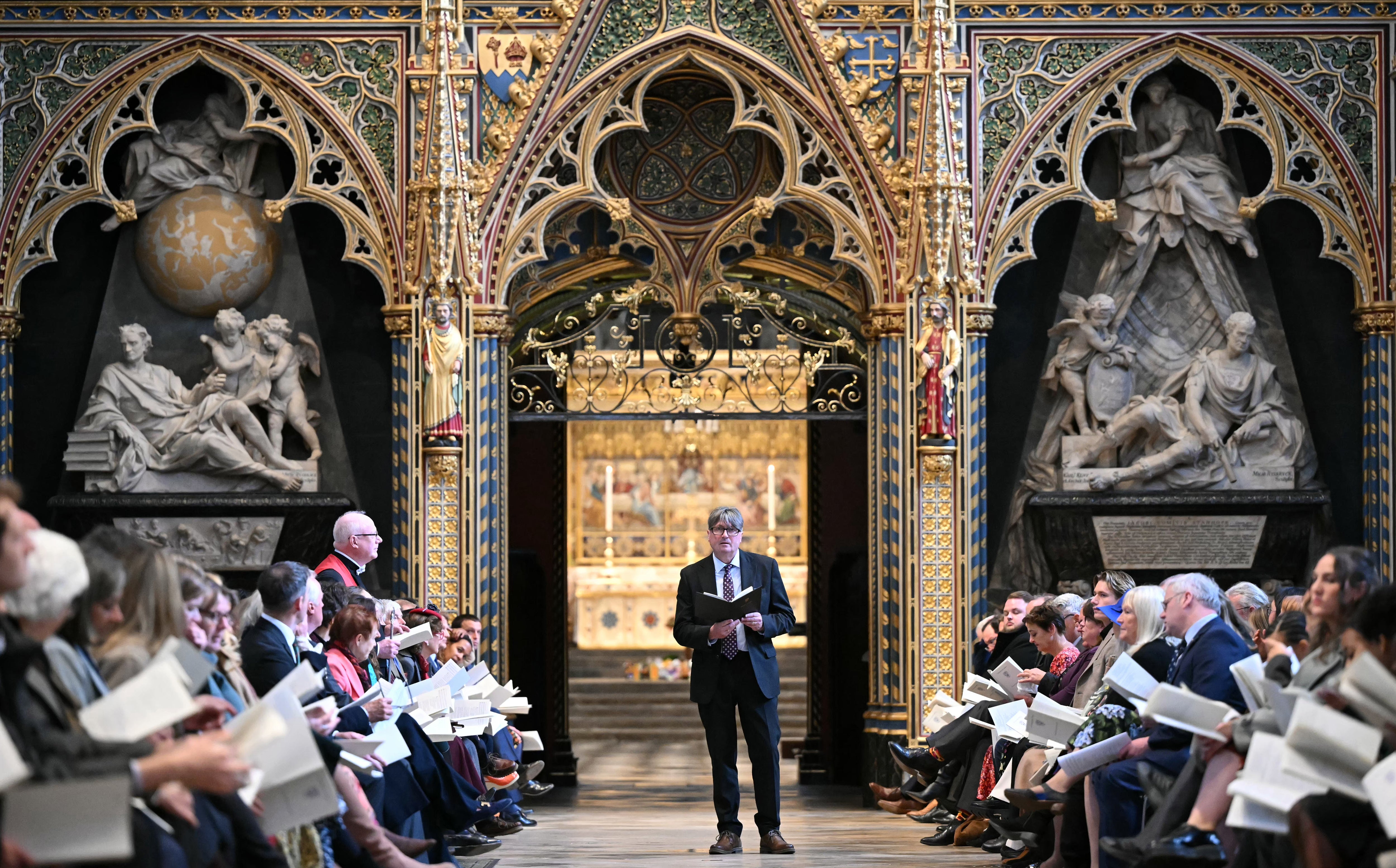
Born in Marsden, West Yorkshire, in 1963, Armitage grew up in a world of hills, village life and sharp domestic humour. His family was not especially bookish, but language was everywhere: jokes, conversation, crosswords and quick-fire exchanges around the dinner table.
His father was a probation officer who also wrote plays and pantomimes for local productions. Armitage followed him into the profession, working in Greater Manchester until 1994. Poetry, initially, seemed an unlikely route to a living.
As the youngest child, he was often the butt of family jokes. He would flounce upstairs, then return with a poem… 15 years later. “That was my witty repartee.”
It was an early lesson in the uses of language: its capacity to wound, to entertain, to change the balance of a conversation. Humour and seriousness have remained inseparable in his work. He can be dry, mischievous and self-deprecating, but beneath the lightness is an unusually alert intelligence, constantly looking for the connection that makes the familiar strange.
In his last collection, New Cemetery, for instance, he writes about shaving. Little stubbles and crescents of fingernail clippings collect in the basin. Most of us would rinse them away without a thought. Armitage sees the body, the passage of time and the approach of death.
“The kind of poetry that I’m interested in tries to make points about the universal out of the particular,” he says.
The poem moves from the debris of an ordinary morning towards the vastness of the universe, with the poet resisting the prospect of his “warm atoms” being drawn into deep space.
There is something almost comic about the scale of the ambition. A man stands at a bathroom sink and finds himself contemplating the cosmos. Yet this is poetry’s peculiar magic: the transformation of the insignificant into the immense.
Armitage does not claim that every poem arrives through some mysterious act of inspiration. Often, the beginning is simply the freedom to let the mind wander.
“I just don’t think we get enough time to daydream these days.”
He worries about our addiction to interruption, the reflex to reach for a phone whenever there is a spare moment.
“I think daydreaming should be a GCSE subject.”
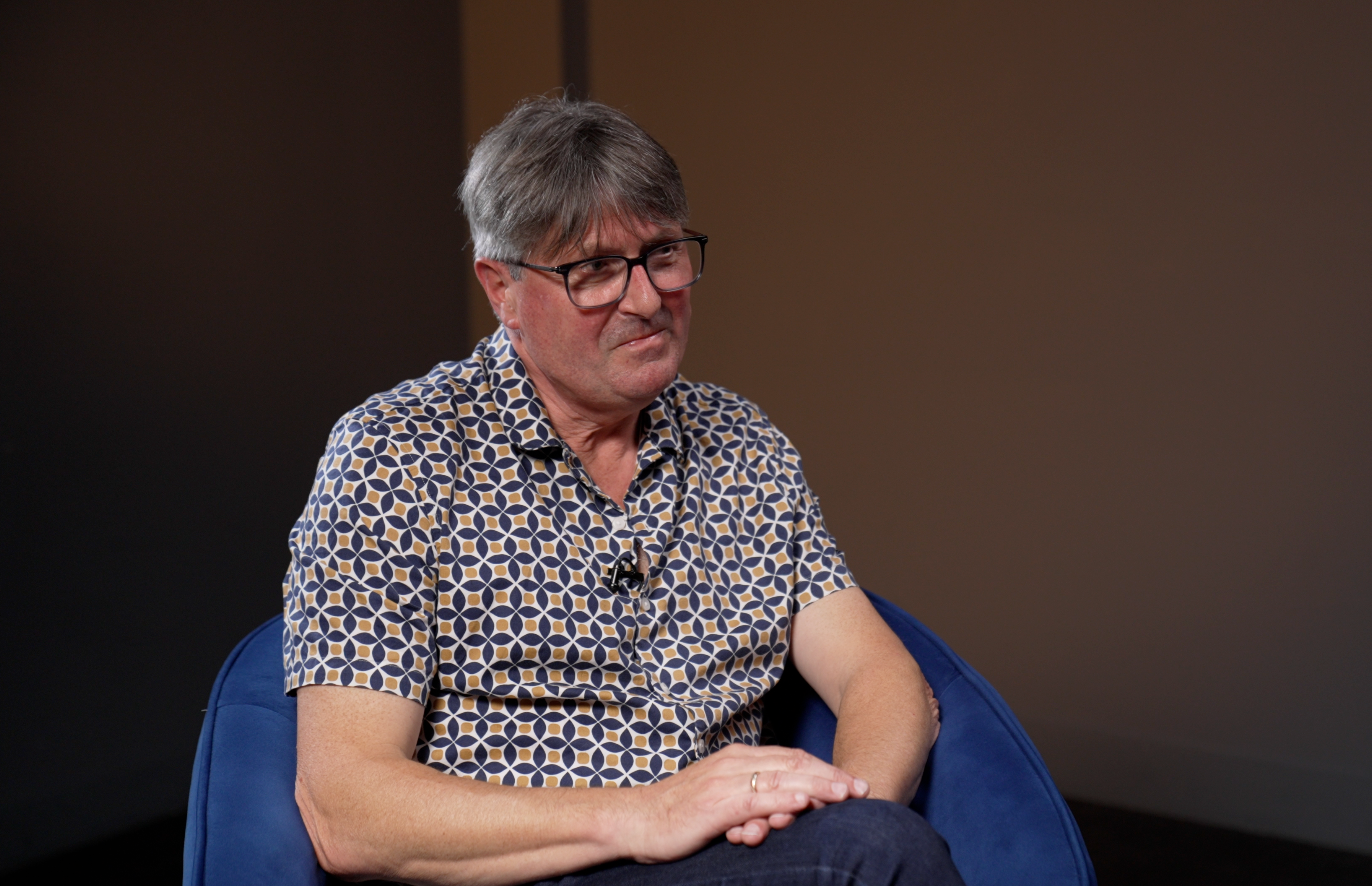
His own ideas frequently emerge while travelling, looking out of a train window rather than sitting dutifully at a desk. A thought develops; a phrase attaches itself to it; suddenly there is the beginning of a poem. The work then becomes a matter of discipline, judgement and craft.
Sentimentality and righteousness, he believes, are the enemy of good poetry. Feeling alone is not enough. The poet must find a form capable of carrying it without smothering it.
It is also perfectly acceptable, he insists, not to like reading the 17th century poet John Donne or the other metaphysical poets. Poetry should not be a test of cultural obedience. No one should feel obliged to admire a poem because generations of teachers have declared it great.
The important thing, he believes, is to discover what moves you, surprises you or makes you see something differently. Armitage’s own range is broad enough to encompass ancient epics, contemporary anxieties, popular song and the smallest domestic observation. He is interested in poetry as a living art, not a museum exhibit.
There is, however, one subject that takes him beyond wry observation and professional composure: his father.
The story of Armitage’s journey from probation officer to Poet Laureate is framed by two conversations with him. The first came when the young Armitage announced that he wanted to leave his secure profession and become a poet. The second came decades later, when he had reached one of the most distinguished positions in British literature.
The first conversation was difficult. His father worried that his son might abandon a respectable career for an uncertain existence, disappearing into Bohemia and ending up destitute.
“I think we sat down, and I thought, ‘Here we go.’”
There was no guarantee that poetry would pay. Armitage’s employers offered him a year away, with the possibility of returning if writing failed to provide a living. It was a safety net, but the decision still required courage. He was stepping away from the world he knew towards something he could not yet see clearly.
My father cried when I told him I was the next Poet Laureate
Then came the years of work, the books, the readers and the recognition. In 2015, he was elected Professor of Poetry at Oxford, a position that placed him at the heart of the academic establishment. In 2019, he became Poet Laureate.
He was working at Princeton in America when he received the call confirming the appointment. He telephoned home.
“I said, ‘I’ve got something to tell you.’ And he said, ‘What?’ And I said, ‘I’m going to be the next Poet Laureate.’”
There was a silence. Then he heard his father crying.
“He was a man of few tears, I should point out.”
His mother could be heard fussing in the background. Eventually his father recovered enough to speak.
“If your granddad had been alive today, this would have killed him.”
Armitage pauses over the memory. The story is funny, touching and deeply revealing. His father’s response was not simply pride in an impressive title. It was the release of years of worry, the recognition that a decision which had seemed reckless might, after all, have been right.
“It was, ‘I told you it would be okay.’”
He had wanted to prove that the gamble was justified, that becoming a poet was not an act of foolishness. He had wanted his father’s approval.
“I always wanted his admiration and affection.”
His father died a couple of years after the appointment. When Armitage talks about him now, the conversation changes. The wit remains, but it can no longer protect him.
I always wanted my father’s admiration and affection
He begins to well up. His voice catches; he pauses, visibly fighting the emotion. The loss is so immediate that, for a moment, it seems almost to overwhelm him. This is not the controlled melancholy of a man discussing grief as a literary subject. It is grief arriving in the room, taking possession of the conversation.
“He was the centre of the solar system of the family,” he says.
The words seem to carry him back to the structure of his childhood, to the man whose presence organised family life and whose approval had mattered so much. Without him, the whole system shifted.
“It was a peculiar shifting of roles and orbits and gravities.”
It is an extraordinary image, both scientific and intimate. The death of one person alters the gravitational pull on everyone left behind. Life continues, but the centre has gone.
Armitage struggles to contain his emotion as he describes it. There is no performance in the moment, no neat literary resolution. He is simply a son talking about his father, feeling the full force of what he has lost.
And then the poet’s instinct returns, not to suppress the feeling but to understand what language can do with it. He explains how poetry is like hard carving or carpentry and is exacting and in compromising, especially when writing about anything emotional.
“There’s no good me blubbing all over the page, ’cause then it’ll just be handing over some big mush.”
The remark is wry, almost brisk, but it contains the essential distinction between emotion and art. The feeling must be allowed to exist; the poem must nevertheless be made. It must find a shape that lets a reader enter the experience without being told what to feel.
That is the paradox at the heart of Armitage’s work. The emotion must be genuine, but sentimentality can destroy it. The poet must be vulnerable enough to feel, and disciplined enough to make something from the feeling.
Armitage’s years in the probation service helped give his poetry its social breadth. He encountered lives marked by violence, deprivation and confinement. He sometimes became over-involved, he says, and the work could be emotionally scarring.
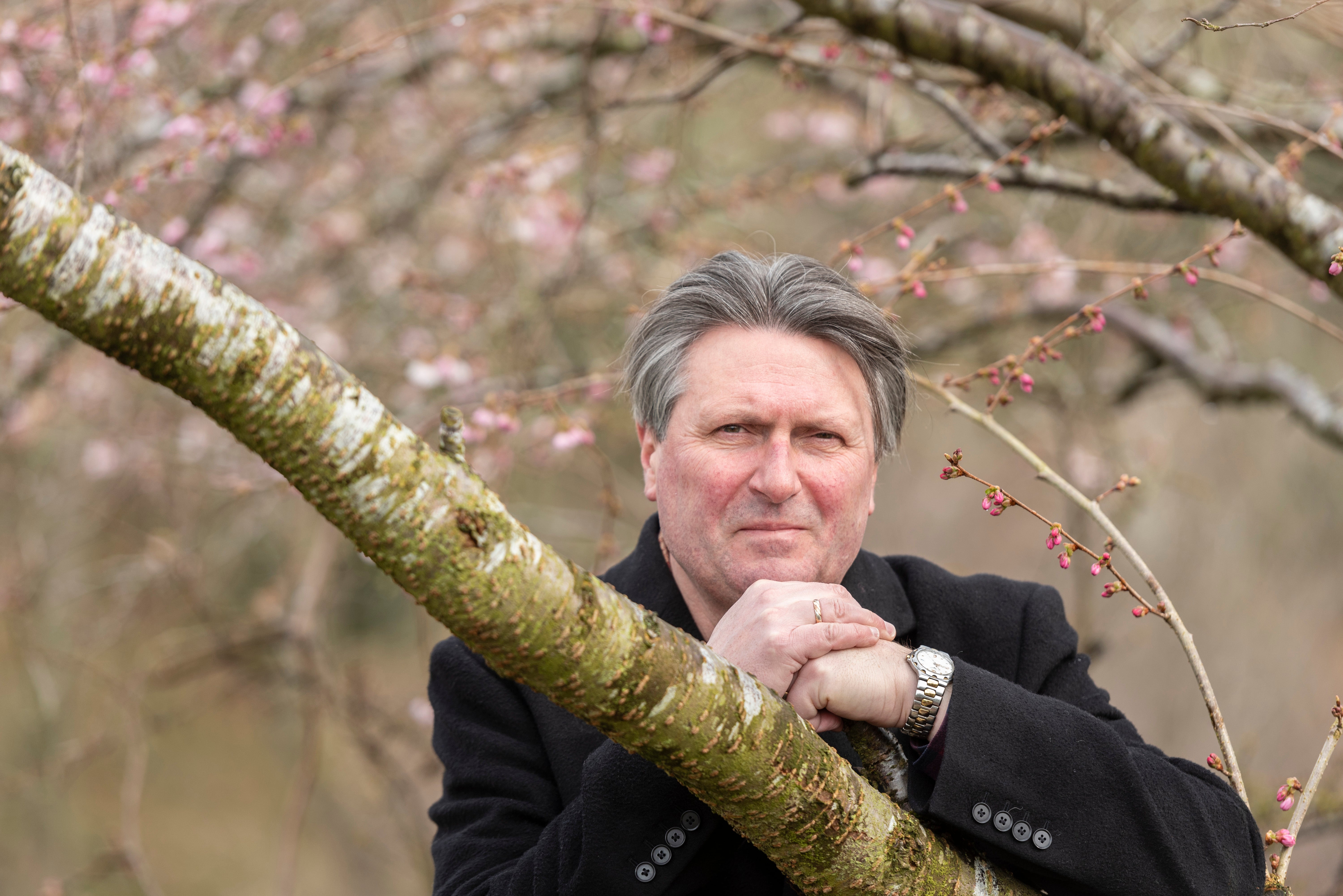
When somebody suggested that leaving probation meant he would no longer be living in the real world, he responded sharply.
“Is that the real world? You know, is driving around Greater Manchester looking at cigarette burns on babies, is that the real world? Is spending time with people who are serving life sentences in solitary confinement in Wakefield Prison, is that real life?”
The challenge remains pertinent. Why should one kind of existence be considered more authentic than another? Poetry need not be detached from experience. It can carry the voices, the discomfort and the contradictions of the world into a different kind of attention. “Someone said to me, ‘Aren’t you worried you’re not going to be living in the real world anymore?’ That I was going to become this lotus-eating aesthete lounging around in a Victorian night smock and eating cream cakes every day and penning the odd sonnet!”
Armitage has never been content to leave poetry on the page. As Poet Laureate, he has written about the deaths of Prince Philip and Queen Elizabeth II and the coronation of King Charles III. He is fascinated by moments when a nation finds itself looking in the same direction.
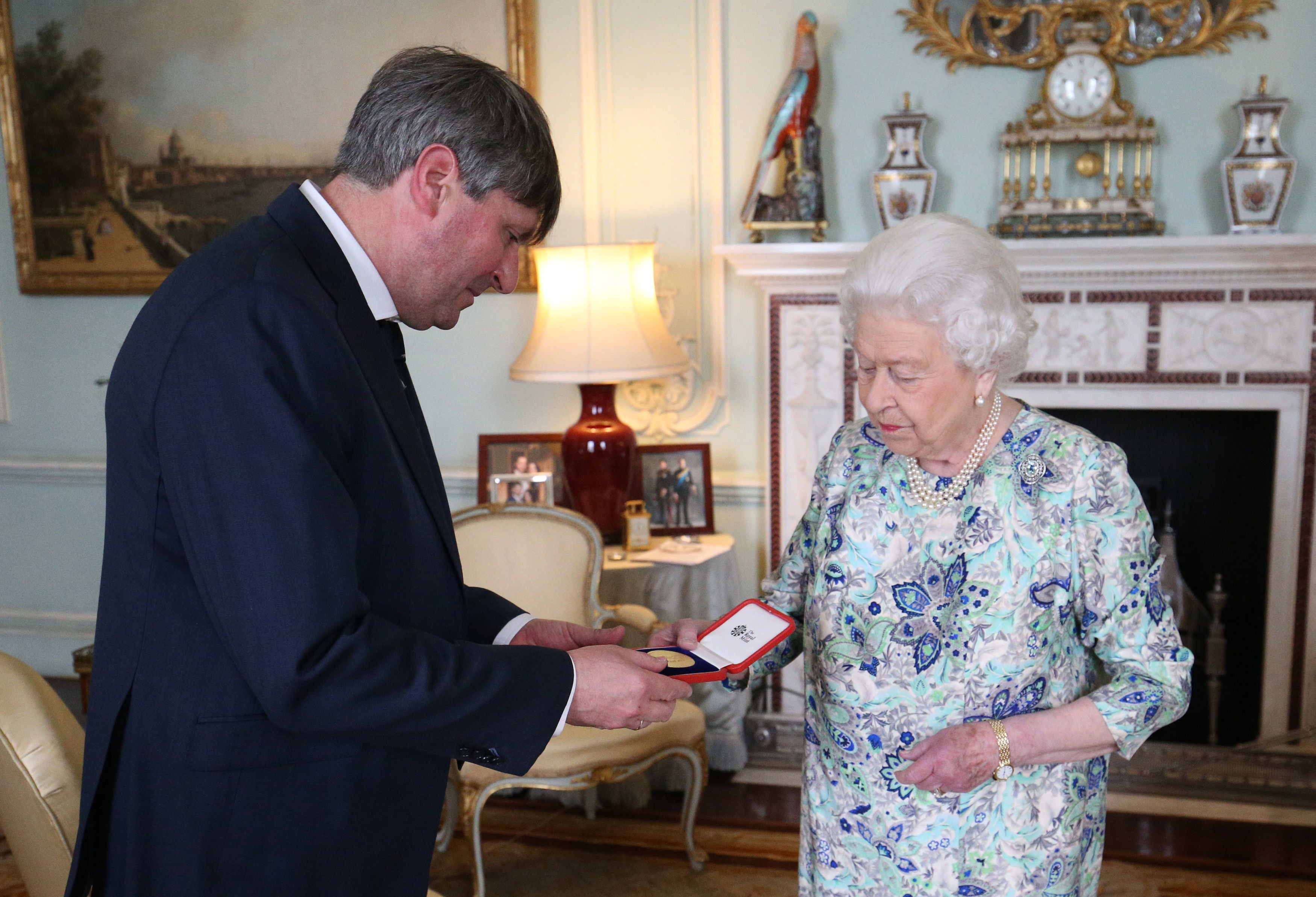
“I was this sleepy, almost comatose student, and then fast-forward 50 odd years and I am at the Queen’s funeral and I’m at the Coronation,” he says. “I was thinking about Samuel Pepys, who was at the coronation of Charles II, and his witness account of that. And I just thought, these are great moments to witness and to document, but also to approach in my own way with my own kind of poetry.”
“There’s a great energy around that that I want to tap into.”
He sees the role not merely as a ceremonial obligation but as an opportunity to respond to events that occupy the public imagination. The challenge is to make a poem rather than a piece of official prose.
His guiding principle is that “the idea is the problem and the poem is the solution”.
The idea may be an ancient king’s terror of death, the death of a parent or the strange fact that the body is constantly shedding traces of itself. The poem is the attempt to make that idea live.
His appointment also extended a career built on communicating poetry to people who might not otherwise seek it out. He has taught, broadcast, performed and travelled relentlessly. His years as Oxford’s Professor of Poetry did not turn him into an academic speaking only to academics; nor has becoming Poet Laureate made him abandon the directness of his Yorkshire voice.
He remains funny about the business of being a poet, alert to pretension and suspicious of the idea that poetry belongs to an exclusive club. His intelligence is not a barrier he places between himself and his audience. It is the means by which he finds a way through.
Before he became a writer, Armitage had barely travelled, despite studying geography. He imagined a writing life spent in a back bedroom, perhaps eventually earning a window to look out of.
Instead, poetry has carried him from Yorkshire to Tasmania, from China to the Arctic, into universities and radio studios, village halls and international festivals.
“I always wanted a passport that said poet in it.”
He has become one of the great public advocates for poetry: a writer prepared to take it wherever people will listen, rather than wait for them to come to him. His accessibility should not be mistaken for simplicity. He knows the traditions, the technical demands and the risks of the art. He also knows that a poem has failed if its supposed sophistication prevents anyone from feeling its force.
His ambition is democratic, but never merely populist. He wants poetry to be open to everybody because he believes everybody has experiences that poetry can illuminate.
That conviction brings us back to Gilgamesh. Four thousand years separate the clay tablets from the modern reader, yet the king’s grief remains legible. The epic survived the disappearance of the world that created it. A scholar’s exhilaration brought it back into view; a poet’s imagination made it speak again.
The same impulse operates in Armitage’s most personal work. His father is gone, but language can preserve something of the man and the relationship. A shaving basin becomes a meditation on mortality. A fleeting thought becomes a poem. A few words, carefully arranged, become a place where another person can recognise their own life.
As we exchange examples of short poems, the pleasure is immediate: the little surprise of a phrase, the pleasure of a rhyme, the discovery that an ordinary object can suddenly become something else.
He quotes “Fleas” by Strickland Gillilan – “Adam/Had ‘em” – and I riposte with Ogden Nash’s Death of A Waiter: “By and by,/God caught his eye.”
As well as humour, he sees a sense of possibility. Nothing is too small to begin with. Nothing guarantees that the result will work. The satisfaction lies in trying.
For Armitage, this is poetry’s enduring joy: the chance to make something where there was previously nothing, and to make it matter to somebody else.
He can take us from a clay tablet to the cosmos, from a bathroom basin to a father’s deathbed, from a joke to a moment of almost unbearable sadness. He does not ask us to admire poetry from a distance. He wants us to experience what it can do.
The two conversations with his father remain the emotional bookends of his life as a poet: the first, when he feared he might disappoint him; the second, when he could finally tell him that the gamble had worked.
Between them lies a life transformed by language.
And behind the honours, the travels and the ancient epics is a simple human desire: to make the people we love proud, and to know that words matter as much and can last several millennia.