








Want to bookmark your favourite articles and stories to read or reference later? Start your Independent Membership today.
Join today
Already a member?
Log in
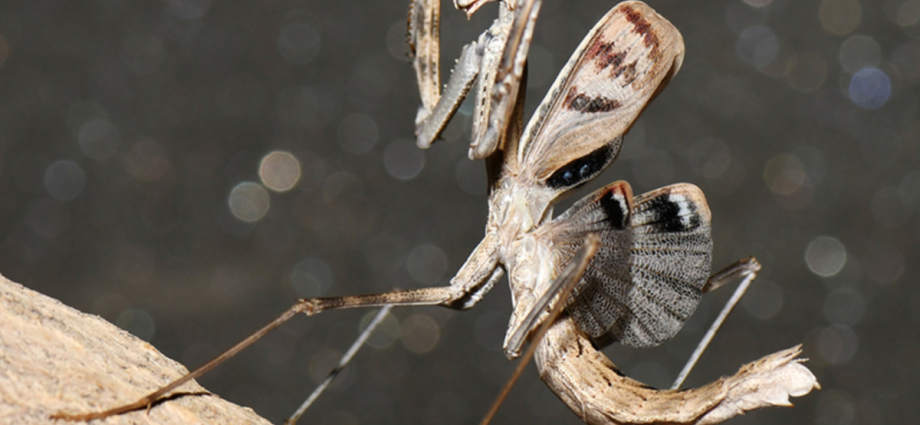
Scientists discovered a new praying mantis species hiding in plain sight in the oak forests of western Iran, shedding light on the biodiversity of the world’s most complex borderlands.
Researchers surveying the forests of the Lorestan province collected a praying mantis that, upon closer inspection, turned out to be a species entirely new to science.
The mantis was named Rivetina archibaldi, honouring renowned conservationist George Archibald, who devoted over half a century of his life to the protection of wildlife. In particular, Dr Archibald played a key role in saving several crane species from extinction and promoting their conservation across continents.
“The name honours his remarkable contribution to avian conservation and his inspiring legacy in global ornithology,” researchers said in a study detailing the discovery in the Journal of Orthoptera Research.
.png)
The new species was identified based on a male specimen collected from an oak forest in Pol-Dokhtar, located at an elevation of 1,128m, in June 2016.
It belongs to the family Rivetinidae, a group of predominantly ground-dwelling mantises found across the Mediterranean Basin, Western Asia, and Central Asia.
Unlike their well-known European cousins, the species of Rivetina mantises are never green, run rapidly across the ground, and shelter beneath stones.
So far, eight Rivetina species and subspecies are known from Iran.
Scientists suspect many more species remain undiscovered as most are morphologically similar, uniformly colored, and easily confused.
-and-female-(B).jpeg)
Researchers collected juvenile mantis specimens from the ground beneath oak trees, reared them until adulthood, and subjected them to rigorous scrutiny, comparing them against published descriptions of specimens from Iran, Yemen, and Palestine.
They found that while the Lorestan mantises fit the genus Rivetina, they exhibited features that set them apart from every other Middle Eastern specimen.
One specific difference was in the insect’s metazone, the elongated section behind the front legs and leading toward the wings.
Males averaged about 55.5mm in body length, with wings that failed to reach the abdominal tip, and females 56.4mm with darker greyish-brown.
The discovery points to a research gap as regions in western and southern Iran, close to the borders with Arab nations, remain neglected in species identification studies.
Scientists argue that only community-based species discovery and conservation, grounded in local stewardship, can safeguard the mountainous region’s biodiversity.