










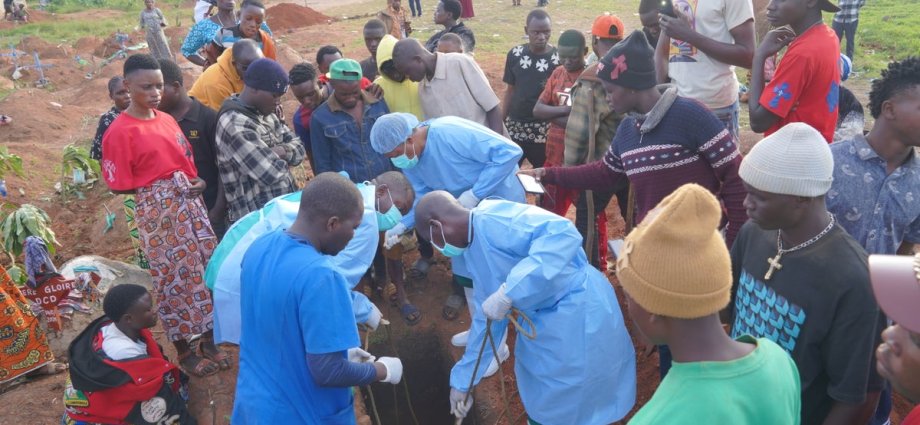
One hundred days into the Ebola outbreak in the Democratic Republic of Congo (DRC), the response is still struggling to keep pace as the virus overwhelms the systems trying to contain it.
The death toll has accelerated sharply in recent weeks, with roughly half of the more than 2,500 deaths recorded in the past 20 days. It is the deadliest ever outbreak in the DRC, as well as the fastest growing anywhere, with more than 5,000 confirmed infections in just over three months.
Ebola has now been detected in an area bigger than France, while more than half of deaths happen outside treatment centres. It suggests many are dying in their communities without receiving care, aid agencies have warned, allowing the virus to continue to spread before cases are detected.
Around four in five new infections are also being detected outside known chains of transmission, meaning the epidemic continues to shift beyond the reach of existing surveillance. “This epidemic continues to spread, moving faster than the response can keep up,” Dr Javid Abdelmoneim, international president of Médecins Sans Frontières (MSF), says.
This Ebola outbreak, caused by the rare Bundibugyo strain for which there is little recognised treatment and no cure, has surpassed the total number of cases recorded during the DRC’s previous worst outbreak, which lasted two years from 2018 to 2020. It is also spreading significantly quicker than the worst Ebola crisis ever, the West African Ebola outbreak of 2014 to 2016, which killed more than 11,000 people. That outbreak took a year to reach 2,000 deaths.
It is leaving almost two children a day orphaned, with at least 180 children who have lost both parents or primary caregivers, according to Save the Children. They face increased risks of trafficking, exploitation, violence, forced recruitment by armed groups and severe psychological distress.

As the outbreak grows “exponentially”, the response is only “covered for the next weeks, and very soon funding will run out”, the United Nations’ senior Ebola coordinator Julien Harneis adds at a press briefing.
International pledges to help with the response have exceeded the amount requested, he says, but less than half of the money has actually been disbursed. Response efforts have been hampered by conflict, displacement, weak health infrastructure and abrupt cuts to global aid, such as by the United States Agency for International Development (USAID) last year.
Dr Manenji Mangundu, Oxfam’s country director in DRC, says: “This is a disaster unfolding right before our eyes, and it is the result of political choices. We urgently need proper funding to be restored. Without it, the virus will continue to spread, and more lives will be lost.”
Rory Stewart, who previously served as the UK’s Africa minister, has said of the widespread aid cuts: “Pandemic preparedness – in other words, dealing with an Ebola outbreak or even a new version of a Covid outbreak – requires lots of people on the ground in places like DRC or Uganda who are able to detect cases, respond to them, quarantine and prepare responses.”
“It’s all the infrastructure behind that which is being undermined at the moment. And that’s a real threat, of course, to the world,” he told BBC Radio 4 earlier in the summer.
Mr Harneis is clear that extra support is needed now. “Every delay in funding and implementation makes this epidemic more deadly, more difficult to stop and more expensive. So, we need that international support immediately,” he says.
Case numbers are now rising rapidly beyond the epicentre of Ituri province, with North Kivu province experiencing particularly high levels of mortality and mistrust in the response, according to MSF.
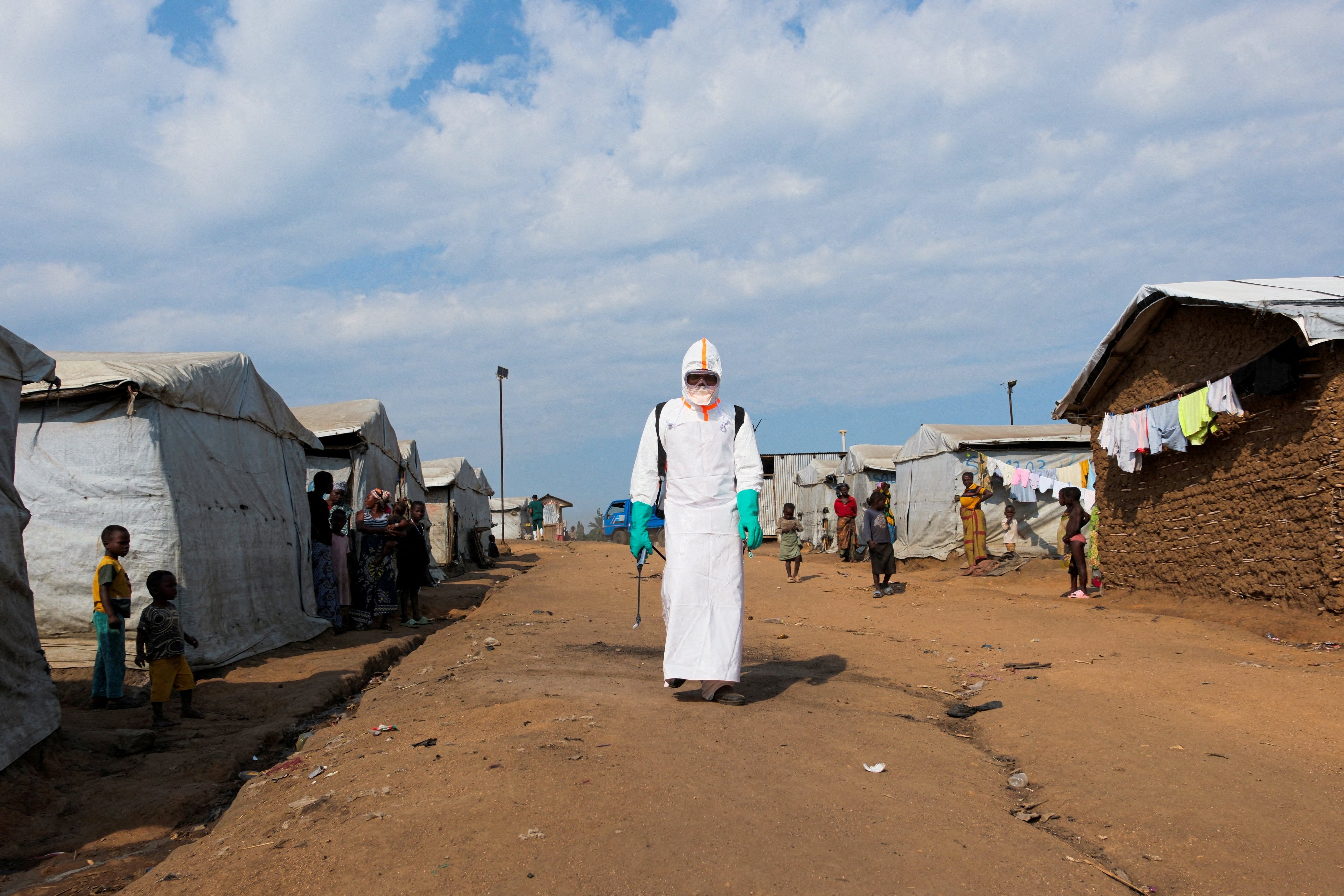
Although the outbreak was officially declared on 15 May, the World Health Organisation (WHO) believes the virus may have been spreading undetected for weeks before, since as far back as February.
The “brutal” operating conditions also continue to impede the progress of frontline workers, Mr Harneis warns. More than 160 healthcare workers have also contracted Ebola, with 43 dying, in a country whose health system was already struggling.
Isolation centres and other health facilities have also increasingly become targets amid widespread misinformation, with more than 260 attacks on health workers reported in the past six months, and eight being killed.
Although the outbreak initially affected more men, largely because it originated in a mining area, the demographic profile of the epidemic has since shifted. Women now account for 53 per cent of all reported cases, with the greatest burden falling on women from 18 to 49 years old. Oxfam says this disproportionate impact is driven by women’s roles as primary caregivers for sick family members, their involvement in traditional burial preparations, and their representation among frontline healthcare workers, particularly nurses and midwives.
Women and girls in the DRC already faced significant maternal health risks before Ebola emerged, and now these risks have intensified. The outbreak threatens the estimated 63,700 pregnant women living in affected areas.
Already compounded by conflict and displacement in the DRC, the consequences of the outbreak are now also spreading to food and livelihoods, according to the International Committee of the Red Cross (ICRC). Delayed payments have left some frontline workers unpaid and caused widespread strikes.
“Violence and armed conflict have forced many families to abandon fields further from their homes and farm closer to where they live, reducing food production and limiting the availability of food on the market,” says Abdoule-Karim Diomande, ICRC head of programmes in DRC. “In Ituri, restrictions on cross-border trade introduced as part of preventive measures for Ebola have added to these pressures.”
The restrictions are part of efforts to contain the outbreak to the DRC, with preparedness activities in neighbouring countries like South Sudan, the Central African Republic, Burundi and Uganda, which has declared itself Ebola-free after discovering a small number of cases in June.
While there have been trials for a vaccine that could help limit the severity of the disease, the WHO warns that it is “not the solution to everything” and that “community outreach is the main tool”.
With active conflict ongoing, armed groups active and one million people displaced in Ituri alone, the outbreak cannot be treated as a standalone medical emergency, according to the Danish Refugee Council.
“In active conflict zones, traditional health measures simply fall apart,” says Sarah Chieh-Wen Chiang, acting DRC director for the council. “Conflict forced these people from their homes. Violence followed them into the camps. Now, an untreatable virus is spreading through overcrowded sites. The world must not look away.”
This article has been produced as part of The Independent’s Rethinking Global Aid project