

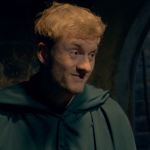
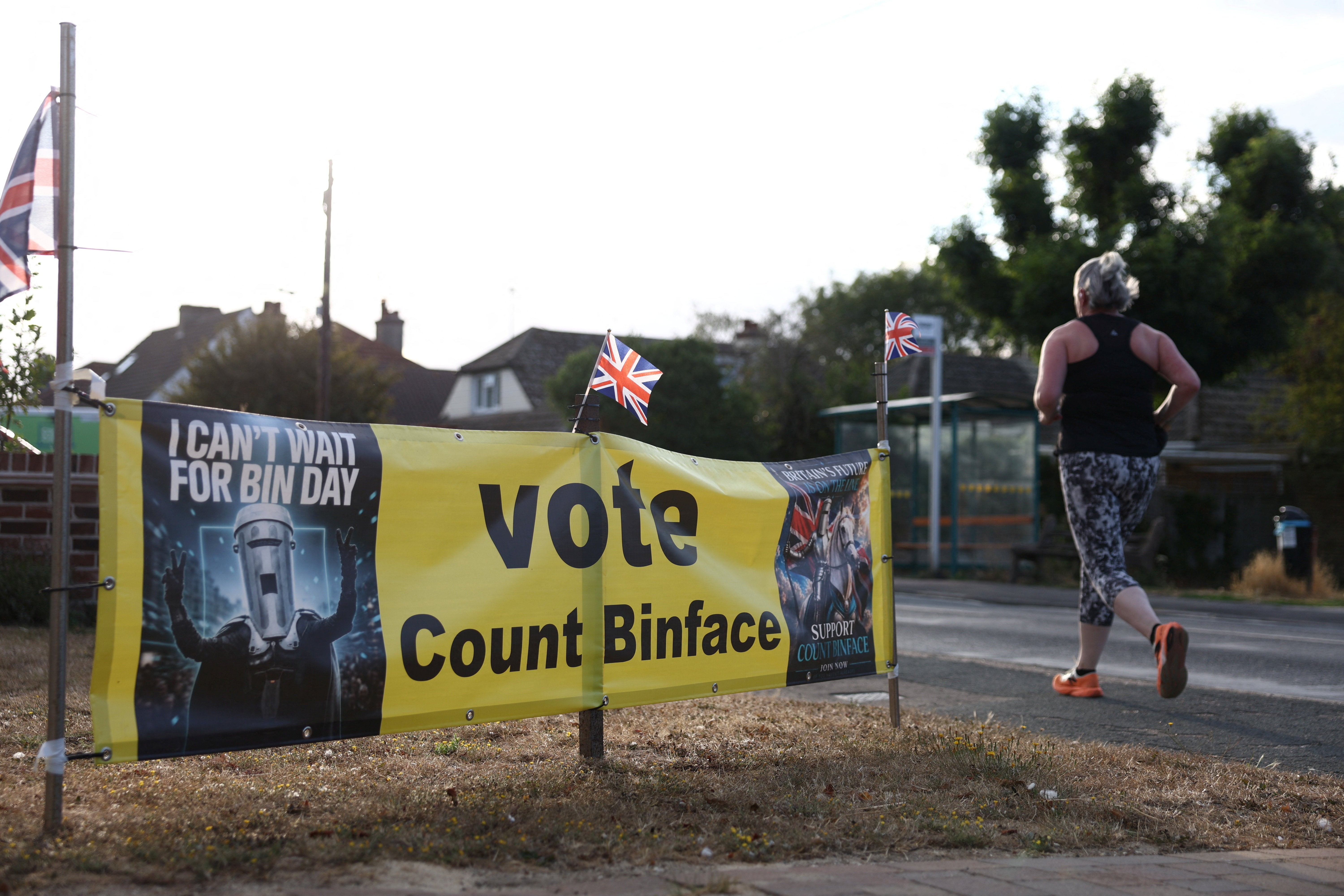
The by-election campaign in Clacton, with a man with a bin on his head a favourite among the record 34 candidates, was not short of a few surprises.
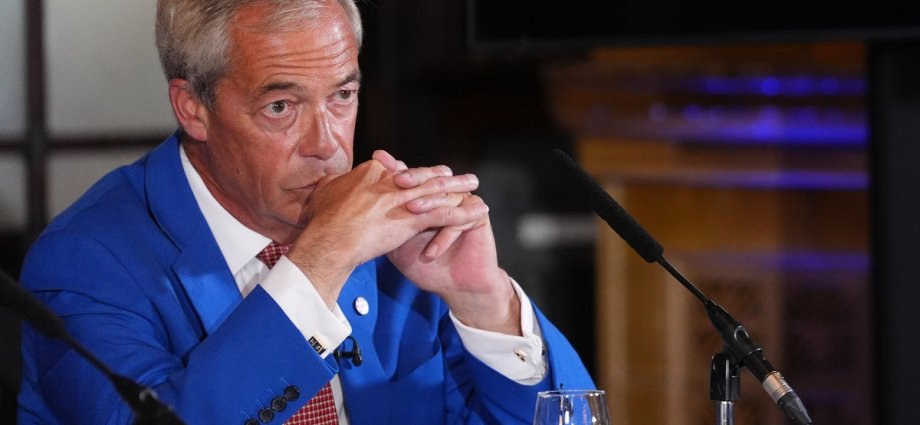
But news that Nigel Farage has reclaimed his seat will come as a shock to no one.
The Reform UK leader will hail today’s result in Clacton as a victory against the establishment after taking 62.8 per cent of the vote, with his chief rival, Count Binface, in a distant second with 26.71 per cent.
But while he may have won the battle for the constituency of Clacton, he still risks losing the fight for the country.
Mr Farage’s approval rating has plummeted to the lowest since the 2024 general election, while Labour has leapfrogged Reform in the polls to lead for the first time since March 2025, helped by the boost in support since Andy Burnham became prime minister.
In fact, his ‘stunt’ by-election may actually have made his situation worse – and left his return to parliament potentially short-lived.
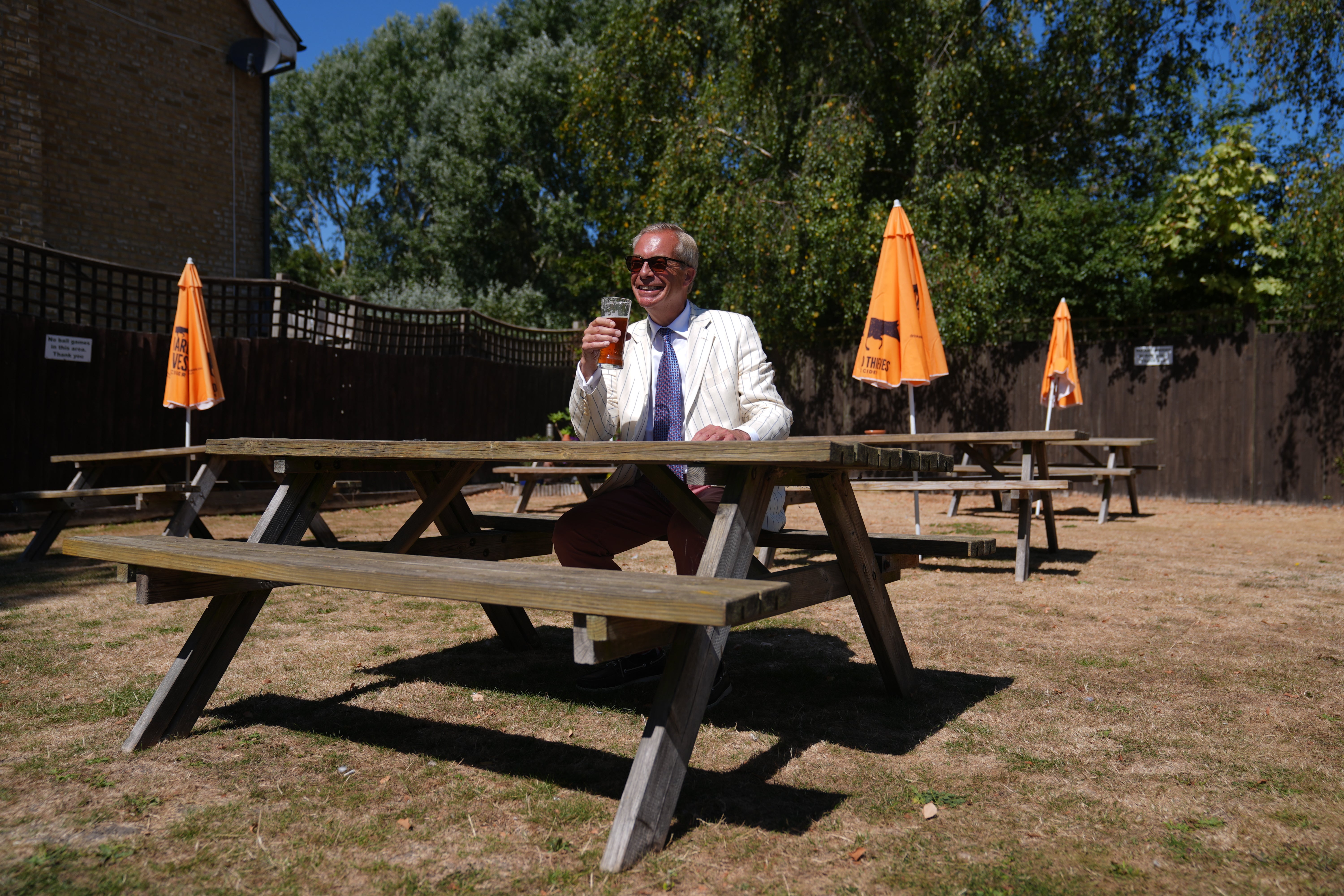
One of the strangest elections in recent years began when Mr Farage dramatically quit as an MP, just two years into the job, at the start of the summer.
Facing at least one probe over unregistered donations of cash and support, he accused his Westminster opponents of using sleaze investigations as a “political tool” against him and insisted he had done nothing wrong.
At the time, he declared: “I’ve decided that the people of Clacton should be the judges of my actions. This will be a people versus the establishment by-election.”
The problem for Mr Farage, of course, is that the people of Clacton are not the only judges.
That baton falls, initially at least, to Daniel Greenberg, the Parliamentary Commissioner for Standards. The by-election has not halted his investigation into a £5m donation from the crypto billionaire Christopher Harborne, which Mr Farage has struggled to explain. It merely paused it.
And the probe is expected to restart within hours now the result is known.
If the commissioner finds Mr Farage has broken strict parliamentary rules, he can trigger a series of steps that lead to a recall petition in Clacton. The signatures of just 10 per cent of voters would be enough to launch another by-election – and see Mr Farage fighting for his parliamentary career all over again.
Second time around, the voters of Clacton could start to tire of the Farage saga.
When The Independent visited the town last week, locals said they felt they had been made the butt of a joke that does little to serve their community.
Mr Farage will also face stiffer competition in any future by-election.
On Thursday the Reform leader’s main opponent was comic candidate Count Binface, after all the major parties boycotted what was described by former prime minister Sir Keir Starmer as a “desperate political stunt”.
However, Tory leader Kemi Badenoch has already pledged that her party will stand a candidate next time around. She wrote an open letter to the residents of Clacton earlier this week, telling them that they deserved better, and promising them that if there is another election, a Tory will be on the ballot paper.
No matter how the parliamentary process ends, the scrutiny that Mr Farage is facing will also not go away.
If anything, his shock decision to call a by-election has probably intensified it. That matters for the Reform leader, because he has made clear just how much he dislikes the attention on his affairs.
When he quit as an MP, he extraordinarily publicly confirmed reports in this publication that he had discussed walking away from politics altogether as pressure grew over his undeclared donations.
That press conference followed weeks of speculation about his future.
The usually headline-grabbing Reform leader had seemingly been sent underground over the previous few weeks by questions about the £5m donation. He even cancelled a high-profile appearance on the BBC’s flagship Sunday morning political programme at the last minute, leaving Laura Kuenssberg to tell startled viewers: “His team told us, he’s changed his mind”.
That was followed by weeks of silence from the ex-Ukip leader.
At the same time, tensions were building behind the scenes within Reform. They bubbled over when not one but two senior Reform figures, including the party’s former chairman Dr David Bull, went public with their call for Mr Farage to temporarily step back from political life.
It is in that context then that his decision to risk it all by quitting as an MP and forcing an election should be seen.
With the Clacton by-election, Mr Farage bet the house in a bid to win the war.
But he may find that he has merely survived the first skirmish.