










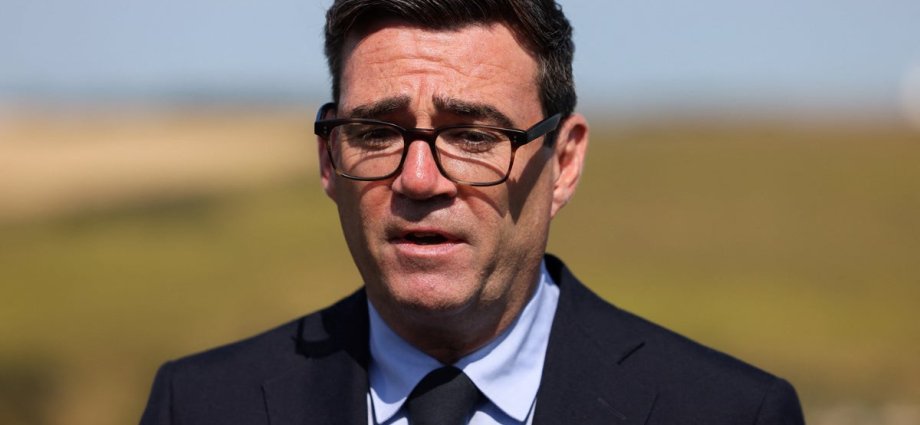
The prime minister has vowed to resolve the “long-running injustice” of indefinite jail terms as part of measures to ease prison overcrowding and stop PC Andrew Harper’s killers from being freed early.
Andy Burnham said he is “increasingly confident” that plans to free up prison cells will mean the number of prisoners being released early can be reduced.
Options being considered include the release of “lower risk” prisoners serving Imprisonment for Public Protection (IPP) jail terms, he said on Tuesday. The comments offer fresh hope for prisoners trapped on the open-ended sentences which were outlawed in 2012.
The Independent has long campaigned for the unjust jail terms – which have left thousands languishing without hope of release – to be reviewed.
In a statement issued on Facebook, he said he has asked justice secretary Alex Norris to fast-track a plan to create more headroom in the prison estate.
The plan will be based “on a range of options”, Mr Burnham said, including “increasing the rate of removal of foreign national offenders from the prison estate to their country of origin; finding an early resolution to the long-running injustice of IPP sentences, which could allow for the release of lower-risk prisoners; and making greater use of the entire prison estate including using the female estate for male offenders”.
He continued: “I am increasingly confident that a more focused approach along these lines will allow us to reduce the number of people released early and, in the case of the most serious offenders like those convicted of the killing of PC Harper, prevent their early release altogether.”
The development comes as the government faces legal action over the jail terms after the United Nations found Britain is unlawfully detaining a number of over-tariff IPP prisoners in a scathing legal opinion issued last month.
The UN Working Group on Arbitrary Detention called for Britain to urgently act in relation to five men handed the jail terms, warning their detention beyond their original tariff amounts to arbitrary detention under international human rights law and they are entitled to compensation.
Lawyers are now preparing to submit a rare habeas corpus legal challenge to the High Court, which will force the government to justify the prisoners’ continued incarceration to senior judges.
The open-ended punishments were scrapped in 2012, but not retrospectively, leaving thousands languishing in prison without a release date for years beyond their tariff, including some for minor crimes. Once released, many find themselves trapped in a cycle of indefinite recall for minor breaches of strict licence conditions.
Despite 96 prisoners taking their own lives in custody after losing hope of ever getting out, successive governments have resisted calls to resentence those still on the jail term.
Four of the five cases condemned by the UN are still incarcerated, including Leroy Douglas, who has served almost 20 years without release for street robbery of a mobile phone; Abdullahi Suleman, who is still in custody 20 years after he was handed an IPP for a laptop robbery; Wayne Williams, who has spent more than 19 years in prison without release for a 23-month jail term for attempting to injure a police officer in a fight; and Shaun Lloyd, 39, who was recently hauled back to prison for the fifth time, having served more than 12 years for two street robberies.
Sadly, Joshua Mcrae, died in prison aged 34, having served more than 16 years for a four-year tariff for grievous bodily harm.
More follows on the breaking news story…