










Want to bookmark your favourite articles and stories to read or reference later? Start your Independent Membership today.
Join today
Already a member?
Log in
Having explored life in high security men’s and women’s prisons, for its third series, the BBC’s Time is turning its lens on a young offender institution. And with British prisons in an ever-deepening crisis, writer Jimmy McGovern’s relentless and unflinching drama feels more relevant than ever. But when fiction flies so close to reality, does it lose some of its impact? Or do the stakes need to be heightened in order to shock the viewing public?
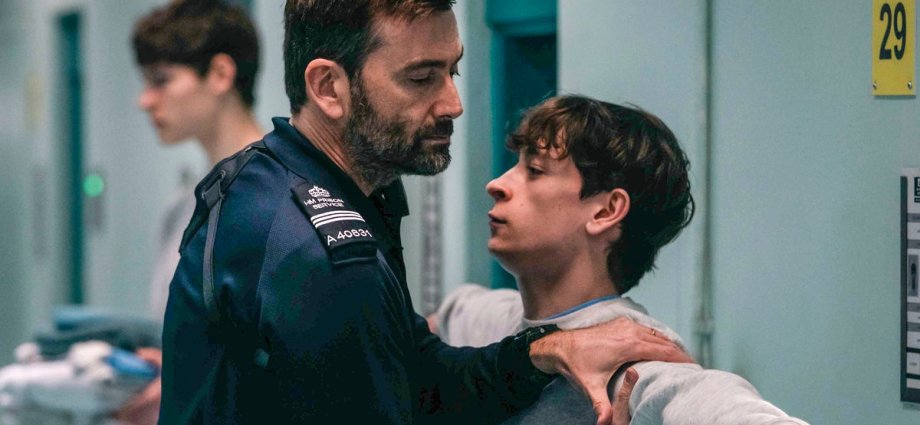
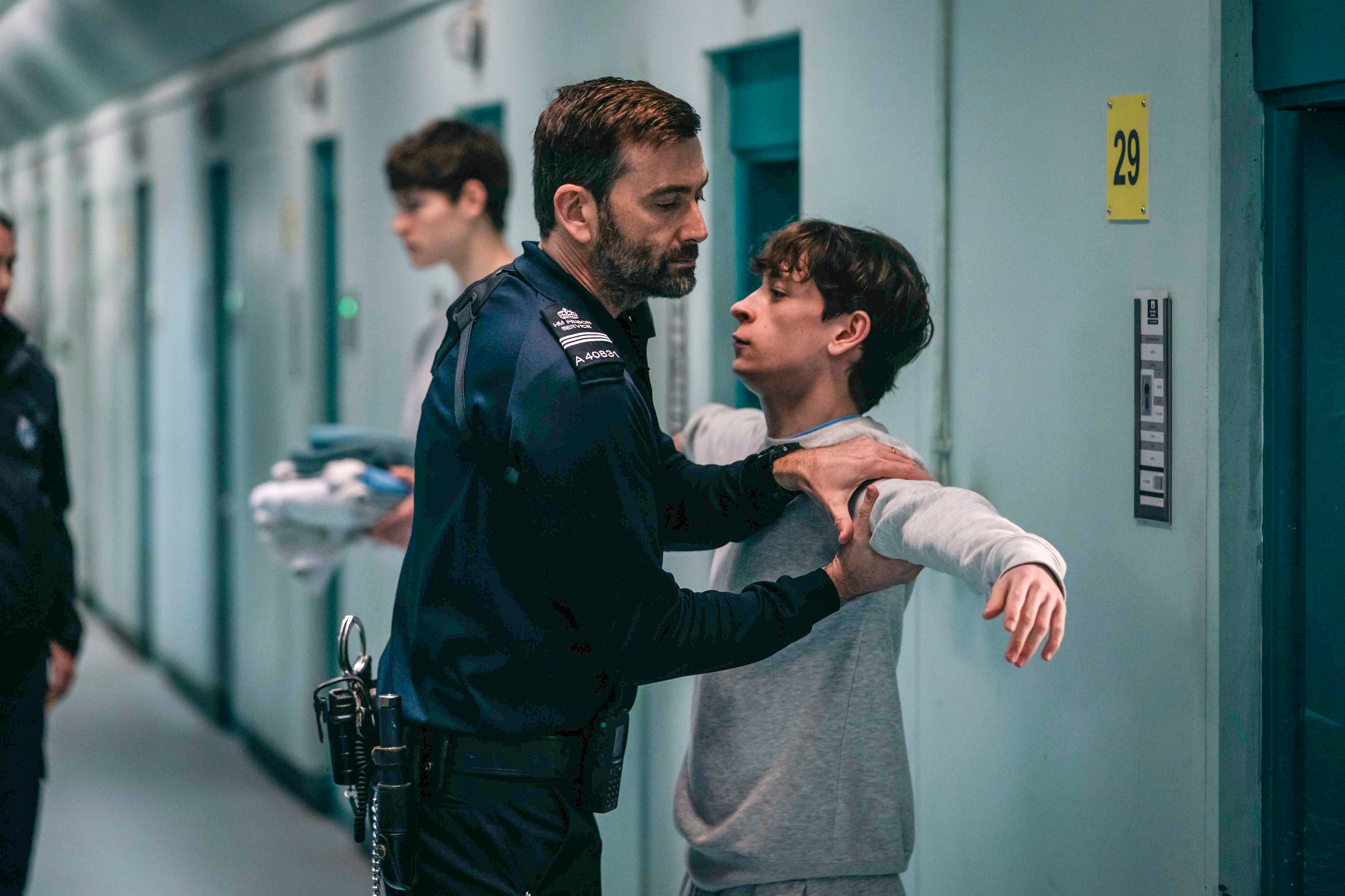
Bobby Bailey (David Tennant) is a guard at HMYOI Alderwick, a secure facility for troubled teenagers, somewhere near Liverpool. His home life, however, is in crisis. He is trying to overcome a drinking problem, and his wife has just left him for another man. In the prison, things are even tougher. New arrivals James (Louis McCartney) and Peter (Ollie McNulty) bring fresh challenges, while a long-standing resident, Christopher (Chukwubuikem Molokwu) is facing identity issues after reconnecting with his birth mother. And then there’s Siobhan Finneran’s Marie-Louise, the itinerant chaplain who ties McGovern’s three series together. But her faith – already sorely tested – takes another battering after a random, tragic act of violence demonstrates the hopeless nihilism of the prison community and the shaky moral framework of the system.
“If we allow them to mix, they’ll attack each other,” comes Bailey’s response to the controversial “keep apart” order, which separates kids prone to conflict. “There’s no way we can do it.” At the same time, Marie-Louise, the conscience of the show, argues that those restrictions are creating unnecessary tensions in the prison. This is the sort of quandary that McGovern does brilliantly. There is not an easy answer (either in real life, or in the world of Time). When prisoners collide, the violence is shocking. “The attack was violent,” Bailey tells his governor, after a particularly gruesome assault, “not the boy himself”. But he doesn’t really believe it. Nor does he believe in the integrity of his colleague Freddie Jennings (Daniel Ryan), even though they must trust their lives to one another every day. Compromise, compromise, compromise. This is the stark reality of systemic underfunding, leading to wide understaffing, in UK prisons.
For the boys, resident in Alderwick, their society is built on unearned machismo. They bark “yes, boss” at Bailey, but their compliance is skin deep. McGovern expertly realises the metastatic despair of young men who can’t see a path forward. Guided by the restrained performances of Tennant and Finneran, the young actors, particularly McCartney, give the ensemble real depth. They are verbose yet inarticulate, brimming with emotion yet unable to find a vent. And, again, McGovern creates a compelling tension. Do you rely on the friends and associates who might keep you safe in prison? Or turn against them in the hope of a fresh start, and risk everything on the outside? For Time, it is these areas – as grey as the great concrete edifice of the prison – that are most productive.
But there is also a tendency to push things towards the extremes. It is reminiscent, for me, of The Pitt, the most acclaimed medical drama in recent years, whose realism was championed by emergency doctors across the world. Yet so much happens on The Pitt that even if each individual storyline is convincing, the concatenation feels implausible. Young offender institutions have high rates of assault and self-harm, but fatal incidents remain rare (in the decade between 2015 and 2025 there were three deaths in the secure estate for children and young people). So, Time is already playing with a premise at the extremes of the prison experience. Over the course of the three episodes, three separate inmates lose parents on the outside, which feels repetitive and designed to extract pathos. And then there’s a third act twist – another shock death – which feels particularly misjudged and gratuitous. It’s a shame because Time does explore the quotidian moral tension of the prison system so well, it shouldn’t need these dramatic contrivances.
This is, I suppose, the compromise of entertainment. Whether it’s the ER of The Pitt or the cells of Time, total realism can feel crushing. This third instalment of Time ends with convenient optimism (and a literal walk off into the sunset), which tempers the rawness but is probably necessary for primetime audiences who want to sleep soundly at night. But, at its most angry, Time is scintillating, urgent television, which acts as a desperate coda to Adolescence. The verdict, Time reminds us, is just the start of another tragedy.