










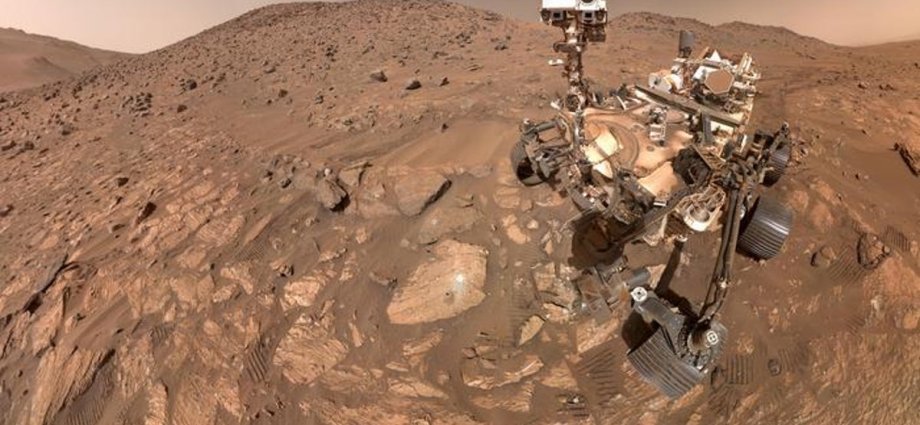
NASA’s Perseverance Mars rover just found further evidence the Red Planet may have supported life billions of years ago.
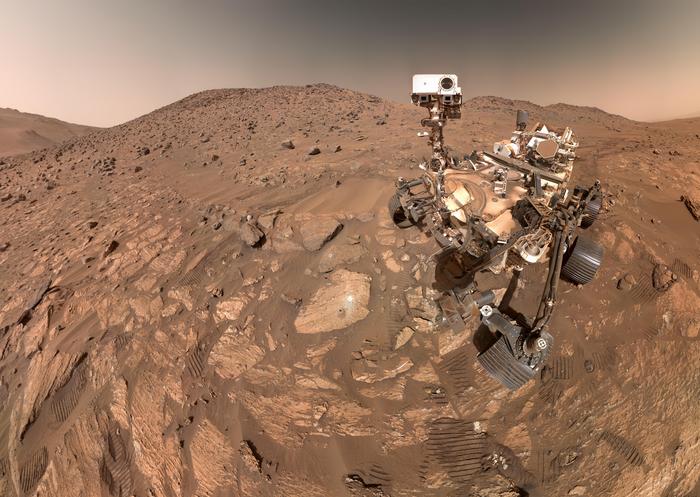
A pair of Martian mudstones the rover collected from the planet’s Bright Angel rock formation in the Jezero crater have complex carbon, one of the building blocks of life, scientists say.
“Measurements of two mudstones show hundreds of organic detections, making this the most robust organic detection in Jezero crater thus far, and, to our knowledge, the only detection of macromolecular carbon on a natural rock surface on Mars,” the researchers wrote in a new study sharing the findings.
The stones were collected in the same location where the rover previously found evidence of ancient microbial life.
Earlier this year, NASA’s Curiosity rover also found never-before-seen organic molecules that the space agency’s Jet Propulsion Laboratory said “renewed confirmation that ancient Mars had the right chemistry to support life.”
Curiosity previously found carbon signatures in powdered rock samples it collected on Mars, too. But those were some 2,000 miles away in Mars’ Gale Crater.
The researchers explain that understanding the origin of organic carbon in the Mars rocks is crucial to determining if there was life on the planet.
“Carbon is the primary building block for life on Earth, and all living things are made up of complex organic macromolecules,” co-lead author Ashley Murphy, a researcher at the Planetary Science Institute, told Space.com on Wednesday. “On Earth, [macromolecular carbon] is often found in extremely old rocks and in some cases it is the only organic evidence of past microbial life.”
But they don’t yet know if the carbon in the mudstones was produced by something living or non-living.
The new carbon “could be from meteorites or cosmic dust; abiological processes like hydrothermal reactions; or they could be biological in nature,” planetary scientist Paul Byrne, of Washington University in St. Louis, told Science News.
The researchers used the Perseverance rover’s chemical-analyzing Raman spectrometer instrument to map where carbon was throughout the samples.
“One mudstone’s interior contained organic carbon within a primary silicate-dominated matrix; the other mudstone held organic carbon with secondary carbonate and sulfate minerals. The carbon in both rocks was not too weathered, indicating it may be recently exposed to Mars’ surface – or may be somewhat resistant to radiation and oxidation,” a release from the American Academy of Sciences said.
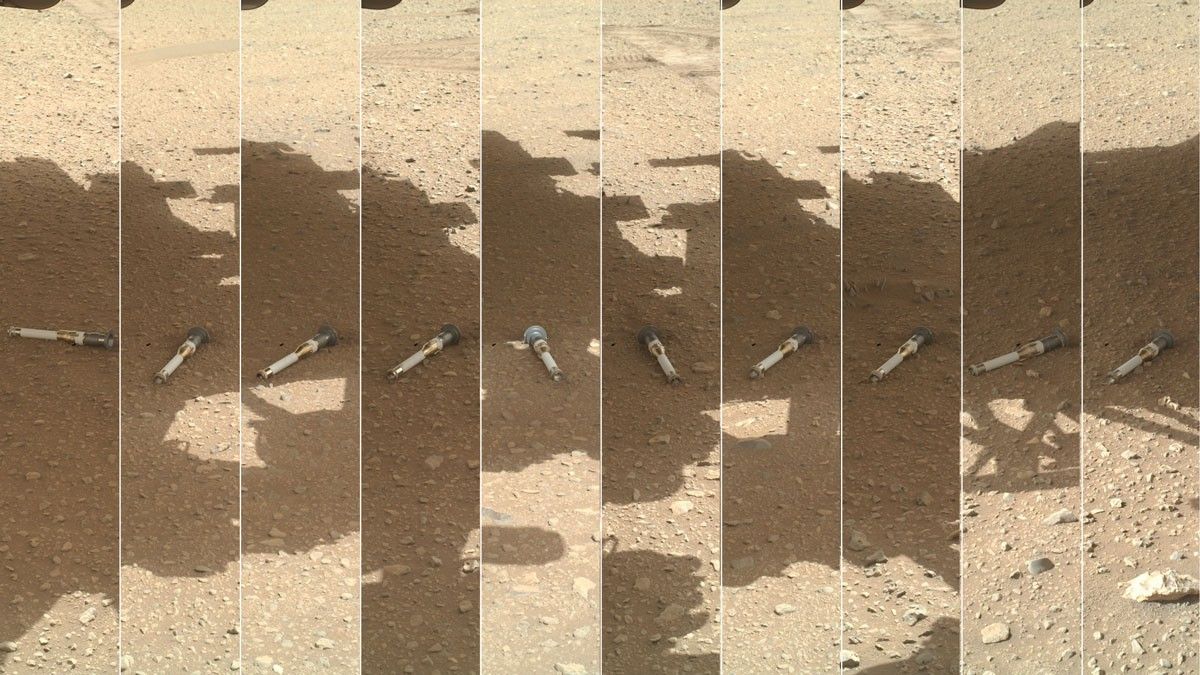
To understand if samples collected by Perseverance are signs of ancient life, they need to be studied back on Earth. The rover can identify the chemical and mineral makeup of areas on Mars, but it doesn’t have the ability to characterize the organic carbon’s make-up.
The stones are a part of dozens of samples Perseverance has collected to be sent home.
When that could happen is anyone’s guess because NASA’s Mars Sample Return program has been overhauled in favor of two cheaper strategies.
A sky crane or a commercial lander could come to collect the samples. Former NASA Administrator Bill Nelson said last year that the return would be set in motion as soon 2035 and as late as 2039.