









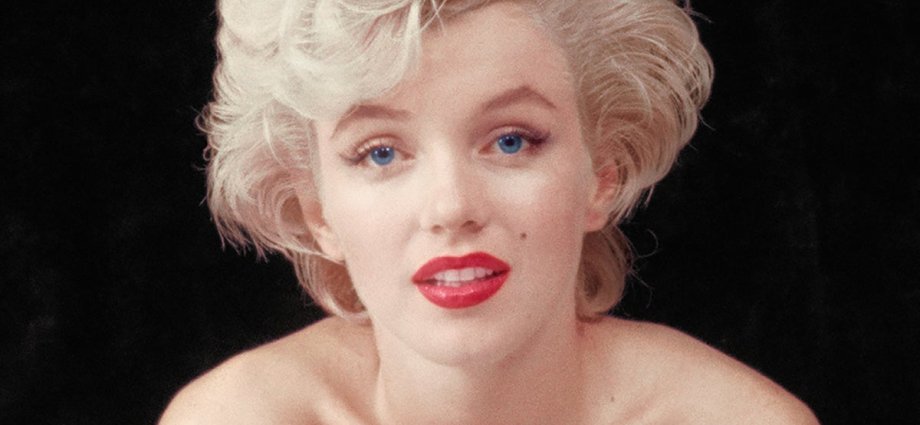
Marilyn Monroe, Death Valley” reads one of the photo captions in the National Portrait Gallery’s new exhibition about the most famous dead woman in history. The image shows a 19-year-old Monroe, her hair brown and in curls, her nose not yet tweaked through rhinoplasty, ascending a rocky cliff edge for the photographer André de Dienes. In another by De Dienes, taken too in 1945, Monroe sits barefoot in the middle of a desert highway. A vehicle speeds downwind along the next lane, meaning she’s directly in the path of any car hurtling towards her. Or is De Dienes’s camera the car in this scenario? Are we?
It feels a bit on-the-nose, doesn’t it? Death Valley, California. A woman scaling something impenetrable. That same woman grinning prettily in the face of certain doom. If the NPG’s Marilyn Monroe: A Portrait does anything, it demonstrates how remarkably easy Monroe’s life was to narrativise, and how easily a little bit of pop-psychology can be applied to every facet of her existence. Norma Jeane Mortensen became Norma Jeane Baker became Marilyn Monroe, as if each new reinvention would fix what was broken. She never knew her father (his identity was only proven, through DNA testing, in 2022), so called each one of her husbands “Daddy”. Letters to the father of her third husband Arthur Miller, some of which are on display here, show that she called him “Daddy”, too. The Spanish-style bungalow she died in – where she accidentally overdosed, or killed herself, or was killed, depending on whom you believe – had a Latin motto inscribed on a plaque outside the front door: “Cursum perficio”, or “Here ends my journey”. Even Ryan Murphy wouldn’t dare try to get away with that one.
Scholars and authors, artists and publicists, studio heads and Reddit sleuths, tabloid hacks, Marilyn herself – all had a go at shaping and tweaking and projecting the story of Marilyn Monroe, in ways that are both thrilling and exhausting. It’s 100 years since she became (briefly) earthbound – she died in 1962 at the age of 36 – and we’re still no closer to a definitive word on her, nor much closer to putting her to bed. We’ve seen photos of her breasts, read copies of her medical records, clicked quickly off blurry snapshots of her corpse when they came up on Google. In its selection of images and the stories behind them, the National Portrait Gallery has attempted to give Monroe back her agency. It aims to reframe her as the architect of her own life story, rather than the subject of it, or the victim. It’s admirable. Occasionally contradictory. Perhaps fruitless.
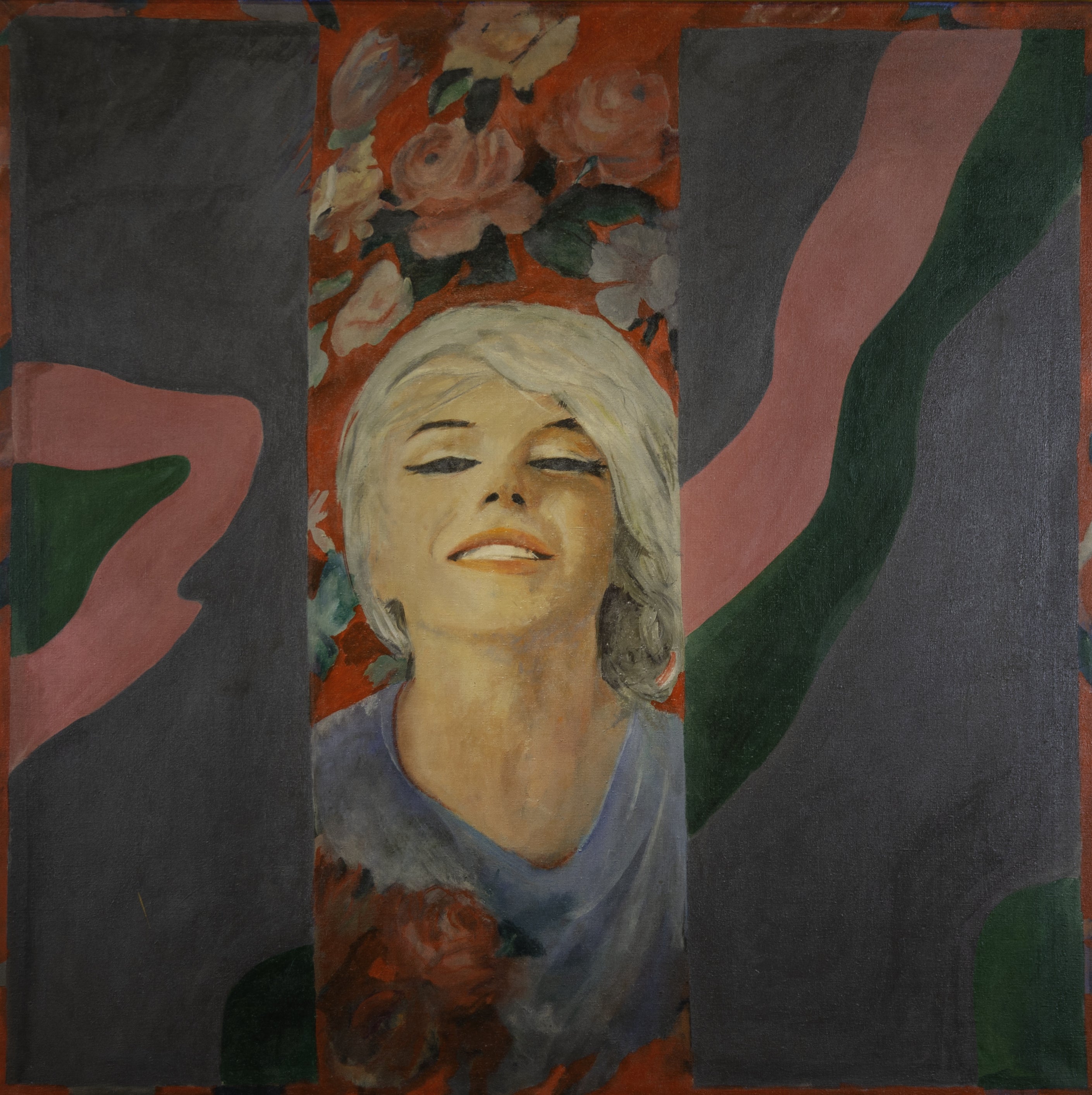
The exhibition unfolds more or less chronologically, from Monroe’s early modelling days to the nude calendar she posed for (images for which were later bought by Hugh Hefner and published against her will in Playboy), to her career in Hollywood. Men are largely avoided – there’s no mention, to my knowledge, of her second husband Joe DiMaggio, or the affair with John F Kennedy that played so heavily into her final months, or the conspiracies that swirl around her death. An entire room is devoted to the artists she played posthumous muse to: a negative image of her face is replicated over and over in Andy Warhol’s famous multicoloured screen prints; she is radiant at the centre of swirling, ominous greys in works by Pauline Boty, who herself met a tragic, early demise just four years after Monroe; she doesn’t appear at all in Joseph Cornell’s tribute, in which a celestial being overlooks a broken chain.
We are told of Monroe’s rich attachments to particular photographers. We see Cecil Beaton’s off-the-cuff glamour portraits, Sam Shaw’s hazy street shots, Eve Arnold’s wounded candids from the set of Monroe’s final finished film, 1961’s The Misfits. Her eyes are sleepy and glazed from drug addiction; her body, barely clinging on, is slumped in the back of a pickup truck. Philippe Halsman asked her, as he did many of his subjects, to leap into the air for his camera; all the better – he believed – to see a person’s true self. He wasn’t sold at first. “Marilyn,” he later recalled telling her, “try to express your character a little more.” The photos are pure joy, and are beamed against a wall by a projector.
Monroe studied her own contact sheets, vetoing pictures she disliked and selecting her personal favourites, cultivating her image in a way that’s routine today but was unusual back then. Much is made of how she craved “an honest picture”, which seems a bit antithetical for a woman so endlessly self-editing.
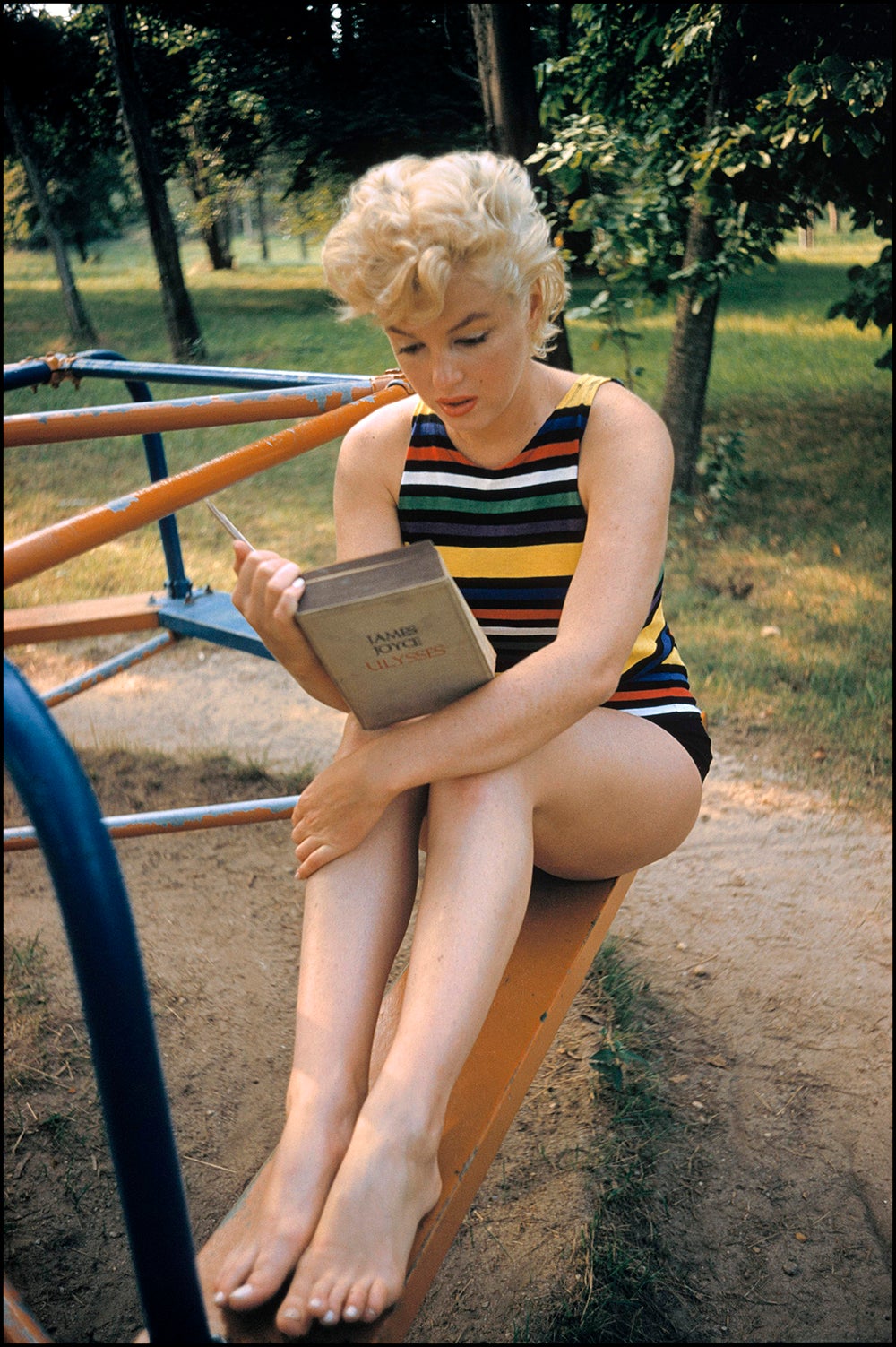
“Honesty”, when it comes to Marilyn Monroe, has always been up for debate. Arnold’s earlier photographs of her, taken a few years before The Misfits, are often framed as being particularly truthful, and reflective of the smarts underpinning the actor’s early screen image of a “dumb blonde”. But I’ve always found the shots of Monroe reading Ulysses in a children’s playground, or studying Michael Chekhov’s To the Actor: On the Technique of Acting while reclining on Arthur Miller’s couch, to be a little clumsy. Not because Monroe was stupid, or an unsophisticated reader, but because these “candid” snapshots feel artificial by design – like those paparazzi pictures of fledgling pop queen Addison Rae walking the streets of Hollywood reading Britney Spears’ memoir, or when a celebrity “discreetly” shows off their engagement ring while shopping for groceries. Even if they’re rooted in reality, something is off.
And it’s a feeling driven home by the sheer volume of images here in which Monroe is performing. Photographs I’ve seen over and over through the years, in books, magazines or on Pinterest boards, are suddenly transformed when contextualised by the curator’s captions. Milton H Greene’s images of her, taken on the Fox backlot in 1954, in which her face seems so bereft, were actually of Monroe in character: as “a French peasant”, “a London girl”, “a hooker”. Likewise, De Dienes’s images of Monroe wrapped in an old army blanket, her face stripped of makeup, were a product of Monroe being asked to embody a variety of emotions. “An entire spectrum of life,” De Dienes recalls, in a caption. “Happiness, pensiveness, introspection, serenity, sadness, torment, distress. I even asked her to show me ‘death’ … She threw a blanket over her head.” These shoots are all a bit of a show, their meanings massaged, exaggerated or entirely made up over the decades.
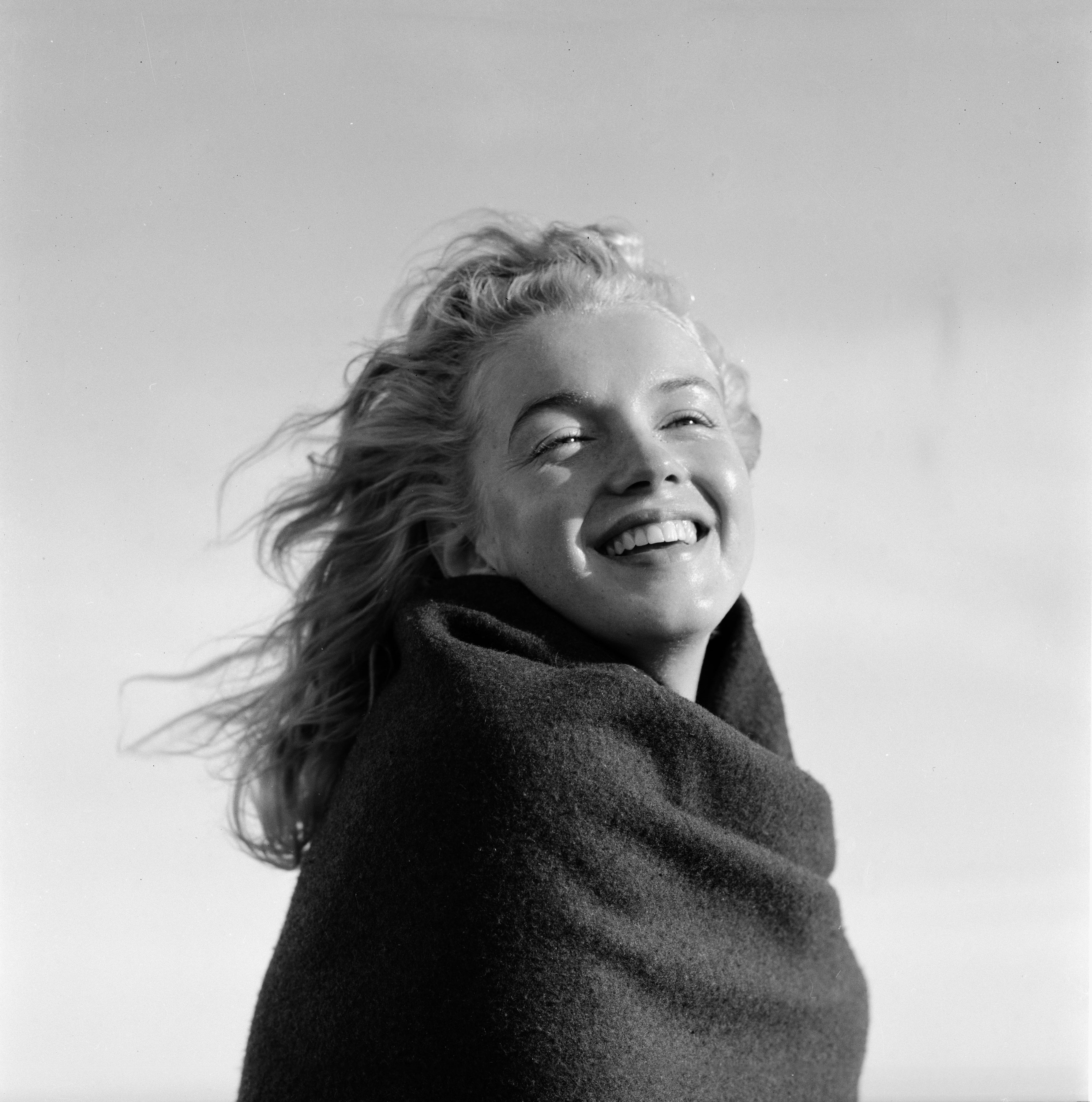
Ironically, Marilyn Monroe: A Portrait seems to say that if you want to truly understand Monroe, looking at pictures of her isn’t the way to do it. Instead, these images are myth machines, artistic inspiration, visual demo reels for the dramatic career Monroe craved. Everything on display fits into whichever narrative you want for her: the cursed beauty; the feminist pioneer; the harlot. Truth is less of a factor, perhaps because we’ll never know it. The stories we make up in our heads about her are just so much more satisfying.
‘Marilyn Monroe: A Portrait’ runs at London’s National Portrait Gallery from 4 June to 6 September