











Want to bookmark your favourite articles and stories to read or reference later? Start your Independent Membership today.
Join today
Already a member?
Log in
Dolphins that are consistently social with their groups tend to live longer, according to a new study which hints that the benefits of socialising extend beyond just better quality of life in animals.
Dolphins are known to be social mammals, forming complex, long-lasting relationships with their peers.
Previous studies have shown that individuals develop preferred relationships, maintain social bonds throughout their lives, and cooperate with particular companions.
But exactly how long-lasting group relationships benefit dolphins has remained unclear.
In a new study, researchers assessed 40 years of data on 400 wild Indo-Pacific bottlenose dolphins from the eastern gulf of Shark Bay in Western Australia to see how sociability influenced their survival.
Scientists from the University of Queensland found a direct link between a dolphins’ grouping preferences and lifespan, which for some of the dolphins reached 53 years.
“Being in groups helps the dolphins find and form friendships, share information and provides more opportunities to find mates,” said Kelley Meehan, an author of the study published in the journal PLOS Biology.

While being in a large group provides protection from predators, if the group size gets too large, it can also increase the risk of disease transmission and induce fighting over limited food and mate availability.
Not only group size, but social consistency also influenced the longevity of dolphins, the study found.
“As the dolphins aged, they created more social connections over time, and maintaining those lifelong friendships provided benefits and could lead to bigger average group size,” Dr Kelley said.
“We found animals developed a preference for a particular group size they liked as they aged and wouldn’t join groups that were too big or too small,” she said.
While the study did not find a specific ideal group size, researchers found a strong trend that individuals with more consistent group sizes appeared to be more socially successful.
“Regardless of the group size or preferred behaviour, consistency was what had a longevity benefit,” said Celine Frere, another author of the study.
Two dolphins may have the same average number of social friends, but they may be very different in how they socialise, scientists say.
“Dolphin 1 may be an introvert and consistently associate with the same 2 individuals, but dolphin 2 behaves more like a social butterfly – liking groups of all sizes,” Dr Frere explained.
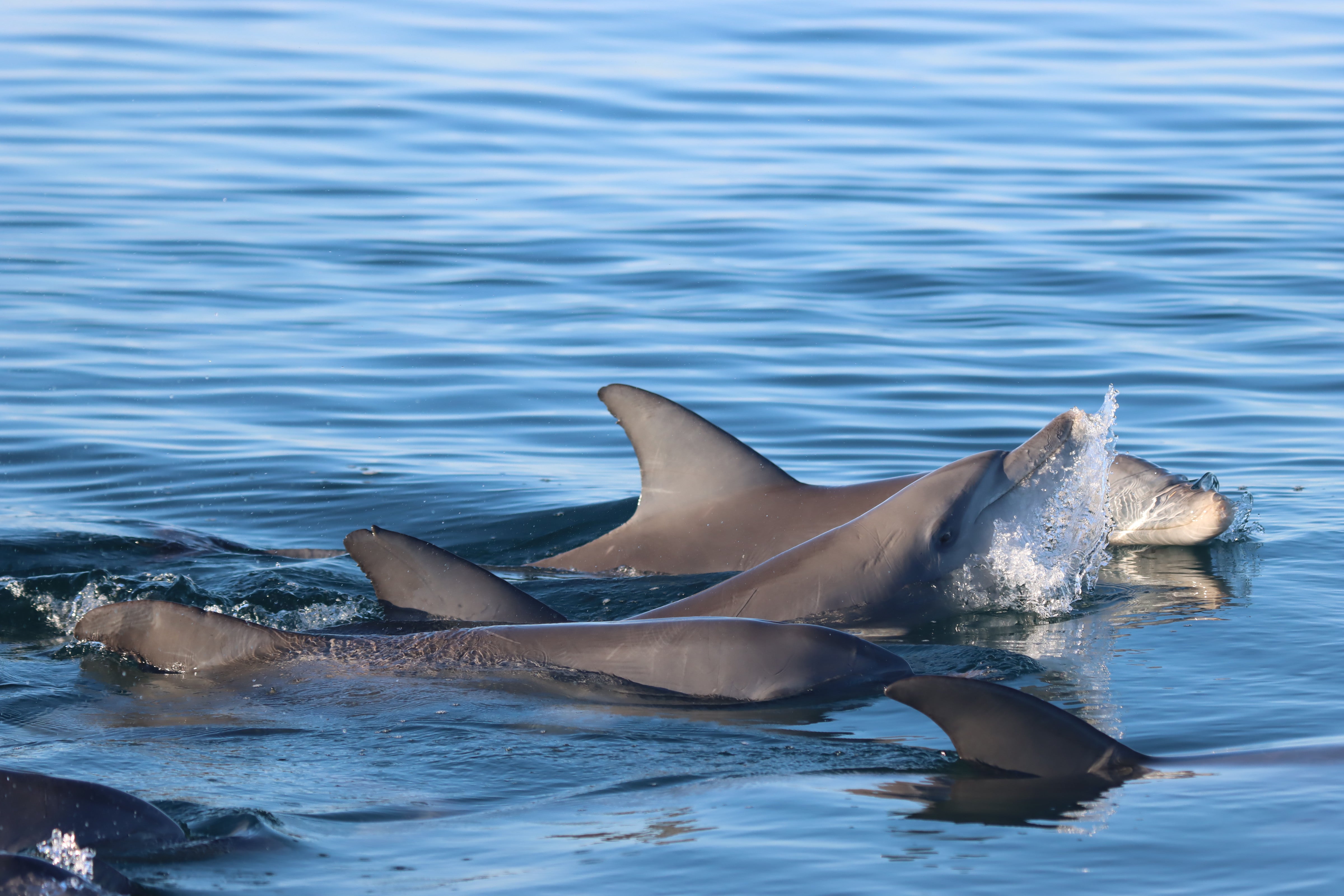
Overall, scientists analysed 65,000 observations of dolphin social behaviour and found clear social differences between male and female dolphins.
“Female dolphins can be more or less social, depending on their personality,” Dr Meehan said.
“Because food is their key resource and they deal with food shortages by moving around and diversifying their foraging strategies, they do not need other females to forage successfully,” she said.
Since males compete over relatively scarce reproductive females that reproduce only every 3 to 4 years, males work as teams to mate or guard a female, researchers say.
“For males, being social becomes the backbone of their ability to reproduce,” Dr Meehan said.
Scientists caution, however, that the findings are an association, and not proof that having more friends directly increased lifespan.