










Want to bookmark your favourite articles and stories to read or reference later? Start your Independent Premium subscription today.
Subscribe
`;
document.body.appendChild(modal);
modal.addEventListener(‘click’, () => {
document.cookie=”mos-plan-select=; Max-Age=0; path=/; expires=Thu, 01 Jan 1970 00:00:00 UTC;”;
});
modal.querySelector(‘.subscribe-link’)?.addEventListener(‘click’, (e) => {
e.preventDefault();
document.cookie=”mos-plan-select=; Max-Age=0; path=/; expires=Thu, 01 Jan 1970 00:00:00 UTC;”;
setTimeout(() => {
window.location.href=”https://www.independent.co.uk/subscribe/app”;
}, 500);
});
});
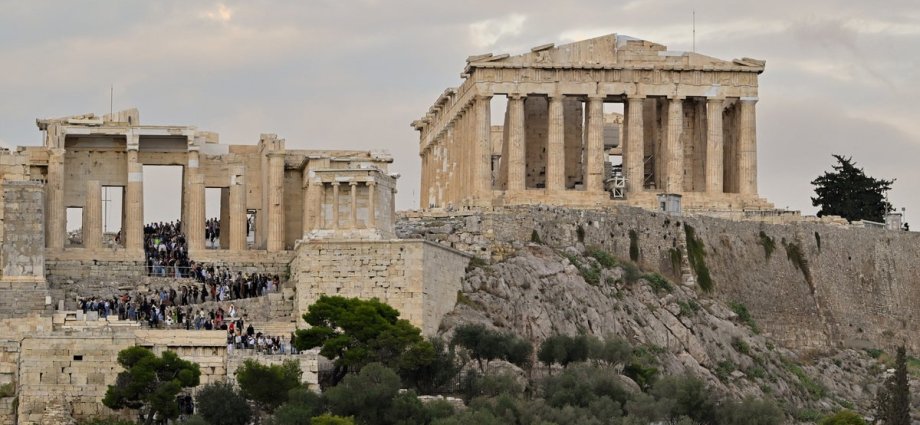
The Greek Parthenon’s iconic curves are a product of architectural tradition and not a calculated design choice to correct optical illusions as widely thought, according to a new study.
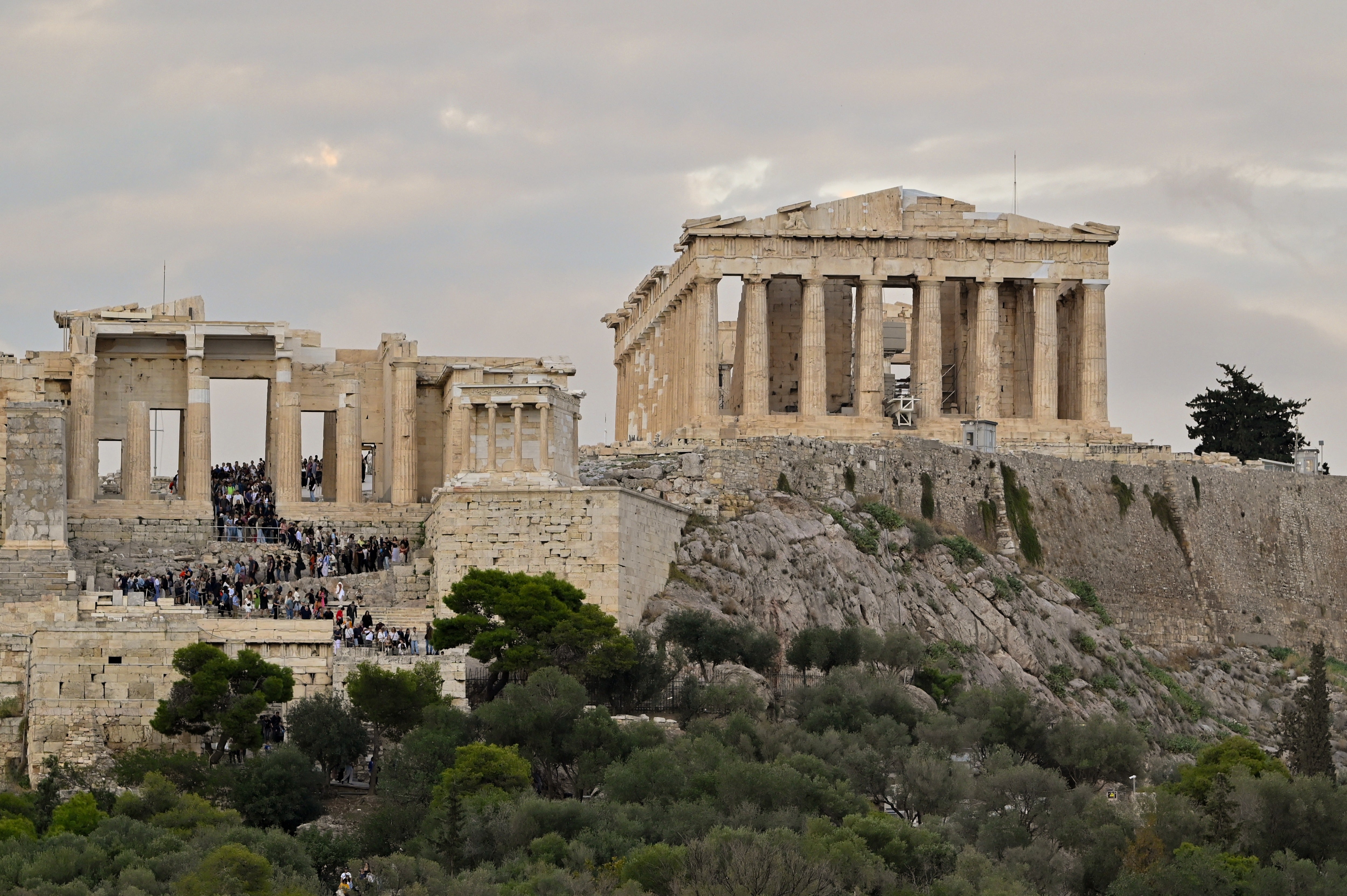
The Parthenon, built during the Golden Age of Athens under Pericles, has stood for almost 2,000 years as a classical temple on the Acropolis hill overlooking the city. It was constructed between 447 and 432BC, dedicated primarily to Athena Parthenos, the city’s patron goddess.
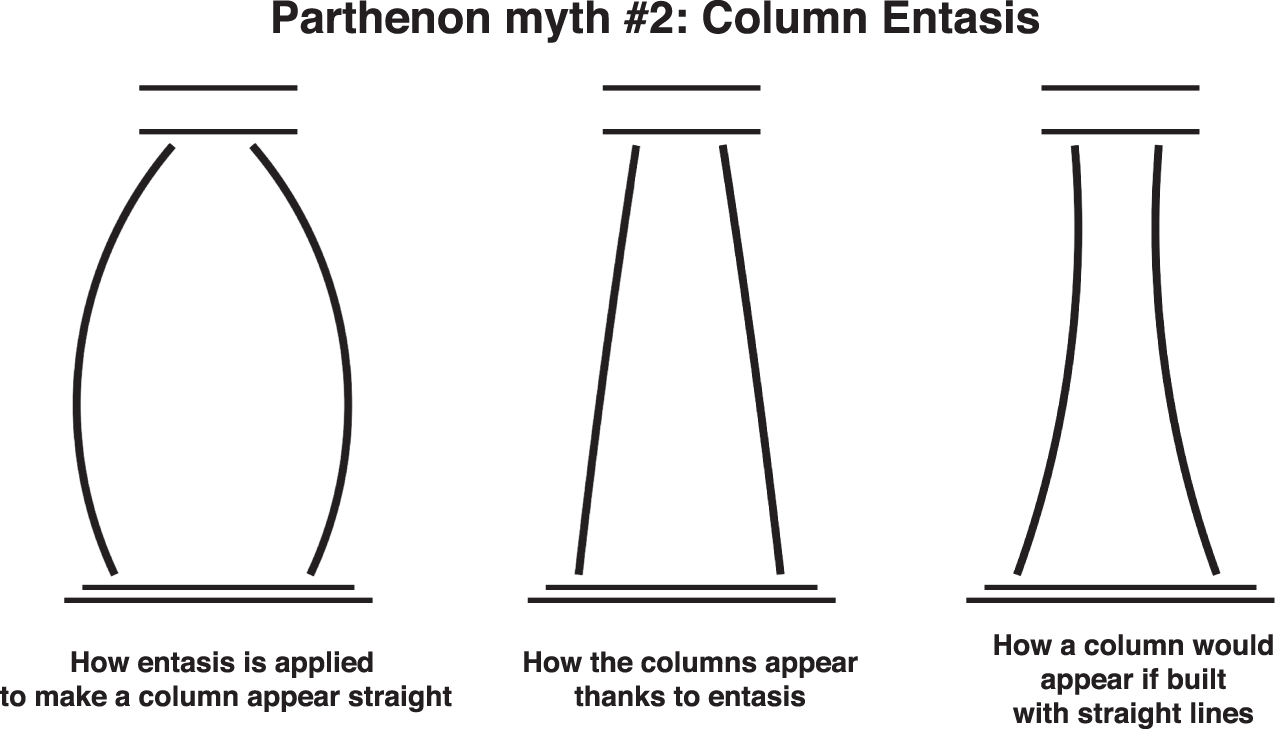
One of the most striking features of the Parthenon is that what look like straight, periodic vertical pillars aren’t really so.
It was widely believed that subtle architectural refinements were made to the temple to make the pillars appear perfectly straight and regular.
It’s also often said that no straight line can be found in the Parthenon and that’s a testament to ancient Greek mastery of abstract geometry, structural mechanics, and visual perception.
“The myth of optical corrections has its origin in the writings of Vitruvius more than 2000 years ago, and was renewed in the nineteenth century when curved profiles were carefully measured,” the new study, in the journal Royal Society Open Science, states.
Combining perspectives from mathematics, geometry, engineering, and vision science, researchers found that no alleged optical illusions existed at the monument.
Its features were due to architectural tradition rather than sophisticated optical engineering, they said, adding that there was no evidence that the Greeks held any knowledge of the particular visual illusions later alleged to justify the Parthenon’s refinements. “We simply don’t know the thought process of its creators or whether they meant for the building to appear straight, curved, perfectly regular, slightly irregular, or for it to evoke any particular feeling,” they said.
Researchers found that many of the claimed optical corrections required looking at the building from a very specific region. But there was no evidence on the ground of the Acropolis that any special viewing points ever existed, they said.
Instead, from many points of view, the top step of the temple that supports the pillars “clearly looks curved at the corner”.
“It is very hard to imagine that any architect would build a temple with the express idea that its beauty can only be revealed at a few specific locations on the ground,” they noted. “A more pragmatic interpretation is that such refinements reflect empirical practices developed by builders and craftsmen.”
The findings, according to researchers, show that “we are prone to delude ourselves in the pursuit of ancient mysteries and ideal fantasies of order and harmony”.