










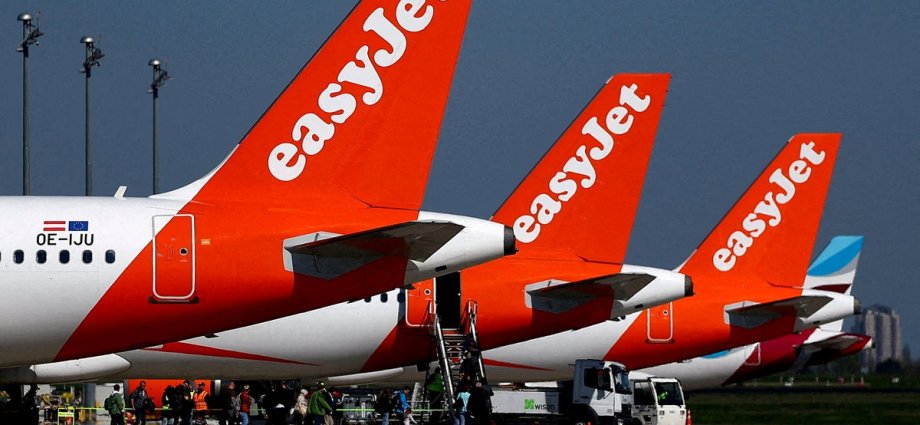
Last week, EasyJet’s board agreed to sell the firm for £5.7bn to private equity firm Apollo.
It ended a short-term battle for the future of the British-run airline, after rival bidder Castlelake had earlier made four different bids to take the company off the London Stock Exchange.
While some had thought a bidding war could drive the share price even higher, Apollo’s winning bid is worth 715 pence for each share of the company.
That is still subject to a shareholder vote, but EasyJet’s founder Sir Stelios Haji-Ioannou still holds about 15 per cent of the business and has given his backing to the deal, so it’s expected to progress.
However, on 10 August the share price stands at 671p, leaving a gap to the eventual exit price for tens of thousands of retail shareholders; in other words, everyday members of the general public who might own shares in the airline in their ISA, SIPP or general investing account, until a takeover is completed in early 2027.
So what should they be considering doing now and what will impact the share price in the meantime?
What’s the gap in real terms?
From 671p to 715p, an expected future 44p rise is equivalent to around a 6.5 per cent gap in share price which still exists – or, to look at it from an investor perspective, still another 6.5 per cent extra cash value which could be added.
Whether that additional money makes a material difference will depend on circumstances for each person: when they bought the stock, their current position of being in profit or loss on their holding and any platform or commission fees they may have to pay to sell a stock, or buy a replacement one with the resulting cash.
For example, someone owning 200 shares of EasyJet right now would see their holding worth £1,342; if they held until the takeover went through, they’d receive a sale price of £1,430.
“Someone fortunate enough to have timed a £1,000 investment in the shares at their 52-week low on 18 May (shortly before news of the bid interest emerged) would have more than doubled their money with a £1,029 gain based on the current share price,” said Russ Mould, AJ Bell’s investment director.
“Assuming the deal goes through at the agreed price, this gain would increase to £1,149.”
What will impact the share price?

Get a free fractional share worth up to £100.
Capital at risk.
Terms and conditions apply.
ADVERTISEMENT
Between now and a takeover being completed there are several steps to overcome.
As mentioned, a shareholder vote still has to take place, which could face opposition – some long-term institutional investors have previously suggested the bids undervalue the long-term worth of the company.
Prior to the pandemic, EasyJet shares changed hands at more than £14; in 2015 they reached as high as £18.
In addition there are regulatory hurdles to overcome, with EU rules stating airlines in the continent must be majority-owned by European businesses. Apollo is a US-based firm, so must create a holding company that regulators are satisfied with.
Any news around regulatory standings, large shareholder discussions or any other factor could send the share price up or down.
“The difference between the current share price and the 715p per share bid reflects the reality that this deal still needs to clear some hurdles – including getting clearance from the relevant regulatory authorities,” Mr Mould added.

“Investors have a choice of selling the shares in the market now or waiting for the deal to play out to get the full 715p. As well as featuring in the top 30 most widely held UK-listed companies on the AJ Bell platform, EasyJet has been one of the most heavily sold equities among AJ Bell customers in the last two months, suggesting some holders have already sold out and moved on.
“While there is an option for a portion of the shareholder base to rollover their interest into unlisted shares, in practical terms this alternative will be limited to large institutions and major shareholders like Stelios and his family.”
Will investors have to pay tax on a share sale?
If an investor holds shares in an ISA or SIPP, they will not pay any tax regardless of when they sell the shares, be it of their own timing or when the sale concludes. In a general investment account, however, tax may be payable depending on the individual’s circumstances: their profit or loss on the deal, their tax band, other capital gains made in the year and more besides.
“Assuming the deal gets the necessary backing from shareholders and secures regulatory sign-off, cash will be paid directly into retail holders’ investment accounts. If owned in an ordinary share dealing account, this will count as a disposal for tax purposes and may be liable for capital gains tax,” said Mr Mould.
“If held within an ISA or SIPP, the profits are out of reach of HMRC and can be reinvested elsewhere without fretting about any tax implications.”
Finally, while some investors may be considering buying in late to take advantage of the above-six per cent theoretical profit, Mr Mould noted there were likely other less risky ways to achieve a near-same outcome.
“Any buyer will need to pay 0.5 per cent stamp duty and, if they are trading more than £10,000 of stock, they will also have to pay the £1.50 Panel on Takeovers and Mergers (PTM) levy. The profit could also be subject to capital gains tax, which could eat 18 per cent or 24 per cent of the gain,” he said.
There are easy access savings accounts paying up to 5 per cent available now, while cash ISAs – where any interest earned is tax free – are offering over 4.5 per cent.