









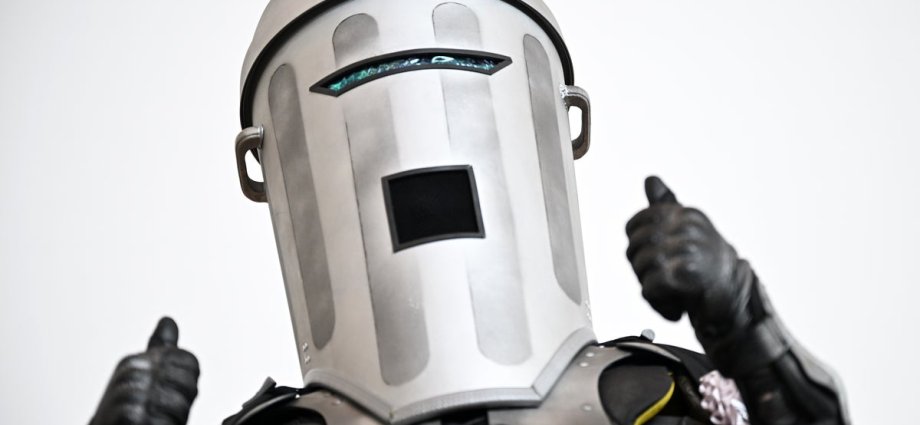
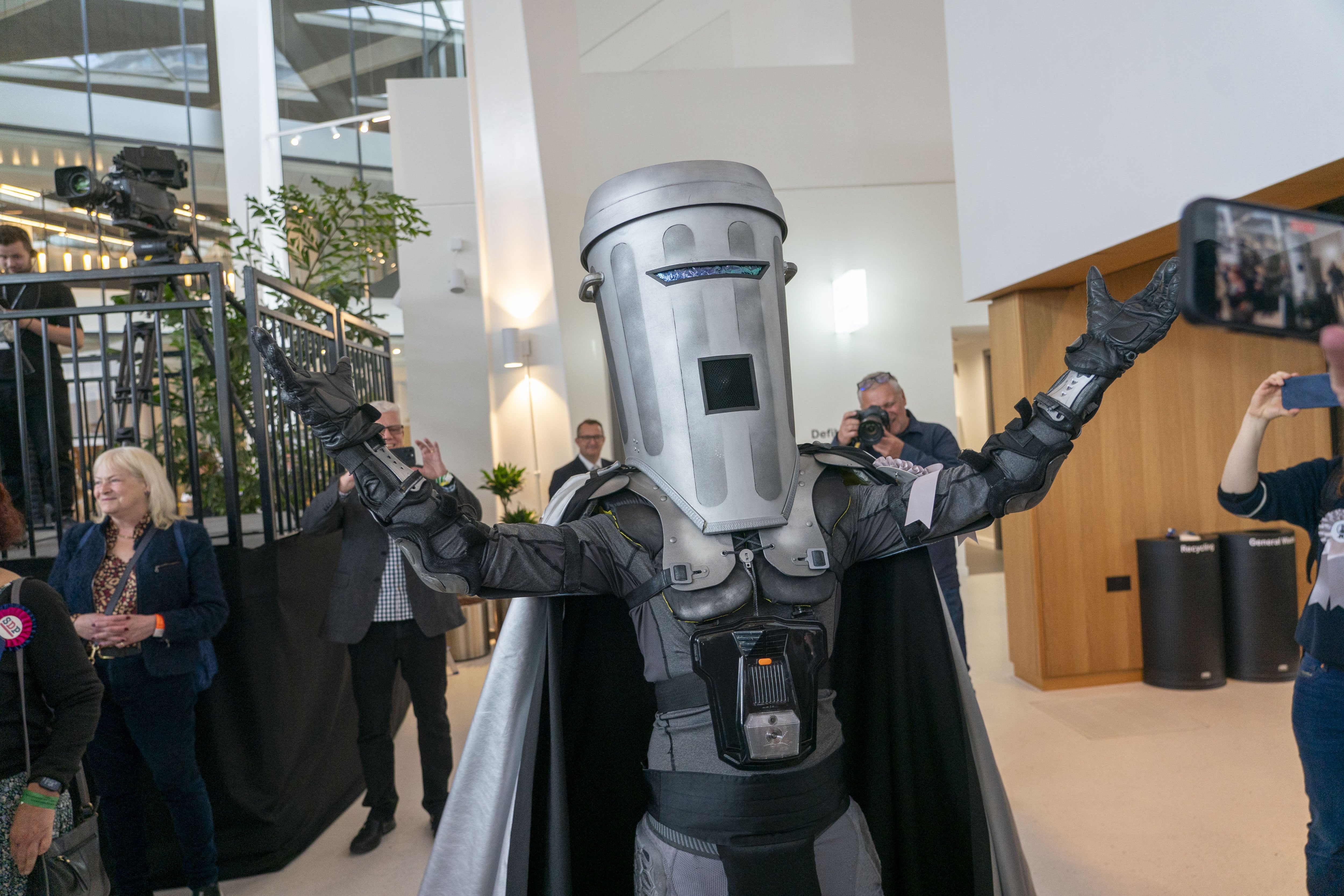
Reform UK leader Nigel Farage’s decision to resign his Clacton seat and force a by-election, amid scrutiny over his personal finances, has produced one of the odder spectacles in recent British politics. With every other major party declining to stand and despite a record 34 candidates running, his most prominent challenger is Count Binface, the silver-caped “intergalactic space warrior” with a bin for a helmet.
Danny Kruger, the Reform UK MP for East Wiltshire, told the House of Commons that politics is not a joke, criticising rivals for lining up behind a comedian in a dustbin costume. His reaction suggests that Reform UK is a party that senses its own vulnerability to ridicule, rather than one confident enough to shrug it off. But Kruger’s reaction also overlooks an important point: that “joke” candidates belong to a long and consequential tradition in Britain.
The template was set by David Sutch, who stood as Screaming Lord Sutch. A previously aspiring rock singer, he entered politics in 1963. He campaigned to lower the voting age from 21 to 18, stood against Labour prime minister Harold Wilson in 1966, and founded the Monster Raving Loony Party in 1983. He contested elections 39 times in total.
His slogan, “vote for insanity, you know it makes sense,” concealed real disenchantment. Sutch saw himself as speaking for people too alienated by politics to vote at all. Ironically, several of his “joke” policies – commercial radio, a lower voting age, all-day pub opening – were enacted later by various governments. In 1990, his party outpolled the collapsing Social Democrats in the Bootle by-election.
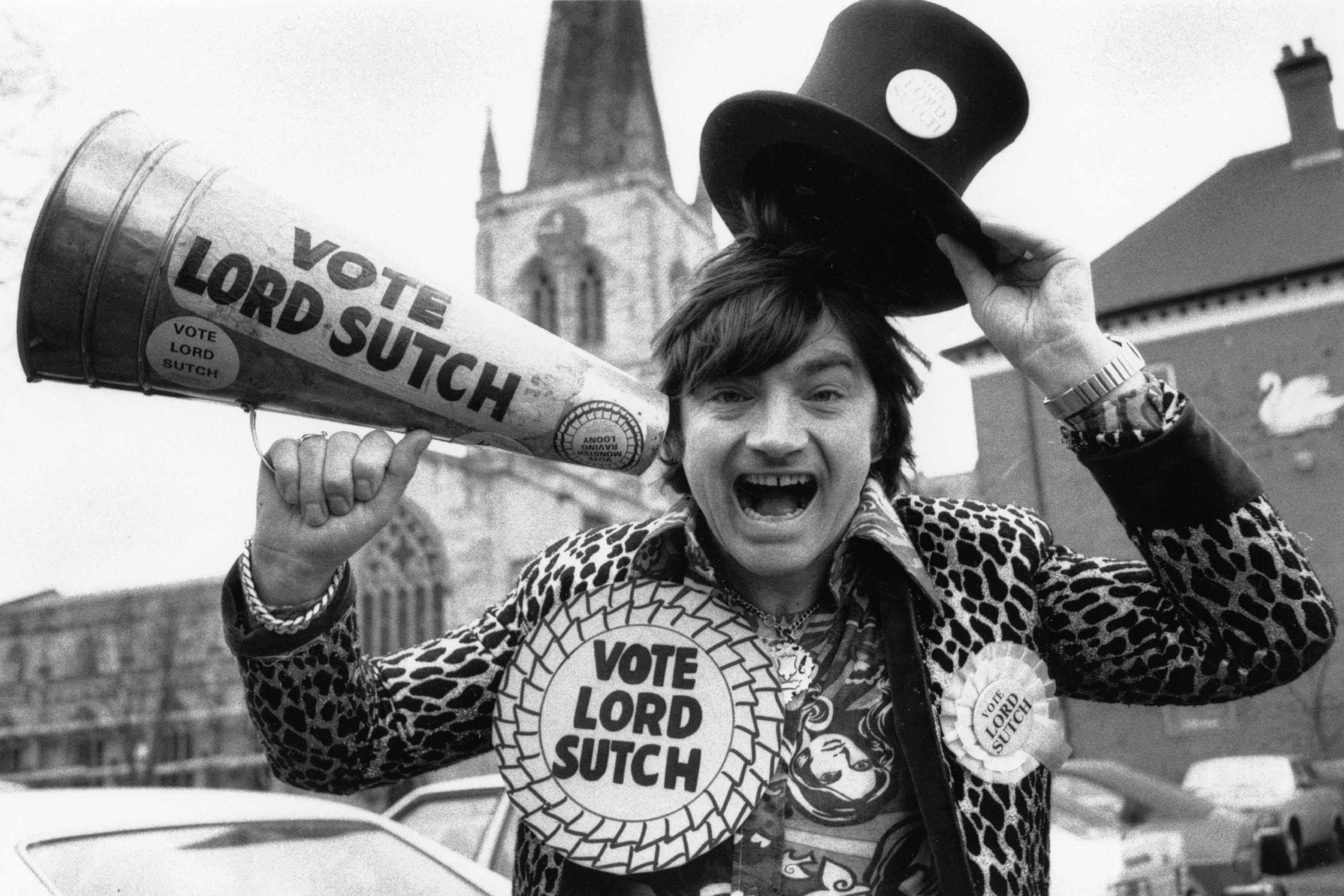
Sutch established the trope of comedy candidates standing alongside the country’s most powerful politicians. Count Binface – who challenged Theresa May in 2017 in his previous guise as Lord Buckethead – follows this well-beaten path.
British election results are announced in a public hall, with the constituency’s candidates all lined up on one stage. This forces even a sitting prime minister to be pictured beside a rival in costume. The ritual of the count itself may help sustain this peculiar tradition by providing oddball candidates with a form of recognition, no matter how few votes they get.
The line between joke and fringe candidates is more blurred than it seems. Sutch’s comedy hid serious protest; some overtly serious candidates, conversely, have been treated by the public as figures of fun. The road-safety campaigner William “Bill” Boaks, a naval veteran decorated at Dunkirk, spent decades sincerely contesting elections from a car painted as a zebra crossing. He eventually polled just five votes in Glasgow.
Similarly, the Natural Law Party (NLP) – whose candidates preached applying the principles of Transcendental Meditation to all levels of government and promoted “yogic flying” – never intended satire. It had serious policies such as an arms export ban. Its excruciating election broadcasts were nevertheless widely considered hilarious.
It should not be assumed that fringe candidacies are necessarily poorly resourced or powerless. Both the NLP and James Goldsmith’s Referendum Party, which fought the 1997 election on a single anti-European Union issue, drew on considerable private riches. The NLP was funded by ex-Beatle George Harrison; Goldsmith was a billionaire. The latter’s party used innovative but expensive messaging techniques such as the distribution of video cassettes to voters. Wealthy individuals could buy influence on the political process – something highlighted again recently by the donations received by Farage.
The Referendum Party did shape the outcome of the 1997 general election. One statistical study found that, despite winning no seats and averaging under 3% of the vote, its intervention cut the Conservative vote by around 3.4 points – enough, it is estimated, to have cost the Conservatives 16 to 18 seats. A single-issue party built around one wealthy backer swung a significant number of individual contests even in total defeat.
Richard Toye is a Professor of Modern History at the University of Exeter.
This article was first published by The Conversation and is republished under a Creative Commons licence. Read the original article.
The possibility of decisive impact without a single seat won is a useful corrective to the instinct to write off Binface’s Clacton campaign as empty theatre. His manifesto combines joke policies, such as nationalising Adele, with a few credible propositions, such as banning MPs who resign mid-parliament from standing in the resulting by-election. One survey already shows more voters nationwide would rather see him win than Farage, and local polling suggests that he might pick up a non-derisory 20% of the vote.
Whether or not Farage takes the Clacton seat, the number of voters who chose Binface instead may be used as ammunition by critics and comedians for the rest of his career. There is a further irony: what counts as “fringe” or “ridiculous” is constantly renegotiated. Farage himself spent years cast as a fringe obsessive before becoming one of the most consequential figures in current British politics. It’s a reminder that the boundary he polices against Binface is one he once crossed himself.
The history of British democracy is not only a history of winners. It is also the history of the losers, loners and long-shots whose campaigns reveal what voters find funny, what they find unacceptable, and what they are, in the end, prepared to take seriously. A man in a bin costume standing against the man who forced this election is a small but revealing window into the shifting boundaries of British politics.