









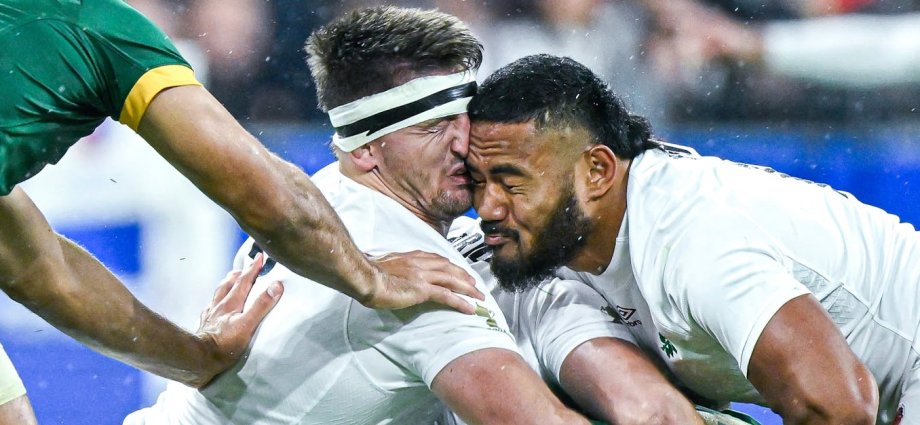
There is now widespread evidence that years of heading, tackling and collisions in football and rugby could increase the risk of dementia and other neurological diseases.
The latest – preliminary research presented at the Alzheimer’s Association International Conference in July 2026 – examined 142 former professional footballers aged 30 to 60, and 56 people of a similar age who had no history of contact sports or repeated head impacts.
The two groups performed similarly on objective cognitive tests, which measure abilities such as memory, attention and decision-making. The middle-aged retired footballers self-reported having worse mood, higher levels of anxiety and poorer cognition.
MRI brain scans were available for 124 of the former players and 40 non-players. On average, the footballers had less grey matter in several regions involved in memory, attention, decision-making and emotional regulation. Grey matter is brain tissue containing many of the nerve cells that process information.
These findings deserve attention, although they do not show that football caused the differences or that all players will develop dementia. The results are preliminary, have not yet undergone full peer review, and come from a study conducted at one point in time. Researchers will need to follow the participants for years to establish whether their symptoms or brain changes progress.
Read more:
Sport-induced traumatic brain injury: families reveal the ‘hell’ of living with the condition
In 2020, I worked in a team which compared questionnaire responses from 468 retired male professional footballers with those from 619 men in the general population as controls. Of these, 326 of the former players and 395 of the controls also completed telephone-based cognitive dementia screening tests.
The former footballers were generally healthier, which could have protected them against dementia. Overall, they reported less diabetes, lower blood pressure and cholesterol, and less smoking and diagnosed depression – although they had experienced substantially more concussions and serious head injuries.
Average performance was similar on some cognitive tests. But on others, including tests of verbal fluency and everyday functioning, the former players scored less well. After differences such as age, education, hearing loss and health conditions were taken into account, former players had around twice the odds of falling below established dementia screening cut-offs on tests of verbal memory and verbal fluency.
A screening cut-off is a threshold used to identify people who may have cognitive difficulties. Falling below it does not confirm dementia, but indicates that further clinical assessment may be needed.
Former players were also more likely to report that a doctor had diagnosed dementia or another neurodegenerative disease, a condition involving the progressive damage or loss of nerve cells.
This study was cross-sectional: it captured participants at one point in time. It can show an association between a professional football career and poorer results on some measures, but cannot prove the cause.
Heading the ball is one possible contributor to the increased dementia risk. In a separate analysis of 459 retired footballers, those who recalled heading the ball more than 15 times during a typical match or training session had more than three times the adjusted odds of cognitive impairment, compared with those reporting five or fewer headers.
Read more:
The ‘unsexy’, low-tech fix that will reduce brain injuries in sport
The finding should not be treated as proof that 15 headers are safe and 16 are dangerous. Players were estimating exposure from careers that had often ended decades earlier, and the study grouped their answers into broad categories. More precise, long-term measurement is needed, including following these retired players over time.
Large studies of former professional footballers in Scotland and Sweden substantiate our findings. Both found higher rates of dementia or other neurodegenerative diseases among outfield players, while goalkeepers did not show the same clear increase. Defenders, who generally head the ball more often, had the highest risk in the Scottish research. We found similar trends in our study.
Heading is only part of the picture. Footballers can also sustain concussion through head-to-head contact, falls and collisions with other players or goalposts. Concussion is a brain injury caused by a blow or force that disrupts brain function, but which does not necessarily lead to loss of consciousness.
In our study of retired professional footballers, concussion accompanied by memory loss was independently associated with greater odds of dementia risk.
Research on former elite rugby players has raised similar concerns about the long-term effects of repeated blows to the head. Separate research at Loughborough University used instrumented mouth-guards to measure head acceleration during matches and found that greater exposure was associated with more symptoms of low mood, anger, fatigue and anxiety in young elite players.
Mood symptoms require support in their own right, but depression or anxiety in a former player cannot be treated as evidence of brain damage. While both have been found to be risk factors for dementia, mid- and later-life depression has a complex relationship with dementia in later life. Long-term follow-up is needed to determine what the findings mean.
Current Football Association guidance for the professional game recommends no more than ten higher-force headers during a training week. These include headers from long passes, crosses, corners and free kicks.
FA concussion guidance also says that any player suspected of concussion should be removed immediately, should not return to playing that day, and should receive appropriate medical assessment. Recovery should involve a gradual return to normal activity and then football, guided by symptoms and professional advice.
Football brings substantial physical, social, health and psychological benefits. The evidence does not justify panic – but it does justify reducing avoidable head impacts, managing concussion properly, and monitoring players throughout and after their careers.

The FOCUS study mentioned was funded by the FA but Eef Hogervorst was not directly paid for this work by them. Eef was invited to speak of the FOCUS study at PFA/FA meetings. Eef frequently acts as consultant on dementia early diagnosis and prevention (eg Proctor and Gamble) and inclusive design (Leicestershire county council) as well as dementia expert for NICE and ESHRE. She is usually reimbursed for travel, hotels and registration when invited at conferences to speak about her work.