









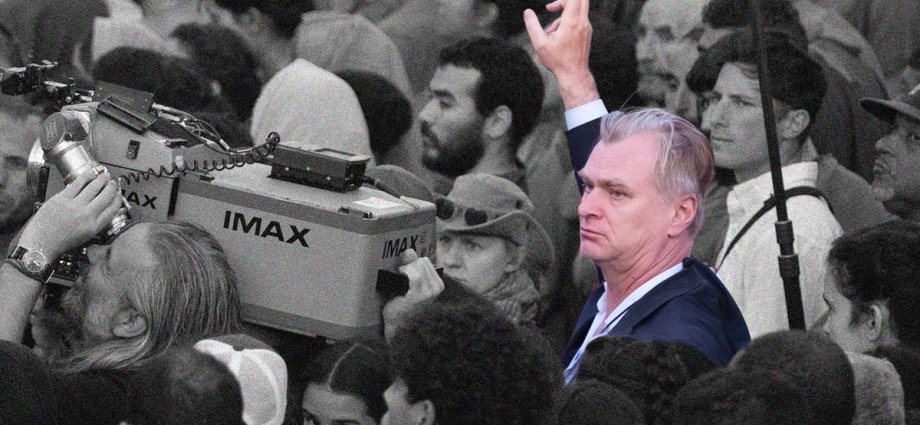
What do we really know about Christopher Nolan? For a filmmaker whose body of work is perhaps the most watched, and discussed, of any this century, the British blockbuster titan is still an enigma. Often, filmmakers expose the rawest and most personal parts of their psyche through their output. It’s true of someone like Steven Spielberg, whose parents’ messy divorce coloured, in different ways, more or less everything he ever made; or Martin Scorsese, whose work is all shaped and informed by his Italian Catholic upbringing. After 13 films, though, Nolan has seemed to leave us little the wiser. Or to put it in movie terms: what, exactly, is his “Rosebud”?
Nolan’s latest film, The Odyssey, might offer the clearest look yet into the mind of a man who has always resisted conventional notions of auteur analysis – though that’s not necessarily saying much. Nolan told The Hollywood Reporter back in 2015 that “the more you know about somebody who makes the films, the less you can just watch the movies”, and that he didn’t “want people to have me in mind at all when they’re watching the films”. He prefers, in other words, to let his movies do the talking. (But who can hear what they’re saying over those famously muddy sound mixes?)
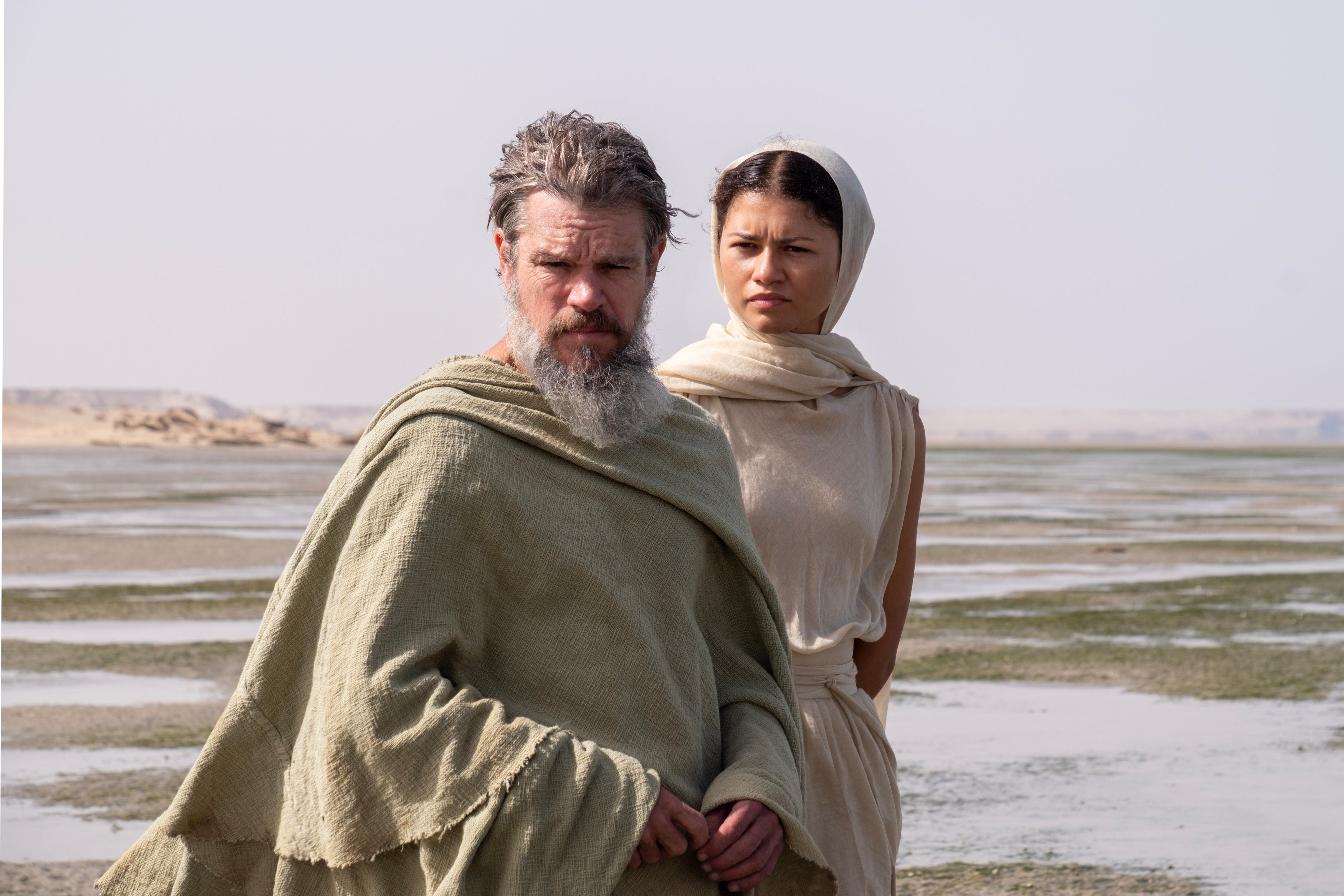
Adapted from the classic Greek epic, The Odyssey stars Matt Damon as wartime hero Odysseus, making his long and arduous journey back to Ithaca, to his wife Penelope (Anne Hathaway) and his son Telemachus (a diligent Tom Holland, here wisely frugal with the gee-willikers credulity he oozes as Spider-Man). Throughout Nolan’s work, families have most often been significant in their absence. Dead wives abound – in Memento, The Prestige, Inception and Interstellar. In The Dark Knight trilogy, Batman’s long-dead parents are a void, with Michael Caine’s shrewd butler stepping in as surrogate father. Repeatedly, Nolan has separated fathers from their children, whether that’s through legal exile, like Leonardo DiCaprio’s Cobb in Inception, or decades-long space exploration, like Matthew McConaughey’s Cooper in Interstellar. In this way, The Odyssey is iterating on a story that Nolan has told several times before.
And yet, what this is saying about Nolan’s psyche is less clear. It’s widely speculated that filmmakers such as Wes Anderson or Paul Thomas Anderson have fixated on troubled parental relationships in their work – on so-called “bad dads” – as a way of exploring their own fraught childhoods. Thanks to his reluctance to speak about his personal life in interviews, we know little of Nolan’s childhood, but what we do know doesn’t suggest some kind of traumatic origin story. His mother Christine is an American, a former flight attendant and teacher. His father Brendan, who died in 2009, was a British advertising executive and by all accounts also a loving and supportive parent. It was his encouragement that steered Nolan and his younger brother Jonathan towards careers in cinema, taking them to see films like Star Wars and 2001: A Space Odyssey at a formative age, then providing them with a camera to experiment with filmmaking as children.
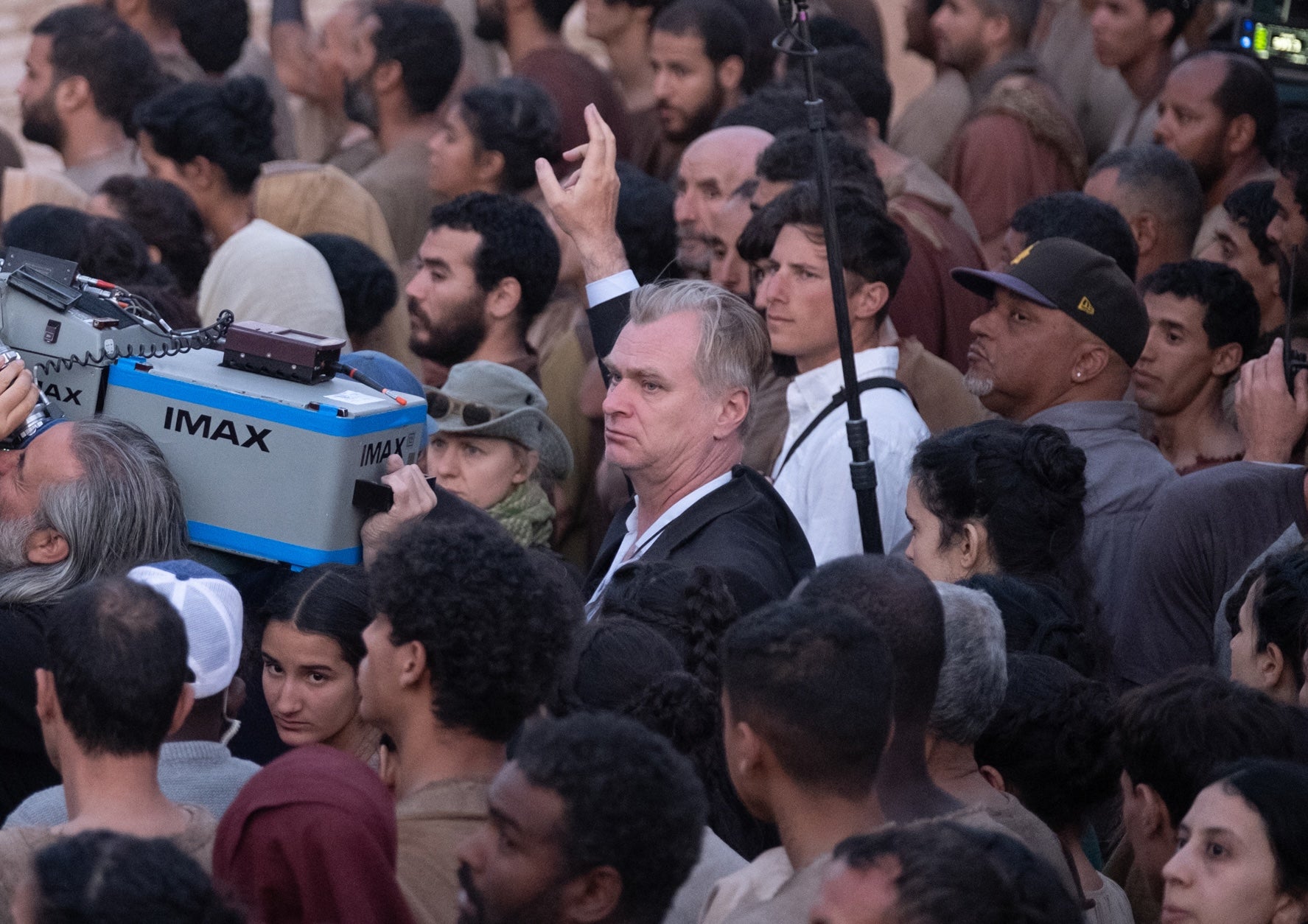
Nolan is himself a father of four children – all young adults now – and it might be tempting, then, to view his work not through the lens of his childhood, but his present-day fatherhood. Watching The Odyssey, you would assume that he relates less to Telemachus than the beleaguered patriarch Odysseus. Both are men in positions of command – Odysseus the Greek military, Nolan a hundreds-strong film crew – with professional duties that pull them away from their family. Both are men at war with time. Yet even this reading risks oversimplifying things: work has not really served to scythe Nolan from his family. Increasingly, it seems like the opposite is true. His wife, Dame Emma Thomas, is a producer who has collaborated with him on every one of his films. His children all worked on The Odyssey behind the scenes; no one was left behind in Ithaca.
There is, however, another major family dynamic in Nolan’s life, and here’s where things get interesting. Nolan is one of three brothers. The younger, Jonathan, is a screenwriter and producer who has worked on several of Nolan’s films. The elder is not. Matthew Nolan, closer in age to Chris and based in America, was arrested by the FBI in 2009, when Costa Rican authorities sought to extradite him on a murder charge. (It was claimed, in one of the court documents, that he was a contract killer.) Matthew denied it, and a US federal judge found the “hitman” claim lacking in evidence, refusing to extradite him; he was nonetheless sentenced to a stint in prison after attempting to escape from jail in Chicago. Neither of his brothers have ever discussed the case publicly.
A 2010 report in The Times notes that Matthew, supposedly the more charismatic of the three brothers, “might have been expected to be the one to become the successful filmmaker”, and that he joined Chris in filmmaking follies as a child. The pair had, it adds, “drifted apart over the years, and now it’s Chris and Jonah who are friends and collaborators, despite their greater age difference”.
For all Nolan’s silence when it comes to his brother, it’s hard not to speculate how this bizarre – and, one can only assume, impactful – part of his family history has imprinted itself on his work. Is it meaningful that his films have revisited the idea of international criminality? Several of his characters lead double lives; some are on the run from the law. One of the allegations to emerge from the reports around Matthew was that he went by the false name of “Matthew McCall Oppenheimer”, in an attempt to link himself to a powerful diamond family – the connection to Christopher Nolan’s 2023 film Oppenheimer is a coincidence, for sure, but one that inevitably raises eyebrows.

Watch Apple TV+ free for 7 day
New subscribers only. £9.99/mo. after free trial. Plan auto-renews until cancelled.
ADVERTISEMENT. If you sign up to this service we will earn commission. This revenue helps to fund journalism across The Independent.
Watch Apple TV+ free for 7 day
New subscribers only. £9.99/mo. after free trial. Plan auto-renews until cancelled.
ADVERTISEMENT. If you sign up to this service we will earn commission. This revenue helps to fund journalism across The Independent.
Ultimately, when it comes to these resonances in Nolan’s oeuvre, everything is guesswork – a squint for cohesion as if it were a Magic Eye picture. But there’s no getting around how curious it is for a director who grew up with such noteworthy brothers to be so reluctant to explore sibling dynamics on screen. Maybe the choice is telling.
The conclusion we might reach is that Nolan is just unwilling to make his films personal. These are works of mass entertainment, after all. But, as the great Italian filmmaker Federico Fellini once said, all art is autobiographical. In some ways, The Odyssey, and its predecessor Oppenheimer, have given us the clearest picture of Nolan’s mind to date: these are films charged with political anger, an artist reckoning with the moral weight of war and foreign policy. (Discussions over whether or not Nolan’s films are subtly right-wing, which peaked around the time of Dunkirk, have largely dissipated.)
But while he has started to open up politically, his personal life remains a mystery. Perhaps, one day, he will address it head on, as Spielberg did with The Fabelmans, a confessional late-career masterpiece that served as a cipher key to much of his life’s work. Or he won’t. But film by film, it becomes increasingly clear that Nolan is a major auteur, one whose films cannot be dismissed as mere diversion. For people to scour his movies for personal revelation – to, as he puts it, “have me in mind when they’re watching the films” – is simply to treat his work with the seriousness it deserves. Whether he likes it or not.
‘The Odyssey’ is in UK cinemas now