






The US is conditioning access to lifesaving global health aid on pacts that “jeopardise human rights” and could require abortion surveillance and undermine patient privacy, Human Rights Watch has warned.
In a newly-released report, the rights groups alleged that new bilateral health agreements with seven African countries give Washington broad powers to access surveillance data and extractive rights to samples for pharmaceutical development.
The governments of Ethiopia, Kenya, Mozambique, Nigeria, Rwanda, Liberia and Uganda are being pressured to accept agreements that “condition vital health assistance for millions of people on acquiescence to troubling conditions,” said senior HRW health researcher, Julia Bleckner.
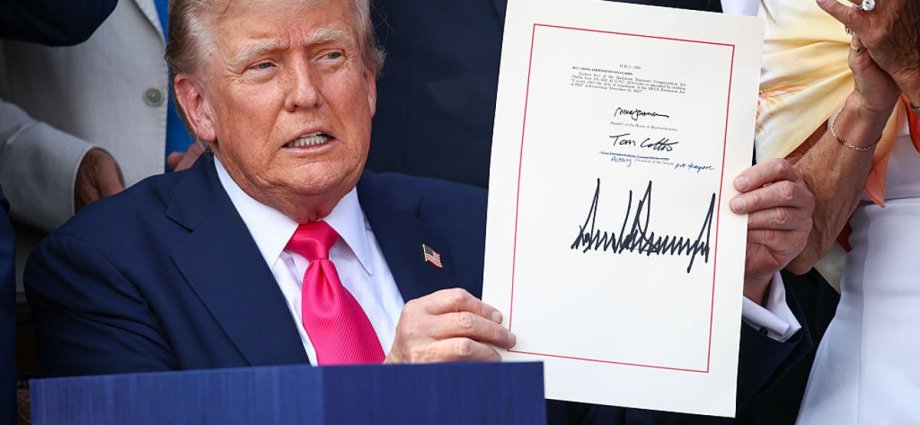
Donald Trump’s abrupt decision last year to dissolve the US Agency for International Development (USAID) effectively eliminated more than 90 per cent of foreign aid contracts, cutting approximately $60 billion in funding. The cuts abruptly shuttered health programmes and disrupted supply chains around the world, and were compounded by heavy cuts to humanitarian aid by the UK and other western countries.
“After the sudden and devastating pullback from US assistance in 2025, governments are now being pressured to accept agreements with contingencies that jeopardise human rights,” Ms Bleckner said.
The US government has not publicly disclosed details of the 32 agreements signed with other governments overall.
The agreements that have come into the public domain, which were either briefly posted to the US State Department’s Freedom of Information Act Library or leaked, were negotiated after the dismantling of USAID.
They require countries to grant the US surveillance access to their health systems, while some allow unannounced inspections of health facilities to make sure they comply with the Helms Amendment, a US law that effectively bans US foreign assistance funding from supporting abortion services.
“Governments negotiating health assistance agreements with the United States face difficult choices,” Ms Bleckner said. “They should be wary of terms asking them to sign away their populations’ rights and push for the inclusion of civil society representative and multilateral global health organisations like the Global Fund in deliberations.”
Experts say the overall aid cuts, and the disruption to support networks, has hampered efforts to save lives amid the first major Ebola outbreak since, having stripped back of the rapid response infrastructure from previous Ebola outbreaks and reducing health aid.
Confirmed cases have hit almost 600 cases across three provinces in the Democratic Republic of Congo, having also spread to Uganda.
Analysis by the US Centres for Disease Control have key health policy authority warning it could match the worst outbreak in history, which killed 11,000 people in west Africa in 2014-2016.
UK development minister Jenny Chapman admitted this week that the response to the rapidly-spreading Ebola outbreak had been undermined by foreign aid cuts during an interview with the BBC World Service during a trip to Kinshasa, the DRC capital.
“But I would say we’re still spending just short of £10 billion on international development each year. So that’s a lot of money in anybody’s book,” Baroness Chapman said. “What we have to do is make sure we spend that really well.”
The cuts have also been linked to a significant increase in violence across several African nations and nearly 23 million additional deaths are expected by 2030 as a result of the global pullback on aid. A peer-reviewed study, published in health journal The Lancet, found that the extra deaths from cuts to aid programmes in 93 countries – including 38 in Sub-Saharan Africa – could include 5.4 million children under the age of five.
Spokesperson for the State Department, Tommy Pigott, said: “The U.S. remains the most generous country in the world, our reforms make our assistance more effective, and President Trump’s actions are making the world safer.”
A State Department spokesperson added that none of the global health memoranda of understanding (MOUs) the US has agreed contain critical minerals provisions and that they provide only for aggregated, de-identified health data of the kind long used to fight HIV/AIDS, malaria, tuberculosis, and other infectious diseases. They said that terms are negotiated with partner governments, tailored to country needs, and designed to advance shared health objectives.
They added that the State Department has signed 32 bilateral global health MOUs representing more than $20.6 billion (£15.4bn) in new health funding, including $12.8 billion in US assistance and $7.8 billion in partner-country co-investment.
This article has been produced as part of The Independent’s Rethinking Global Aid project