










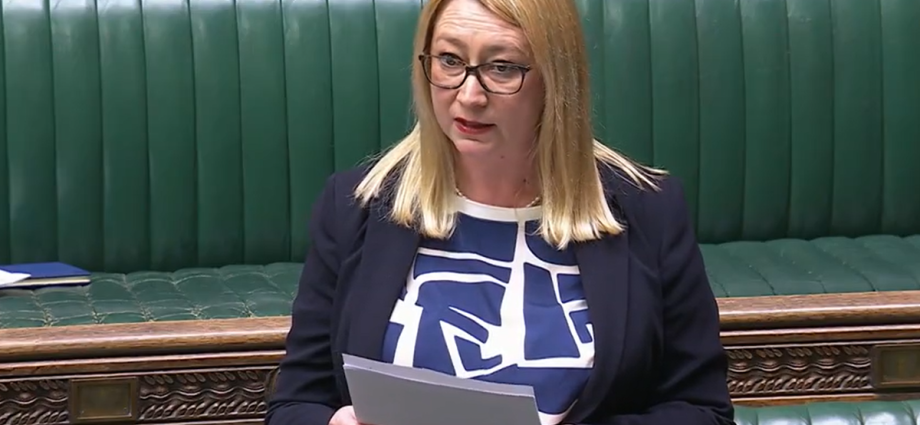
Labour MP Jess Asato has said she is suing Elon Musk’s xAI, alleging its Grok chatbot generated fabricated images of her in a bikini.
The Lowestoft MP confirmed she filed a claim at the High Court on Wednesday, aiming to hold the company accountable for the design decisions that enabled the AI to produce such content.
Ms Asato is seeking damages, but also hopes to establish a precedent for corporate liability in the design of AI systems, advocating for “better guardrails” for future tech developments.
Ms Asato told the Press Association: “Me going public is so that we can invite people who may have been victims of AI photo manipulation on Grok to come forward and to seek legal help … to give people a sort of sense that they’re not alone when this happens.”
She added: “Nobody would be able to walk up to me in the street and strip me and put me in a bikini, and I don’t see why anybody should be able to do that to me online, because the feeling, while it is not quite the same, is very similar.
“It is like somebody has digitally stripped me without my consent.”
It comes after a backlash earlier this year over how artificial intelligence tool Grok was being used to create false sexualised images.
Ms Asato was targeted in January after speaking up, she says, and spoke in the Commons at the time about how Grok had been used to create fake images of her in a bikini.
Amid the backlash, xAI said users would no longer be able to use the tool to generate sexualised images of real people.
And it has since become illegal to create or request a non-consensual deepfake image of an adult in the UK.

But Ms Asato said her claim was about seeking redress for “the harms that were created while Grok was creating harms”.
“If you think about any other products, like a car, for example, that might have been manufactured with a fault, it doesn’t matter if, you know, the cars get recalled and the faults are fixed and no more harm is done.
“It matters that the car was produced with the fault in the first place, and that’s the problem with Grok, is that it was created without the safeguards and without the guardrails to prevent this from happening in the first place.”
She said that safety by design should apply as much in the online space as it does offline.
“I guess that’s the centre of my case, is to say that it doesn’t matter how quickly things were then repaired. Once the damage is done, the damage is done,” she said.
The claim filed at the High Court on Wednesday is being brought under the Data Protection Act and for tortious misuse of private information.
Ms Asato’s solicitor, Ravi Naik of law firm AWO, said: “Where there is a wrong, the law must provide a remedy, and that is as true of artificial intelligence as of anything else.
“No one should be subjected to abuse like this, and no one should have to instruct a lawyer to get images like these taken down.
“This content existed because of design choices made by engineers at xAI. It is built deliberately.
“This is one of the first claims to test liability for the design of an AI system, and we aim to make it clear that safety cannot be an afterthought. Ms Asato has shown real courage in stepping forward.”
xAI has been approached for comment.