











Archaeologists have identified the structural features of the Great Pyramid of Giza that have enabled it to withstand earthquakes for thousands of years, a discovery that stands as a testament to ancient Egyptian engineering.
The Great Pyramid, also known as the Khufu Pyramid and the Pyramid of Cheops, was completed between 4,600 and 4,450 years ago, and has since experienced earthquakes, including one in 1847 with an estimated magnitude of 6.8, and another in 1992 with a magnitude of 5.8.
While it stands firmly today without any major damage, both externally and internally, there has been little evidence to support theories explaining its structural resilience – until now.
To better understand the source of the Great Pyramid’s resilience, scientists recorded ambient vibrations at 37 locations around the pyramid, including in its internal chambers, construction blocks, and in the surrounding soil.

Most vibrations recorded within the pyramid were found to have a frequency between 2-2.6 hertz, indicating that mechanical stress is evenly distributed throughout the structure.
In contrast, researchers found that vibrations in the surrounding soil had a frequency of approximately 0.6 hertz.
Normally, when two objects shake at matching frequencies, their vibrations tend to combine and get amplified in a process called resonance.
This is similar to how an opera singer shatters glass by matching their voice to the glass’s natural resonant frequency.
But in the case of the Great Pyramid, the difference in its vibrating frequency with that of the surrounding soil has helped protect the monumental structure from earthquakes, scientists found.
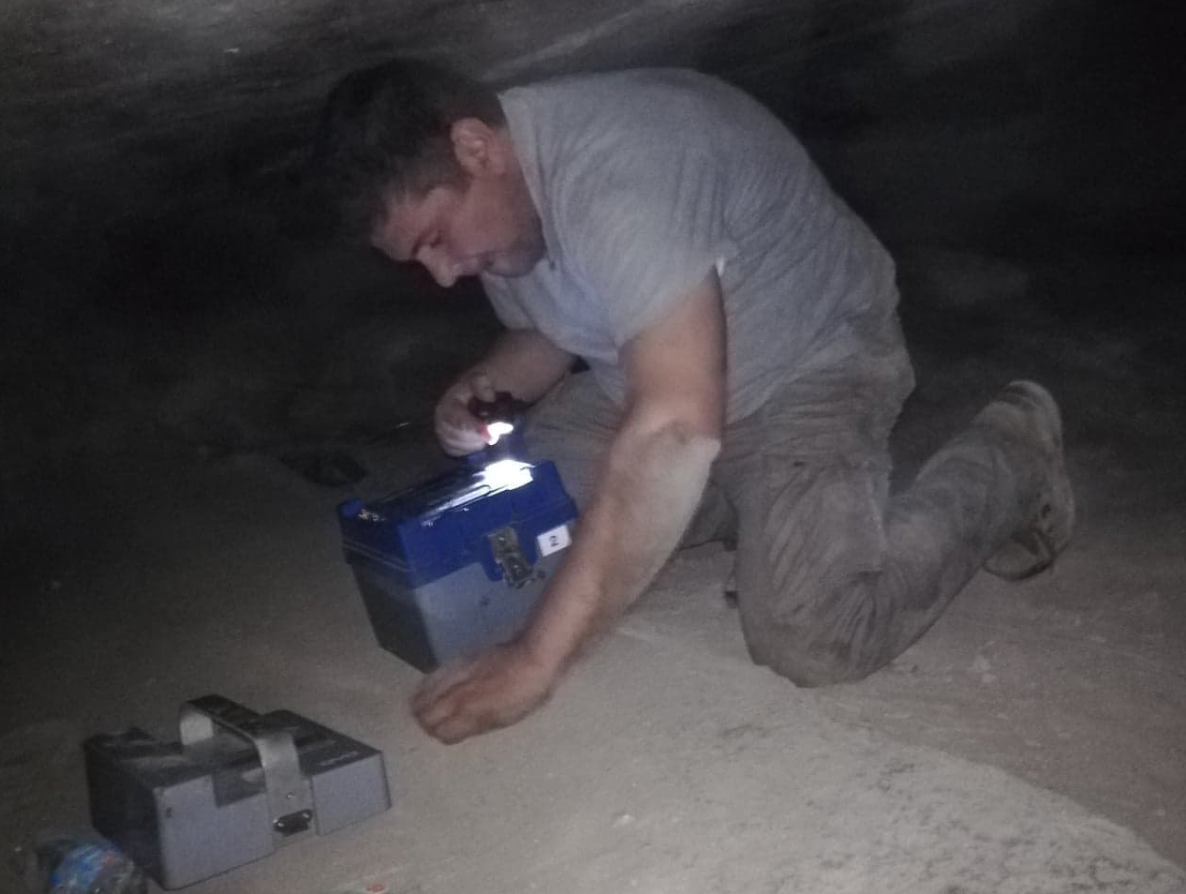
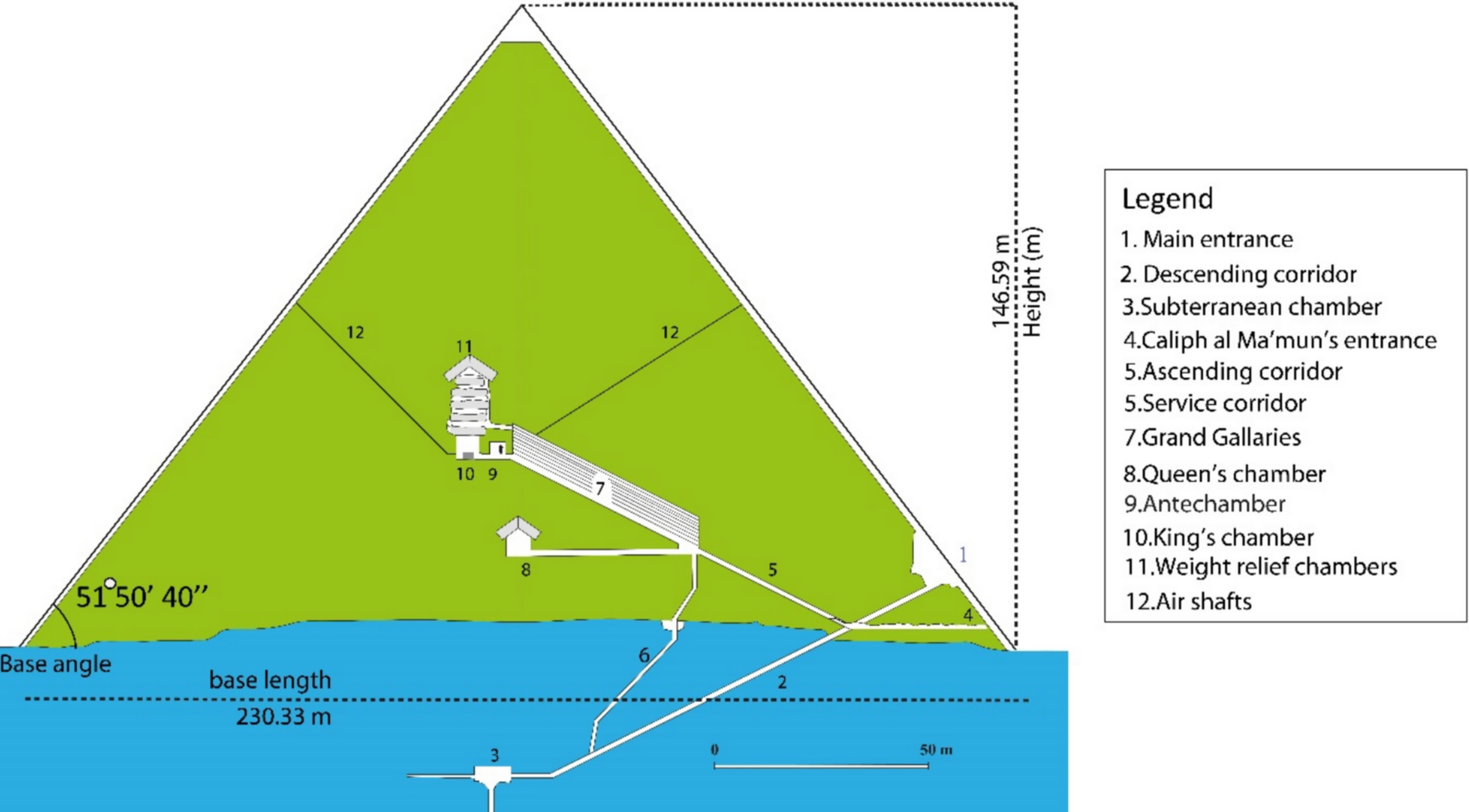
There was also no vibration amplification in the pyramid’s Subterranean Chamber, which is carved directly into the soil bedrock.
“The observed frequency separation between soil (~ 0.6 Hz) and pyramid structure (~ 2.3 Hz) indicates naturally reduced resonance risk, which may contribute to the monument’s remarkable seismic endurance over millennia,” researchers wrote in the study published in the journal Scientific Reports.
Amplification generally increased with height, peaking in the King’s Chamber.
But in the Relieving Chambers directly above the King’s Chamber, the amplification factor decreased to 3 Hz, researchers found.
Scientists suspect this reduced the risk of seismic activity damaging the King’s Chamber.
This is also consistent with the theory that the Relieving Chambers provide structural protection to the King’s Chamber.
Hard limestone rock used to build the pyramid may also be decreasing its risk from seismic activity, researchers say.
However, they caution that the findings do not prove these were intentional features of the pyramid’s design.
“Any suggestion of intentional seismic optimisation by ancient Egyptian architects remains purely speculative,” scientists wrote.
Future studies, they hope, could affirm the Khufu Pyramid as an “architectural marvel” and a “testament to ancient seismic engineering principles”.