










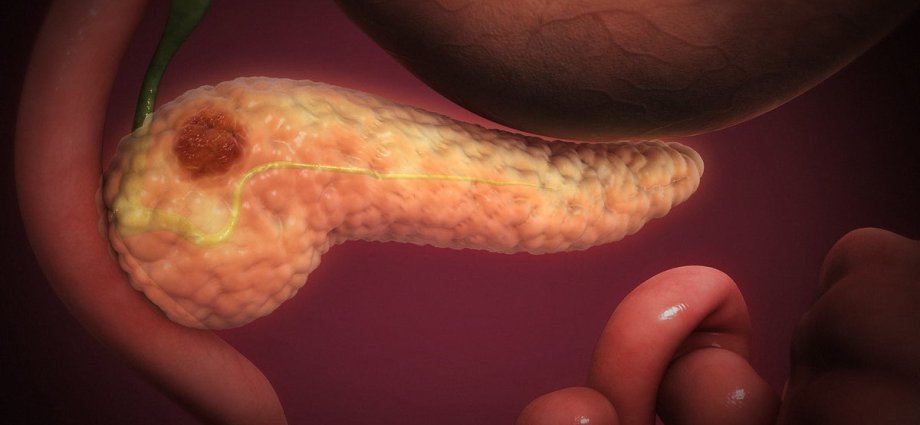
The drug daraxonrasib could be a potential new treatment to double the survival of advanced pancreatic cancer patients, a groundbreaking new clinical trial suggests.
Pancreatic cancer patients often discover the disease after it has already spread and cannot be surgically removed.
This makes chemotherapy the primary treatment option for most patients, with very few surviving beyond one year of diagnosis.
More than 90 per cent of patients also have genetic mutations called KRAS driving their cancer, which, for a long time, was thought to make their disease untreatable.
But a class of drugs called RAS inhibitors have emerged in the last decade as effective options to target mutated genes linked to cancer, like KRAS.
These drugs have been found to “turn off” mutated RAS genes, frequently found in pancreatic, lung, and colorectal cancers, putting them into a dormant state.
Now, a new early-phase clinical trial shows that the RAS inhibitor therapy daraxonrasib has the potential to improve patient outcomes over current standard treatments for patients with RAS-mutant pancreatic cancer.

In the trial, 38 patients received a daily 300 milligram dose of daraxonrasib.
The patients had pancreatic adenocarcinomas, which are among the most lethal cancers as they are not usually diagnosed until advanced stages.
Their overall survival rate after taking daraxonrasib increased to 15.6 months, compared to standard chemotherapy, which typically improves survival for only up to 6.7 months.
“This trial provides a really strong signal that this targeted therapy has the potential to extend the overall survival of these patients,” said David Hong, an author of the study published in the New England Journal of Medicine.
“We saw rapid and durable responses, and the manageable overall safety profile supports the ongoing evaluation of daraxonrasib,” Dr Hong said.
Some patients experienced side effects, including rash, diarrhoea, throat inflammation, and fatigue, but no one had to discontinue treatment due to these effects, researchers said.
“If supported by data from future clinical trials, daraxonrasib would be a targeted therapy relevant to nearly all patients with advanced pancreatic cancer,” said Brian Wolpin, another author of the study.
“If this drug proves effective in larger clinical trials, it would signify a substantial shift in how this disease is treated,” Dr Wolpin said.
Scientists are studying the drug’s effectiveness further in an ongoing, longer clinical trial involving more participants.
The final analysis of this trial would be presented at a plenary session at the American Society for Clinical Oncology (ASCO) Annual Meeting on 31 May, researchers said.
“The drug controlled people’s cancer longer than what we have historically seen with chemotherapy as second line therapy, but we await results,” Dr Wolpin said.
“Although much work remains to be done, it genuinely feels like a new day is dawning for pancreatic cancer treatment, with daraxonrasib potentially serving as the first of a set of new medicines that broadly target mutant RAS,” he concluded.