









The FTSE 100 fell sharply on Tuesday, as did UK bonds, with investors wary ahead of local elections and amid ongoing uncertainty in the Middle East.
The FTSE 100 closed down 144.82 points, 1.4%, at 10,219.11.
The FTSE 250 ended down 87.80 points, 0.4%, at 22,443.81, but the AIM All-Share rose 2.62 points, 0.3%, at 799.28.
After Monday’s sharp gains, when London financial markets were closed, the oil price cooled a touch with the fragile ceasefire between the US and Iran barely holding.
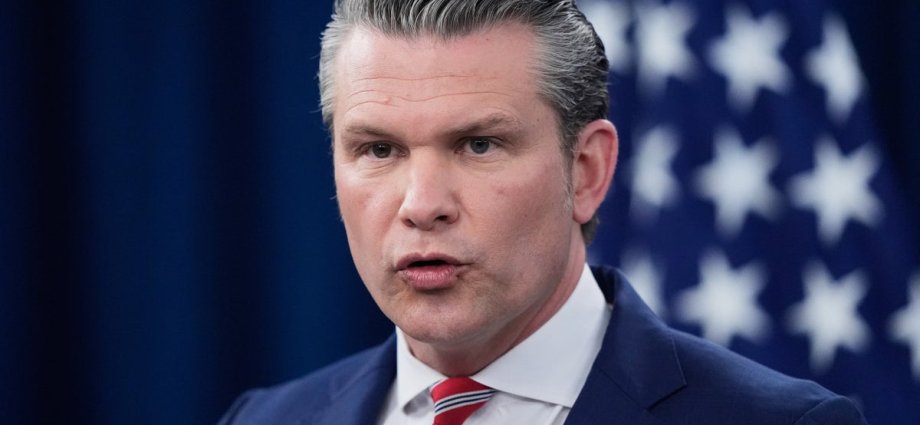
US rhetoric remained defiant, with US secretary of war, Pete Hegseth,stating Tuesday that any attack on commercial shipping by Iran will be met with a “devastating” response.
Mr Hegseth told reporters: “We’re not looking for a fight. But Iran also cannot be allowed to block innocent countries and their goods from an international waterway.”
Brent crude for July delivery was trading at 110.70 dollars a barrel on Tuesday, up compared to 108.86 dollars at the time of the equities close in London on Friday.
In European equities on Tuesday, the CAC 40 in Paris ended up 1.1%, and the DAX 40 in Frankfurt jumped 1.7%.
In New York, markets were higher. The Dow Jones Industrial Average was up 0.5%, the S&P 500 was 0.7% higher, and the Nasdaq Composite was up 0.9%.
The yield on the US 10-year Treasury stretched to 4.42% on Tuesday from 4.38% on Friday. The yield on the US 30-year Treasury was at 5.00% on Tuesday, widened from 4.97% on Friday.
The yield on UK 10-year gilts rose to 5.08% on Tuesday from 4.96% late Friday, with domestic politics adding to the drag from the Iran war.
Thursday sees local elections in the UK, with the government expected to suffer elevated council seat losses. This could spark a leadership challenge to Prime Minister Sir Keir Starmer.
Michael Brown, senior research strategist at Pepperstone, thinks the “best-case” outcome from the local elections for UK assets would be a “relatively contained Labour defeat, which allows PM Starmer to stumble on for a short while longer”.
“Though such a scenario may lead to a relief rally in the GBP and in gilts, any such move is likely to prove relatively short-lived, considering that the present political inertia will likely continue. In fact, for markets, under this scenario, the question would likely rather quickly become one of when sticking with Starmer, and a Government that is struggling to govern, is a worse outcome than changing leader?”
Susannah Streeter, chief investment strategist at Wealth Club, said investors in UK government debt are “uneasy”, given worries that a replacement might cause the government to veer into a less fiscally responsible spending direction.
“Rising gilt yields mean it’s becoming more expensive for the government to finance UK debt, which puts pressure on current budgets,” while they also act as a “red flag” for the mortgage market, given that banks and lenders price many loans off these market moves.
The pound eased to 1.3569 dollars on Tuesday afternoon from 1.3626 dollars on Friday. Against the euro, sterling was higher at 1.1586 euros from 1.1578 euros on Friday.
The euro traded lower against the greenback, at 1.1707 dollars on Tuesday from 1.1765 dollars on Friday.
Against the yen, the dollar was trading at 157.66 yen, higher than 156.74 yen.
In London, rising bond yields and fears of an extended conflict in the Middle East raised fears of a hit to economic growth.
Banks were a weak feature, with lenders HSBC, Lloyds, NatWest and Barclays down 5.9%, 3.4%, 3.6% and 3.3% respectively.
HSBC was further knocked by mixed first-quarter results with a strong underlying performance clouded by above forecast costs and worse-than-hoped impairment charges.
The charges included a 400 million dollar fraud-related, secondary, securitisation exposure with a financial sponsor in the UK, as well as a 300 million dollar increase in allowances to reflect the possible impact of the Middle East conflict.
The Financial Times said the UK fraud charge was tied to collapsed UK mortgage lender Market Financial Solutions, citing people familiar with the matter.
Without naming the group, HSBC’s chief financial officer Pam Kaur said on a media call: “We have an exposure to a financial sponsor who has an exposure to the company.”
A 400 million dollar loss would place HSBC among the lenders hardest hit by the MFS implosion.
Last week, Barclays PLC took a £228 million hit from its demise.
Citi analyst Andrew Coombs said the UK charge was “not expected”, while the increase for the Middle East conflict was “broadly as anticipated”.
While Dan Coatsworth, AJ Bell’s head of markets, said the “sizeable” fraud-related charge is “a reminder that risks don’t only exist in more far-flung parts of the world”.
Retailers were also on the back foot over fears of a knock-on impact from higher energy prices on consumer spending.
Marks & Spencer fell 4.8% while JD Sports, which reports full-year results this week, dropped 3%.
Leading the risers, Intertek, up 6% after EQT increased its bid proposal for the FTSE 100 listing to 5,800p per share from 5,400p per share.
London-based assurance, inspection, product testing and certification company Intertek, which rejected the 5,400p bid, as well as an earlier approach priced at 5,150p per share, said it is reviewing the higher proposal.
BT gained 3.5% as Bank of America (BofA) upgraded to “buy” from “neutral” on hopes for higher dividends.
BofA sees a material step-down in capex at the telecommunications firm as its fibre build completes, driving improved free cash.
Gold traded lower at 4,576.51 dollars an ounce on Tuesday, from 4,637.78 dollars on Friday.
The biggest risers on the FTSE 100 were Intertek, up 286p at 5,090p; Spirax, up 274p at 7,372p; Polar Capital Technology Trust, up 15.5p at 627p; BAE Systems, up 42.5p at 2,077p; and Compass, up 0.55p at 28.8p.
The biggest fallers on the FTSE 100 were Entain, down 36.6p at 531.2p; HSBC, down 79.6p at 1,279.8p; Marks & Spencer, down 16.0p at 321.5p; Fresnillo, down 140p at 3,115p; and Weir Group, down 110p at 2,490p.
Wednesday’s global economic calendar has a slew of composite PMI readings, including the UK at 9.30am and US ADP employment data.
Wednesday’s local corporate calendar has a trading statement from Johnnie Walker owner Diageo, clothing and homewares retailer Next and medical technology company Smith & Nephew.
Contributed by Alliance News.