










Want to bookmark your favourite articles and stories to read or reference later? Start your Independent Membership today.
Join today
Already a member?
Log in
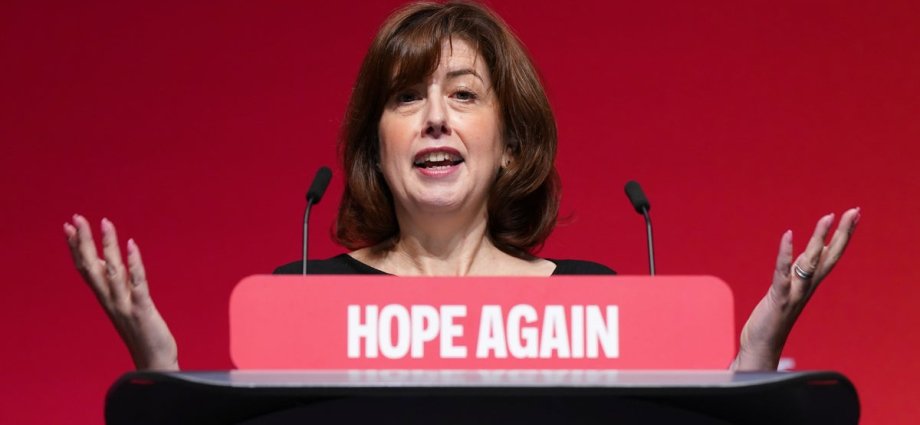
Lucy Powell, deputy leader of the Labour Party, Secretary of State for education and self-styled “tiger mum” of the nation declares that the new curriculum for English schools is “about raising standards in more subjects and giving young people more pathways and more options to success”.
Not even her most trenchant critics could quibble with such an approach, and there is much in her proposals that is extremely welcome – not to say overdue. For example, given its rapid and momentous rise, it is surely time that there should be a GCSE qualification in Artificial Intelligence, and that there should be much more attention paid to how computing and associated technologies are treated in schools, both as aids to learning and as disciplines in their own right.
This, as seems likely, will include the threats and the dangers that derive from them as they permeate society, as well as all the universal advantages and benefits that flow from them. It may well be, as some experts argue, that children learn better from books and via cursive writing than from screen and keyboards; but it is also true that the internet is a far more accessible source of information than even the best-stocked school library, and, as Ms Powell indicates, AI can help guide a pupil through difficult maths homework when a dedicated teacher or competent parent is not on hand to help with the quadratic equations.
In many other ways too, the implementation of the reforms recommended last year by the senior educationalist Becky Francis are simply a modernisation and rationalisation of a curriculum that has become overcrowded to the point of unviability, and bureaucratic with it. This accretion of progress matters; guidance and subject matter has only added to the often intolerable workload for teachers.
It is worth recalling that there was a time, before the Great Education Bill of 1988, when there was no such thing as a national curriculum, and schools and their staff had far more discretion about what they taught and how, given the framework set by the exam boards. The pendulum may well have swung a little too far, even if it has resulted in historically impressive performance by English schools since Michael Gove rightly course corrected things towards academic rigour a decade and a half ago.
Ms Powell’s complaint is that there has been too little emphasis on vocational qualifications (which can be just as intellectually demanding) and on allowing children more creative space as well. The number of young people not learning or earning may well be partly a product of a system that undervalued skills and apprenticeships, and there is no harm in adjusting the curriculum again to correct such shortcomings.
Some rudimentary financial education is certainly something that serves everyone well, and makes them that bit less vulnerable to fraud and inflation. Public speaking or “oracy”, as the “fourth R”, can help build confidence and skills in argument and debate that will also have a broad application in life and work long after the classroom. Ms Powell is also correct to identify white working class children as suffering from lower attainment and a higher “disadvantage gap”, and to want to focus on ending that. This aspect of what’s happening in the school system should not be the monopoly of the racist Right. And for all children, music, competitive physical activity in team games and excursions should add to the variety of their experience and reduce the ever-present risk of boredom.
As the details of her reforms are published and debated in the coming days, Ms Powell would be wise to listen to the concerns of her critics and, more important, teachers and parents as the implications become clearer. These reforms will vitally affect the life chances of so many, and the prosperity of the nation as a whole, and they have to be right and widely accepted. So far as is possible, she will have to keep children and schools out of our endemic “culture wars”, and above all demonstrate that there is indeed “no one stronger on standards than me”, as she told Laura Kuenssberg on the Sunday media round. The changes she is making are not as profound as those pioneered by Kenneth Baker and Mr Gove respectively, but they certainly matter and not just to tiger parents.