








Want to bookmark your favourite articles and stories to read or reference later? Start your Independent Membership today.
Join today
Already a member?
Log in
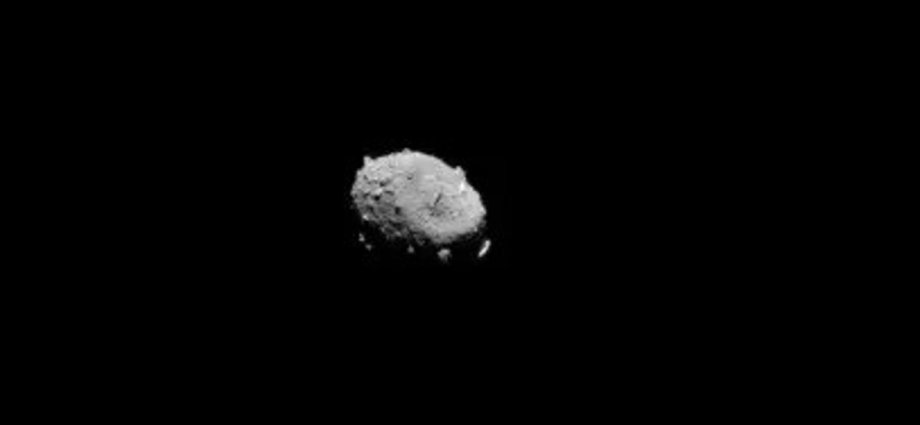
The first images of an asteroid that Nasa deliberately crashed into in order to test the Earth’s defences have been revealed.
A stadium-sized crater is visible in the pictures of the damaged asteroid Dimorphos, released on Wednesday.
The collision took place in December 2022 when scientists deliberately crashed Nasa’s Dart spacecraft into the asteroid to test whether it was possible to push a rock off course if there were ever a risk of one headed toward Earth.
The European Space Agency has since dispatched a spacecraft called Hera to assess the damage caused by the impact.
It said the asteroid’s orbit had been successfully altered by Nasa’s spacecraft as it orbited a larger asteroid called Didymos.
Dimorphos now has “one face flattened with a stadium-sized crater and is tumbling chaotically”.
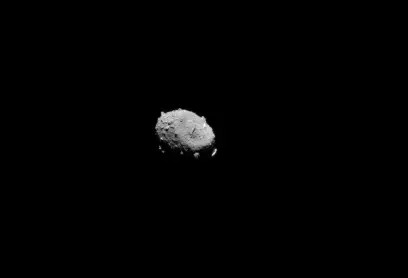
Hundreds of previously unknown boulders encircle the pair, according to the ESA.
The original test saw Dart hurtle into Dimorphos at a speed of 14,000 mph or 22,000 km/h. The 150m (500ft) wide body has left a 6,200 mile long trail of debris behind it following the crash.
Before the impact, the smaller asteroid took around 11 hours and 55 minutes to orbit the larger one but this has since shrunk by around 33 minutes.
“Scientists debated whether Dimorphos had sustained an impact crater, changed its shape or stayed the same,” said Hera‘s principal investigator Patrick Michel, who is also director of research at CNRS and Observatoire de la Côte d’Azur.
“Much to our surprise the answer turns out to be all three at once. The face struck by Dart has been flattened into an impact crater the size of a sports stadium, which extends across the asteroid’s entire width.”
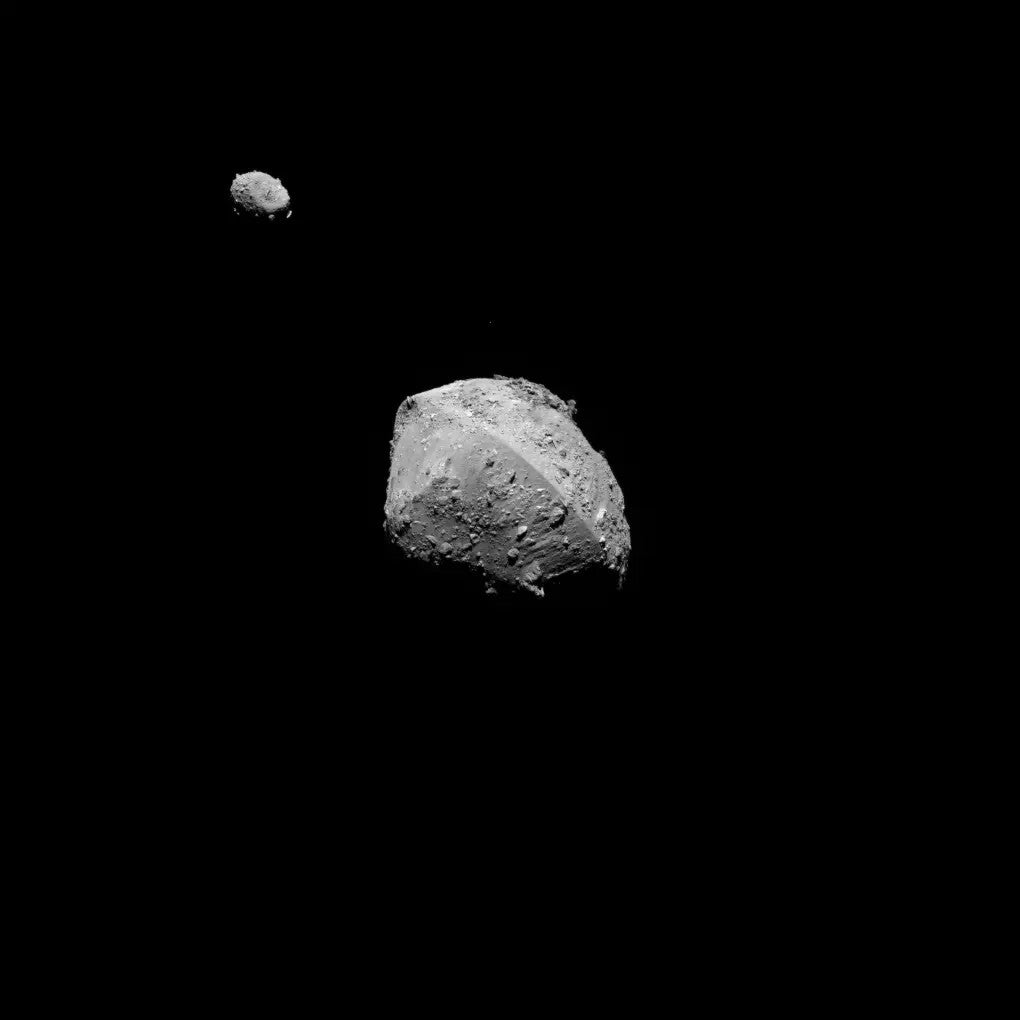
Scientists involved in the project have emphasised the importance of planetary defence as they unveiled the images for the first time at the Natural History Museum in Berlin where several dinosaur skeletons are exhibited.
“Sixty-six million years ago, an asteroid impact changed the course of life on Earth. Today, for the first time in history, humanity is validating how to prevent such an event from happening again,” said Hera mission manager Ian Carnelli as the pictures were unveiled.
“Nasa’s Dart mission demonstrated that we can change an asteroid’s orbit. Hera is now revealing what happened to the asteroid itself. By combining these two missions, humanity is taking a decisive step towards making asteroid deflection a reliable tool for protecting our planet.”
But Hera’s investigation has not concluded and is only beginning. In December is it scheduled to approach around 13km from the asteroids and return progressively higher-resolution images.
Then in January 2027, Hera will deploy two shoebox-sized CubeSats (a type of miniature satellite) that will venture even closer.
An international collaboration has assisted the discovery with ESA noting “valuable contributions from international partners, including Japan’s JAXA.”