



Want to bookmark your favourite articles and stories to read or reference later? Start your Independent Membership today.
Join today
Already a member?
Log in
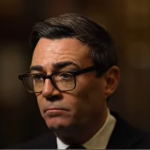
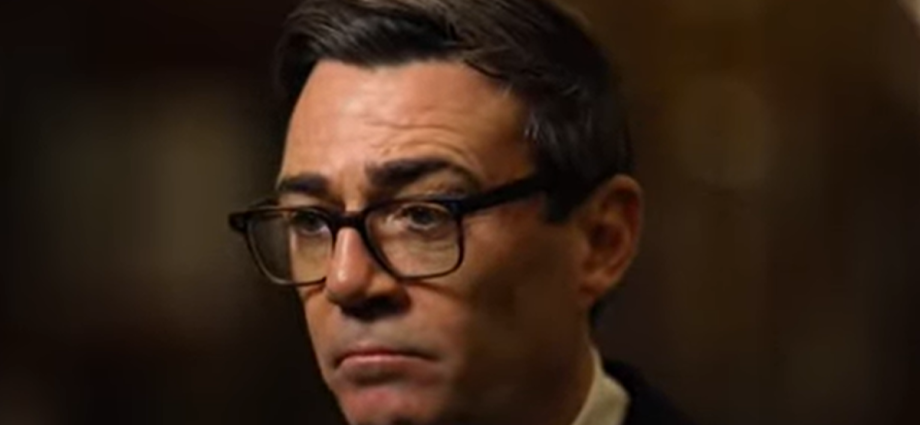
Andy Burnham said it would be “unthinkable” for the UK to rejoin the EU without another referendum and denied that his new deal with the bloc is a “prelude” to a second vote on the matter.
Addressing the House of Commons and taking questions from MPs on the deal signed at last week’s UK-EU summit, the prime minister said “there will be no banging on about Europe”, redolent of former prime minister David Cameron’s words at the 2006 Conservative Party Conference.
Asked by Conservative MP Sir Bernard Jenkin whether he could be “clear and unequivocal” that it would be “unthinkable” to rejoin the EU without another referendum, Mr Burnham said: “Yes, it would be unthinkable.”
Additionally, Father of the House Sir Edward Leigh warned that Mr Burnham’s “sincere desire to rejoin the EU” could put the union at risk by relitigating referendums.
The prime minister responded: “It’s not a prelude to anything. It’s a pragmatic approach and it will continue to be a pragmatic approach.
“If it’s in Britain’s national interest, I will recommend it to this House. If it is not, then I won’t. There is no fixed opinion here. There is no fixed destination.
“Europe could change again in the next year, 18 months, and we’ll have to obviously watch how how life changes. But where Britain can make progress, surely we should make progress.”
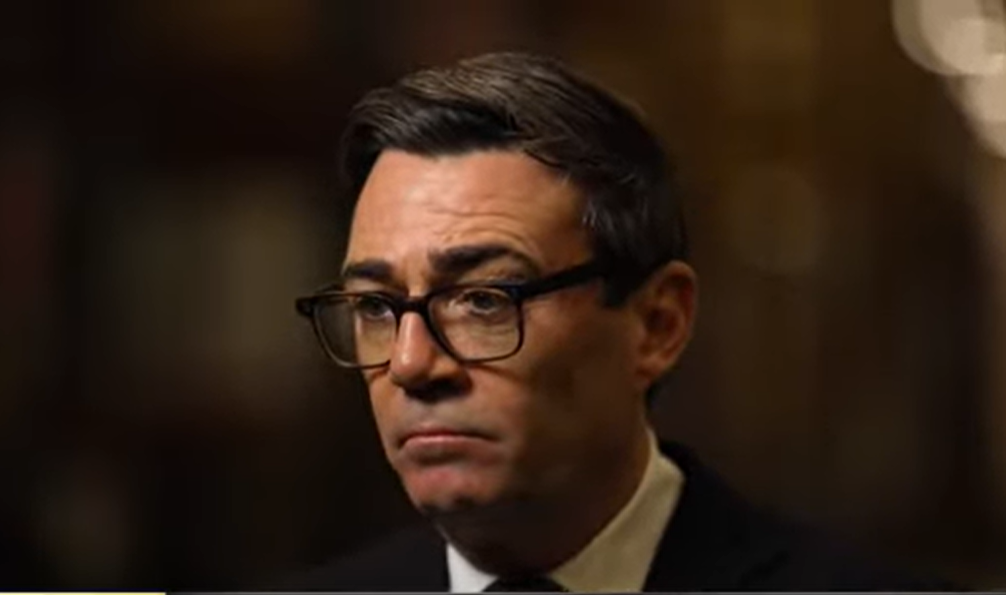
Earlier, Mr Burnham accused his predecessors of being “stuck in the past” as he defended his decision to reopen the Brexit debate and look again at whether the UK should rejoin the EU.
Agreements had been reached on food and agriculture exports, emissions trading and a youth experience scheme at last week’s Brussels summit.
Downing Street said the deal would “lighten the load on shoppers” but could not guarantee prices will fall.
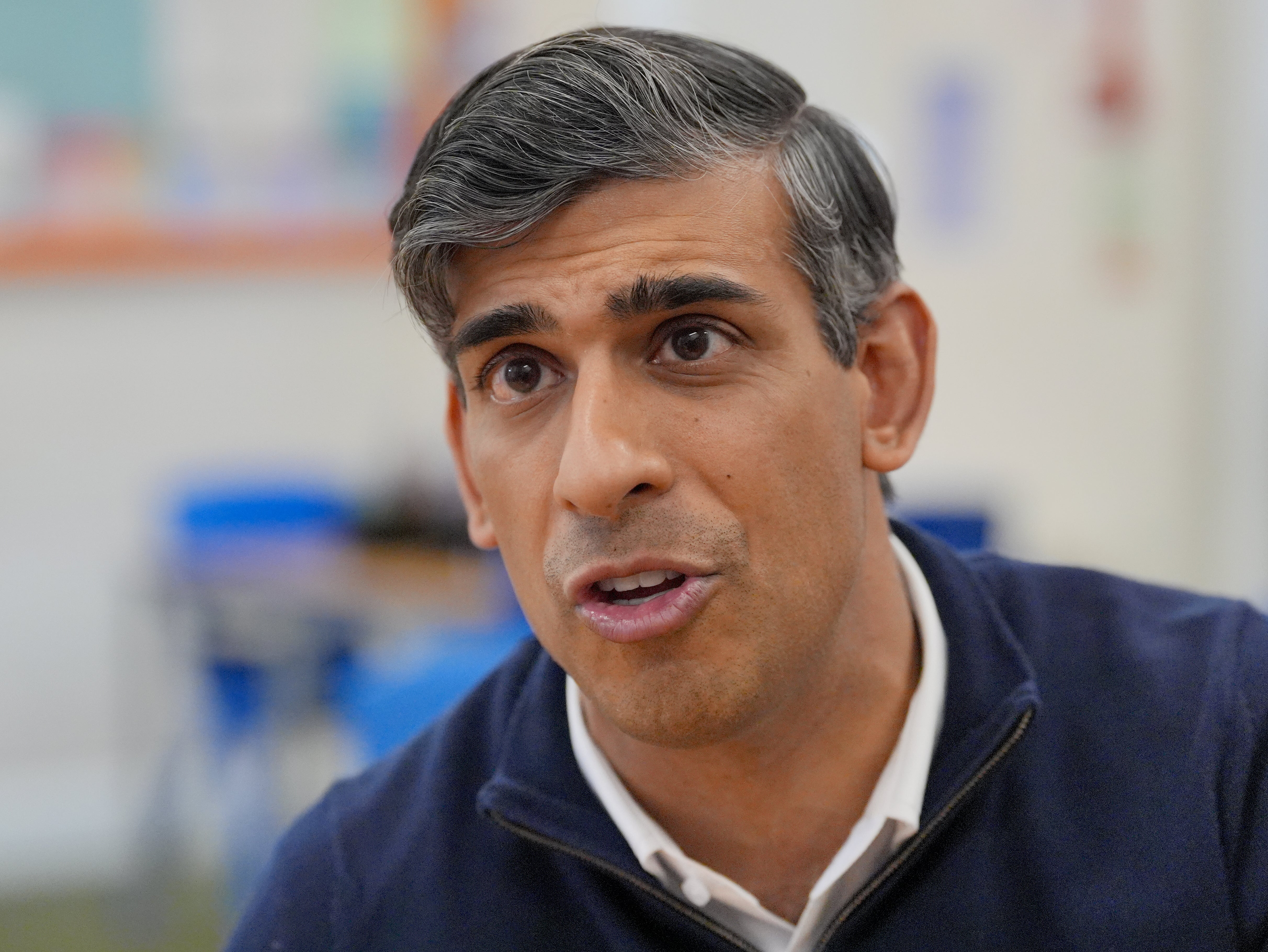
But Rishi Sunak became the sixth former prime minister – joining Lord Cameron, Theresa May, Boris Johnson, Liz Truss and Tony Blair – to question whether the Brexit debate should be reopened.
Mr Burnham was unapologetic and blamed them for “getting us here in the first place” with a series of poor decisions on Brexit.
He said: “I’m not sure they’re the people I’ll be listening to them, because they left Britain with a bad Brexit deal that has hit growth over the last decade, has lifted cost of living, reduced opportunities for young people, and of course, limited our ambition to control immigration.
“So, of course, you look again. They’re stuck in the past because they can’t face up to the bad deal that they did. They just say, ‘Oh, leave it alone, stay in the past.’ Well, I’m not a prime minister that’s going to be stuck in the past. I want to lead Britain forward to a more hopeful future.”
It came out as Downing Street laid out a timetable for discussing the future of Brexit.
On Thursday as “cost cutting” Bill will be tabled for the new deal, in December the PM will set out his 10-year plan, in January he will brainstorm the future with EU leaders, then in November 2027 the options for the UK on Brexit will be laid out for the British people.
Mr Sunak, who has recently been adopted to stand again in his Richmond seat in Yorkshire for the Tories, was a Leave supporter back in 2016 and now opposes revisiting Brexit which he himself amended as prime minister with the Windsor Framework in 2023.
He told Sky News: “If it was me I wouldn’t reopen this debate about re-joining the EU. Obviously it is divisive but we saw last time around that it is also all consuming so it ends up being a huge distraction for government and everyone from focussing on all the things we need to do to make people’s lives better today.”
Over the weekend, Baroness May, whose premiership was overwhelmed by her failure to agree a Brexit deal, told the BBC’s Laura Kuenssberg: “I look slightly aghast at what Andy Burnham is talking about, further negotiations of going into the EU. And also we, as a country, we voted for Brexit.”
Lord Cameron, who resigned in 2016 after voters backed Brexit in the referendum he called, has also advised against reopening the debate, while Sir Tony Blair said that his support for rejoin is “heavily conditioned” on the EU reforming itself.
Mr Burnham was speaking at a visit to Morrisons at Sittingbourne in Kent where he said his new Brexit deal would boost business opportunities.
“I want to get the cost of living down for people, lower energy bills. All of these things can be achieved by a more positive, constructive relationship with the European Union, our largest market,” he said.
“And that’s why I’m very confident in what we’ve done. I believe it will be better for Britain to take this path, and I won’t be listening to those voices who put us here in the first place.
“So we’re here at Morrison’s, a major distribution centre in Sittingbourne, and they have told me that the deal will lift the pressure off the weekly shop. They’ve just shown me a stack of paperwork about that big, which they have to fill in when they export from here to their store in Gibraltar. Now that adds cost. If you remove that paperwork, that red tape, you can lower the cost, and they say it will lower the pressure on the weekly shop.”
Defending his deal, he added: “ We cannot ignore the fact that our economy is smaller since Brexit, and exporters, British-based businesses, are facing bigger costs to export to Europe, more red tape. It’s why the National Farmers’ Union says that exports from British food producers and farmers are down about 30 per cent since Brexit.
“So, if we can do something to boost growth, why wouldn’t we do it? And that would be my question to those former prime ministers who are turning their back on this. Surely, in this moment, when Britain needs to help our businesses, needs to help people by lowering the cost of living, when you have a deal that can do all of those things, surely it’s in the national interest to take?”
Later he doubled down on his comments during a statement in parliament when he responded to Tory former deputy PM Oliver Dowden.
He knocked down claims that he has agreed to join the Euro, turning to Sir Oliver, he said: “He talks in terms which I think show the problem on the other side of the House. Hardline, doctrinaire for years they have gone to Brussels and insulted people. They have gone there and damaged good will and that is against the British national interest.
“It is in our interest to work with people when they are our nearest neighbours and it became very plain to me as part of these negotiations the depth of the damage they have done to those relations.”
Moments after Mr Burnham answered questions in Kent, Tory leader Kemi Badenoch made it clear that her party sides with former PMs criticising his deal and reopening the Brexit debate.
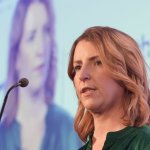
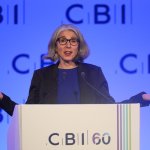
Speaking to the Confederation of British Industry (CBI), Ms Badenoch said: “For Britain to have an economic revolution, we need to be at the forefront of the industries of the future: artificial intelligence, biotechnology, advanced manufacturing.
“We have enormous advantages in these areas, but we will never leave these industries if we smuggle them in regulation. We have the opportunity to outperform our European competitors by being more innovative, more competitive, and more business friendly. Since leaving the EU, British scientists and farmers have been able to surge ahead with technologies that can make crops more productive and resistant to disease.”
But turning on the PM, she said: “Now, by signing us up to EU agricultural rules, Andy Burnham risks losing those gains and dragging us backwards. The last thing we need is to start taking the EU’s rules again. Instead, we should be making Britain the best place in the world to innovate.”
However, business leaders want a new conversation on Brexit.
CBI chief executive Rain Newton-Smith said: “It’s important we have a conversation about our relationship with the EU.
“Across our economy there are areas where there are still frictions with the EU, the more we can reduce those, the higher growth prospects.”
While the majority of Labour MPs backed Mr Burnham on his Brexit strategy, veteran Labour MP Graham Stringer warned Mr Burnham against breaking his promise to his constituents in Makerfield.
Mr Stringer said: “Does he reflect on when he said in Makerfield that it would be wrong to reopen the debate on Europe because it would be divisive and then he does exactly that in Brussels, that that leads to cynicism and a loss of trust in parliamentary democracy. Where there is a loss of trust in parliamentary democracy you get extremists.”
Mr Burnham said: “I am not proposing at this moment to rerun the referendum.”