


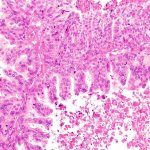







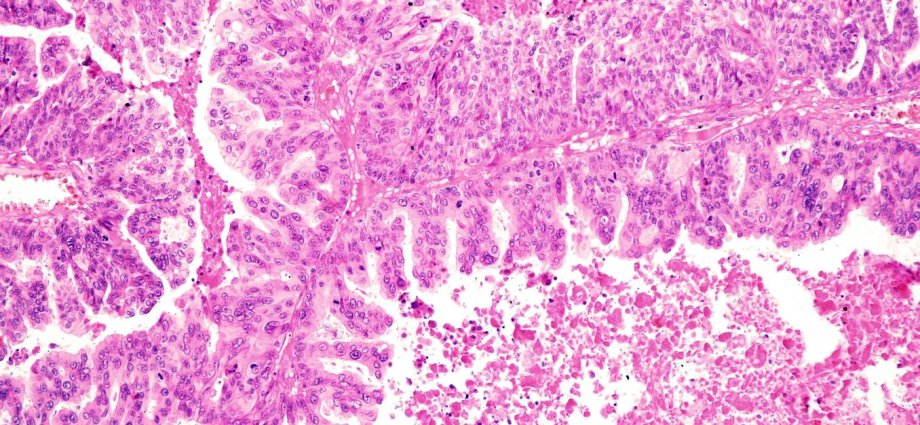
The most common type of ovarian cancer tends to grow quickly. It’s called high-grade serous ovarian cancer and often starts in a fallopian tube, one of the tubes that carry eggs from the ovaries towards the womb.
The first changes can be so small that they’re usually found only when a specialist examines the tube under a microscope after surgery. Now, a new study suggests that some of those changes may leave a trace in the blood.
The researchers looked for a molecule called Tu-stroma in stored blood samples. They found higher levels in people with early cancer that had begun growing into nearby tissue. Levels were also higher in people with a tiny patch of abnormal cells still confined to the lining of the fallopian tube. This patch, known as serous tubal intraepithelial carcinoma (Stic for short), can be an early step towards this type of ovarian cancer. The next step is to follow people over time to find out when the signal first appears.
Ovarian cancer can cause symptoms such as persistent bloating and pain in the tummy or low down between the hips. Some people feel full after eating very little or need to pee more often. These symptoms are common in other conditions too. If they persist or keep coming back, it’s worth getting them checked by a GP.
When investigating symptoms, doctors may use a blood test for CA125, a protein whose level can rise when ovarian cancer is present. Other conditions can raise it too, including endometriosis, in which tissue similar to the womb lining grows elsewhere in the body. Some people with early ovarian cancer still have a low CA125 level. The UK has no routine screening programme to check people without symptoms for ovarian cancer.
What the researchers found
Tu-stroma is a type of RNA, one of the molecules cells use to control how they work. Earlier research showed that ovarian cancer cells can release Tu-stroma in tiny packages called extracellular vesicles. Think of these as microscopic parcels carrying messages from one cell to another. The researchers measured how much Tu-stroma these parcels were carrying in the blood.
They analysed samples from 506 people, including 43 with Stic alone. In a separate group used to check how well the test worked, it picked up Stic in about 92% of those who had it. The test showed no signs of Stic in about 98% of people in the healthy comparison group. In these samples, Tu-stroma did a better job than CA125 of telling people with Stic apart from people who were healthy or had non-cancerous growths around the ovaries or fallopian tubes.
There’s an important catch. The researchers were working with samples from people whose diagnoses were already known. Only a small number had Stic, so the results are still uncertain. If the test were offered widely to people without symptoms, very few would be likely to have these patches of abnormal cells. Even a small proportion of false alarms could send many people for unnecessary tests or even surgery.
What it could mean for people at higher risk
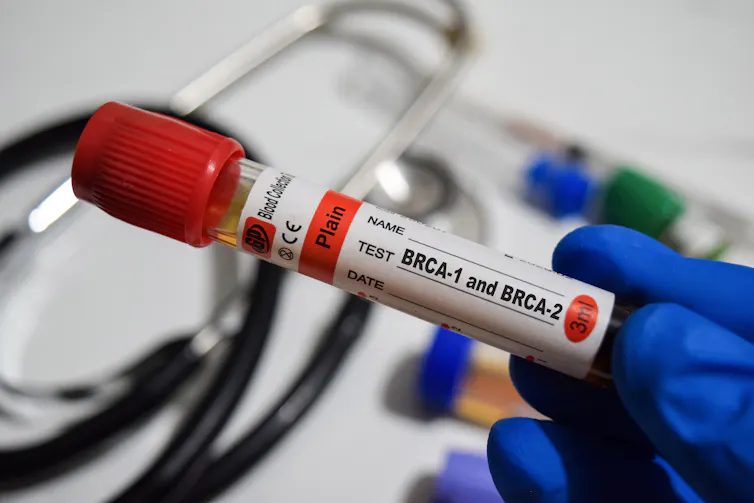
BRCA1 and BRCA2 are genes that help repair damage to DNA, the genetic instructions in our cells. People who inherit a harmful change in either gene have a higher risk of ovarian cancer. They may be advised to consider surgery to remove their ovaries and fallopian tubes once they have finished having children or if they do not plan to have them. The operation lowers their risk, but it ends their ability to get pregnant without fertility treatment. If they haven’t yet reached menopause, the sudden drop in hormones after surgery brings it on straight away.
bangoland/Shutterstock
The National Institute for Health and Care Excellence (Nice) advises that specialist teams can consider regular CA125 testing for some people at high inherited risk who delay or decline surgery. Tu-stroma might one day improve that monitoring. For now, even if the experimental test picks up no warning signs, that result gives someone no basis to postpone recommended surgery.
A large UK trial found that screening with CA125 picked up more ovarian and fallopian tube cancers at an early stage. Even after years of follow-up, there was no clear evidence that fewer people died from those cancers. With Tu-stroma, researchers still need to find out how often the abnormal cells in the tube lining start growing into nearby tissue. They also need to work out what to do if the blood test flags a problem but a scan shows nothing. The question a screening trial would ultimately have to answer is whether acting on that result saves lives.

Justin Stebbing does not work for, consult, own shares in or receive funding from any company or organisation that would benefit from this article, and has disclosed no relevant affiliations beyond their academic appointment.