










Want to bookmark your favourite articles and stories to read or reference later? Start your Independent Membership today.
Join today
Already a member?
Log in
Greg Wise is not, he stresses, an “expert” on grief. “I’m not a therapist. I’m not a grief counsellor. I’m not an academic. I only know the stuff that I know, that I have felt,” he says.
Expert or not, the Crown actor has unexpectedly found himself occupying a space in which grief is his bread and butter, the water in which he swims – something he spends far more time thinking and talking about than his next potential starry TV or film role.
The catalyst for this evolution was arguably Not That Kind of Love, the book he co-wrote with his late sister Clare and published in 2018. Based on the blog she began when she was diagnosed with breast cancer five years earlier, it charts the highs and lows of the last few years of her life; Wise became her carer in the three months preceding her death in 2016, and took over writing when she became too weak to type.
“That was published eight years ago now, and I feel so privileged to, in the interim, have got to know so many extraordinary people in the dying, death and grief world – and I think I’ve learnt quite a bit,” says Wise, now 60. “I’m still getting people stopping me on railway platforms and talking about death.”
We may not be on a railway platform, but we are nonetheless here talking about death – the subject of his new book, Grief Talking, a memoir of sorts in which Wise explores the various losses of his life and the lessons he’s learnt as a result. He describes himself as “a narrator of various different grief stories”, the aim being “to just set myself up as the storyteller of: this is what happened, this is how I reacted, and this is what I’ve learnt – and that’s all.”
“I’m grateful,” he says, “that I was able to write a book without, I think, giving a single piece of advice.”
This foray into literature is the latest move in a 35-year career that has always prioritised variety above all else. After studying drama at the Royal Scottish Academy of Music and Drama, Wise starred in a slew of TV and film roles in the Nineties, with a penchant for playing classically handsome heartthrobs in period dramas like The Buccaneers and The Moonstone. But while acting may have been his first love, it’s never been his only one.
“I’ve always had a reasonably fluid relationship with acting,” he says. “I haven’t done that much over the years; I’ve always been too interested in too many other things.” These “things” include making documentaries, writing screenplays, and his work as a Patron for End of Life Doula UK. He also spends a lot of time up in Scotland, mountaineering, cider-making, and tending to his beloved collection of chainsaws and power tools. “I have an appetite for lots of different things,” Wise says.

Grief Talking encompasses Clare’s death, of course, but Wise writes equally movingly about various other bereavements including the sudden death of his university friend in an accident, the intergenerational grief passed down in his family that resulted in cold and distant fathers and narcissistic mothers, and the death of both his parents.
“There is an exquisite privilege of both the journey and the bearing witness of the end,” Greg says of the fact he has been there for all three of his immediate family members at the end of their lives. “I would be very happy for more people to have this experience.”
All this talk of pain and death has swept away any need for small talk. “I may cut to the chase now,” Wise observes about himself. “There’s not a lot of foreplay – we don’t really have time for foreplay.” It’s true that the actor has a “straight to the point” quality about him, and given the sombre topic of conversation, it’s a wonder that the mood is not remotely gloomy. Joining me over video call from his home, Wise is instead lively, his face expressive and animated as he talks about how looking death squarely in the face can be the key to unlocking life’s deep joys; “The most raucous laughter I’ve ever heard was in a hospital,” he observes.
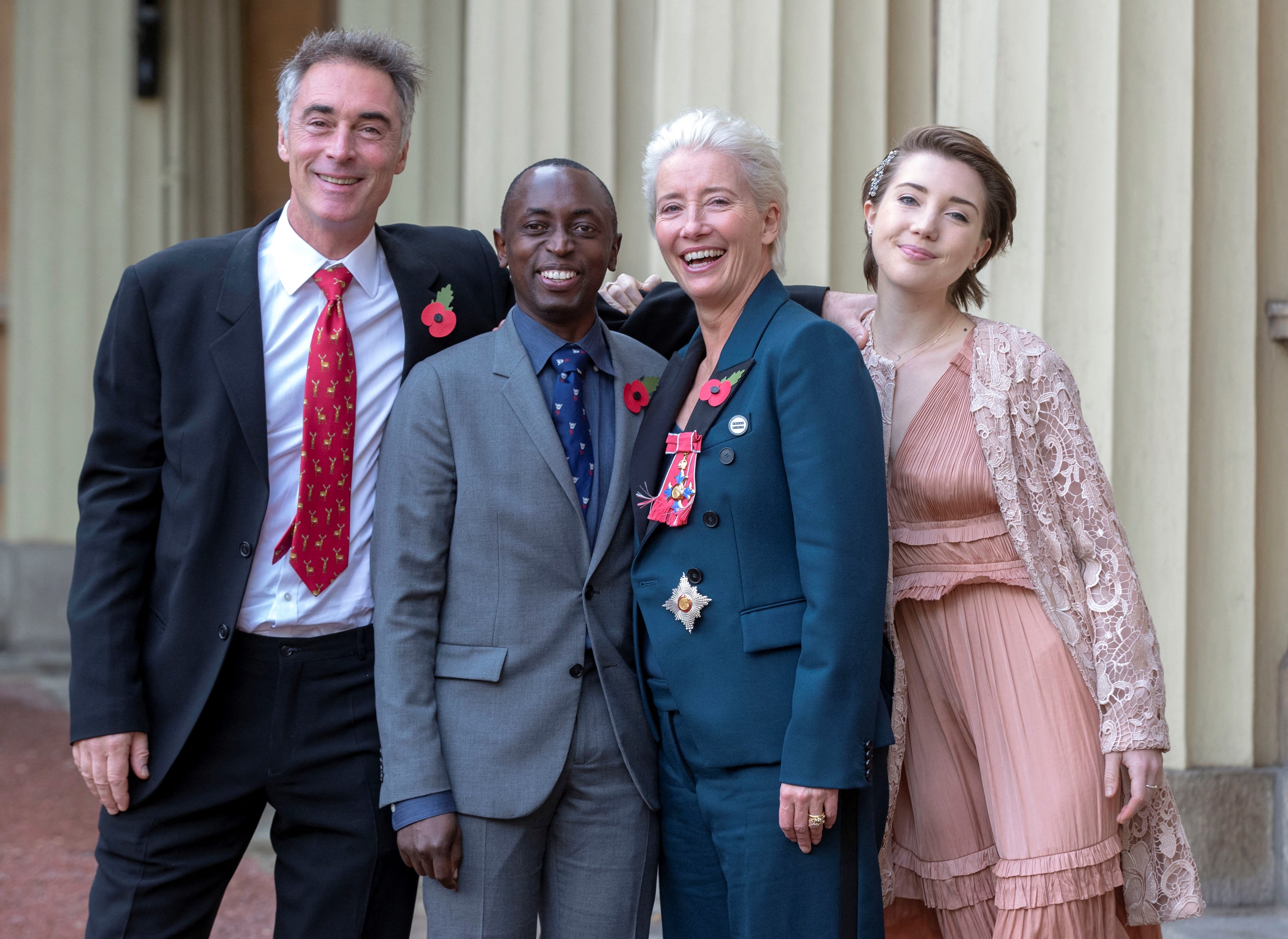
His voice is deep and resonant, still instantly recognisable, more than 30 years on, as that of Wise’s most famous role: Mr Willoughby in director Ang Lee’s beloved 1995 adaptation of Sense and Sensibility. (He hasn’t seen the new film starring Daisy Edgar-Jones and is therefore unable to comment on how it compares; “Your words, not mine,” he responds wryly when I gush that his was the definitive version and that, as far as I’m concerned, there was no need to make another adaptation ever again.)
It was on the set of the Jane Austen classic in 1995 that Greg met his future wife, Emma Thompson. The celebrated actor, writer and director had both written the screenplay and was playing Elinor Dashwood; he was cast as the caddish love interest of her on-screen “sister” Marianne (Kate Winslet).
Thompson had just ended her marriage with fellow actor Kenneth Branagh following his very public affair with Helena Bonham Carter, and Wise was Thompson’s knight in shining armour, ready to all but whisk her away on a white horse, he writes in Grief Talking. They married in 2003.
Both came into the relationship with their own traumas, but it wasn’t until later, when the pair started trying for a family, that they encountered a new form of grief as a couple. After attempts to conceive naturally failed, they were forced down the IVF route. The first round was successful, resulting in their daughter Gaia, now 26; the subsequent rounds were not. “It was a mesmeric grief for the two of us,” Wise recalls. “It is a really isolating experience, especially as a man – the woman is going through most of that, and you’re on the outskirts, doing very little, but still so invested.”
When a second pregnancy didn’t materialise, both Wise and Thompson mourned the child they had hoped to have. The individual ways they each grieved, though, were so different that it became “very atomising”.
“You split into two separate bits,” he says. “You’ve got these two different forms of grief playing out, where it’s quite hard to connect… I felt that I had to be supportive and not look in on the pain that I was feeling, but also unable to connect with Em’s grief. It took us quite a while to navigate through that.”
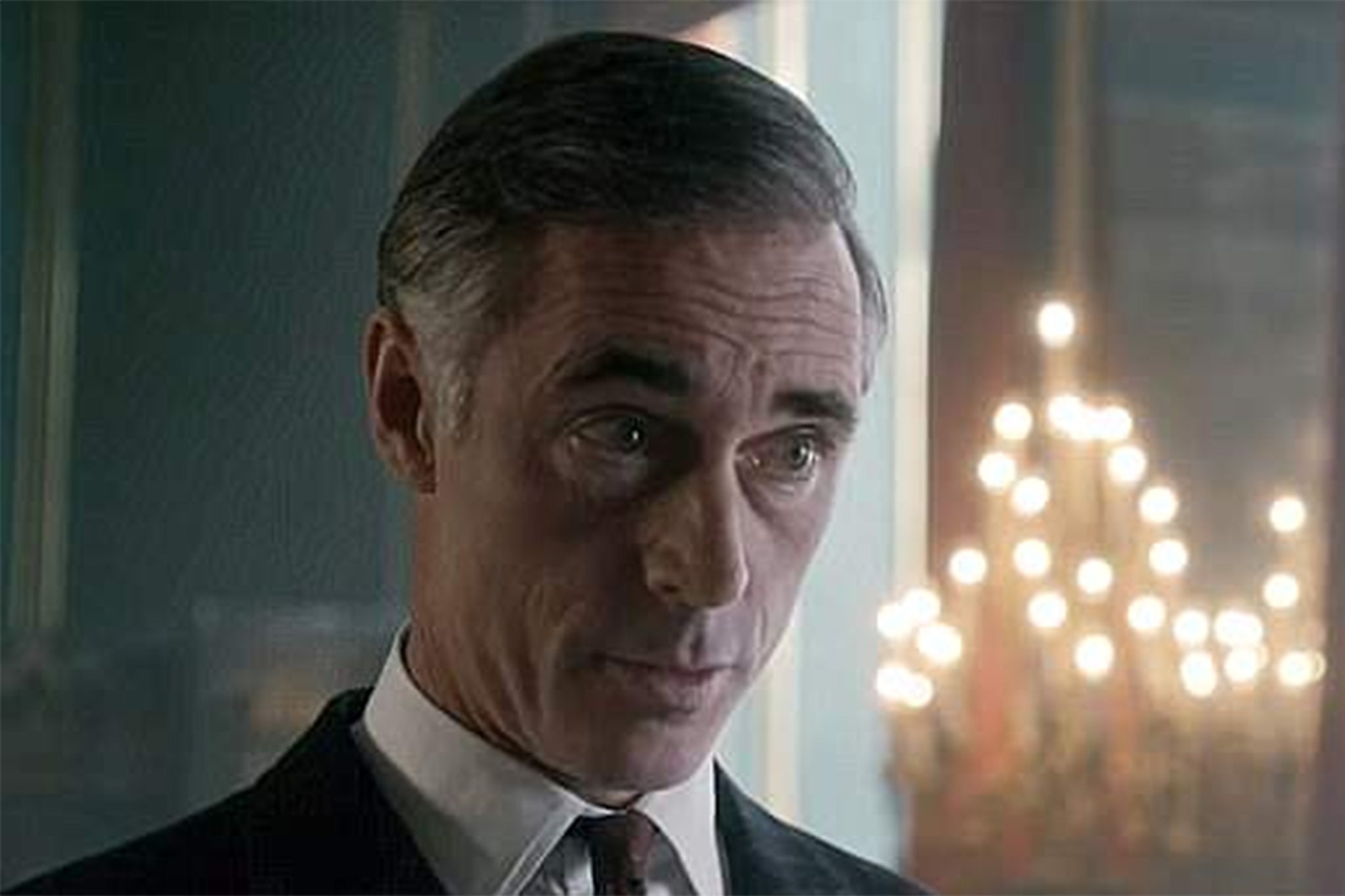
The couple eventually found their way back to each other, and in 2003 adopted Tindyebwa Agaba, or “Tindy”, a Rwandan orphan and former child soldier.
It was this difference in grieving styles that inspired Wise to write his book. While much has been published on grief, there is “a dearth of books for men,” he argues. Through his own experiences and research, he found that men and women tend to grieve differently.
“We are all intrinsically individual, but there’s a tendency for women to be able to grieve emotionally, and there’s a tendency for men to keep it cerebral,” he explains. “It’s all part of the schtick that we’re brought up with as boys: big boys don’t cry. Be in control. Be protective. Be proactive. Men generally treat grief as a challenge to be overcome.”
That perspective means men often retreat inwards instead of seeking help. And help is crucial: “Asking for help saved my life,” Wise says simply. He thinks everybody could probably use a bit of therapy; “I absolutely do think professional help is essential.” There are some things that can’t be “walked off” or solved by chatting to your mates, however well-meaning or lovely they are.
My family and I have had some wonderful discussions about how we want to die
Doing his own extensive therapy has, Wise tells me, enabled him to live in a much more expansive way. “I don’t want to get all hippy about it,” he laughs, “but I know that by having done my grief work, that by having sat in the pain and listened to it and learned from it and been given help with it, I am more compassionate. I’m more loving. I’ve got more gratitude. I’m more empathic. I’m kinder. I’ve got joy.”
It’s also made him more fearless. Wise credits his sister’s death for giving him the no-f***s-given courage to compete on Strictly Come Dancing in 2021. “It helps you put things in a little bit of perspective,” he says. “You know, I crashed spectacularly in front of however many million people watching Sunday night live telly. Great! I’m not going to die.”

Wise and his partner Karen Hauer were eliminated in the fourth week, but not before he paid tribute to Clare with a poignant couple’s choice dance dedicated to his disco-loving sister. Now, he’s ready to test life’s limits some more. “I want to see what happens and give it a go. What’s the worst thing that can happen? Ritual humiliation on Strictly? That’s fine! That’s the gig.”
Greg may not be an “expert” on grief, but he does have a couple of words of wisdom he wouldn’t mind passing on. Firstly: address the practicalities around death while you’re still hale and hearty. Wise is a big advocate for putting together a “death box” of all relevant documents and details, such as lasting power of attorney (LPA), an advance plan for end of life, funeral preferences or arrangements, and details and passwords for various accounts.
“My family and I have had some wonderful discussions about how we want to die,” he says cheerfully. “It’s not maudlin because we’re all going to die, and we want to try to do it as well as we can – not just the person dying, but all the people around them. You know, it’s a communal endeavour, a good death.”
Secondly, he implores people to actually engage with their grief, in all its forms and complications. “Do the work. Sit in it. Face into it. Listen to it. Ask for help, but do the work. The rewards are boundless: it’s all about living better, living more fully, being more present, being more grounded and grateful, and compassionate, and empathic with yourself as well as the wider world.”
“I think it’s a world game-changer, grief work,” he says. “I really do.”
‘Grief Talking’ by Greg Wise is published by Bluebird, an imprint of Pan Macmillan (hardback, £18.99)