










Want to bookmark your favourite articles and stories to read or reference later? Start your Independent Membership today.
Join today
Already a member?
Log in
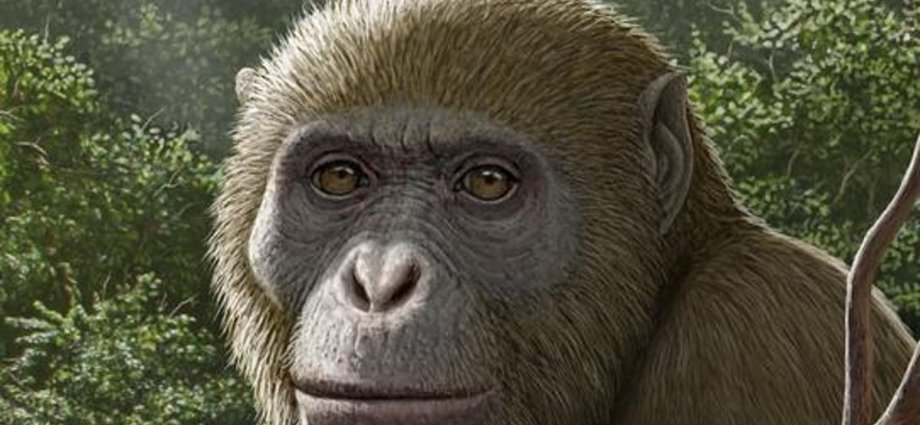
An 18-million-year-old ape fossil has been discovered in Egypt, suggesting northern Africa likely played a more important role than previously thought in the emergence of the lineages that eventually gave rise to modern humans.
The newly identified species, named Masripithecus moghraensis, lived about 17 to 18 million years ago during the Early Miocene, say researchers from Egypt’s Mansoura University Vertebrate Palaeontology Centre (MUVP).
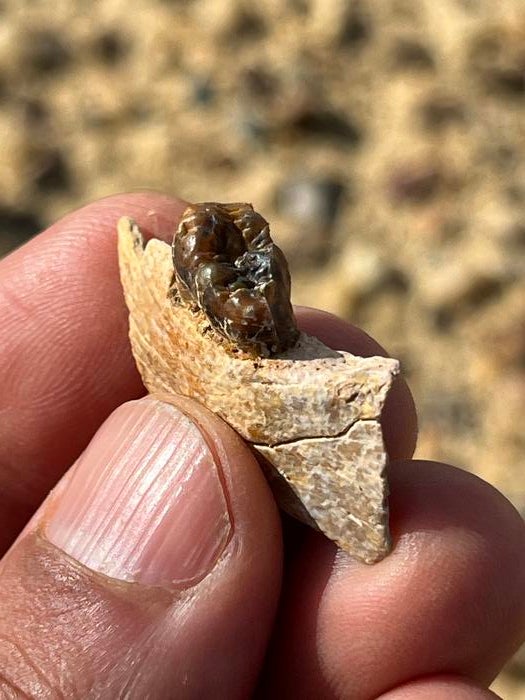
Fossils of the species were discovered at the Wadi Moghra archaeological site in Egypt, making it the first definitive fossil ape species ever discovered in North Africa.
Its genus name combines ‘Masr’, the Arabic name for Egypt, with píthēkos, the Greek word for ape, and the species name honours Wadi Moghra, where the fossils were found.
Only fossil jaw bones were uncovered during excavations, but the jaws had an unusual combination of features, including a remarkably large canine and molars with rounded chewing surfaces and pronounced textures.
These features helped distinguish the animal from other apes of similar age, and also reveal valuable clues about the foods the animal could eat and how it survived in its environment.
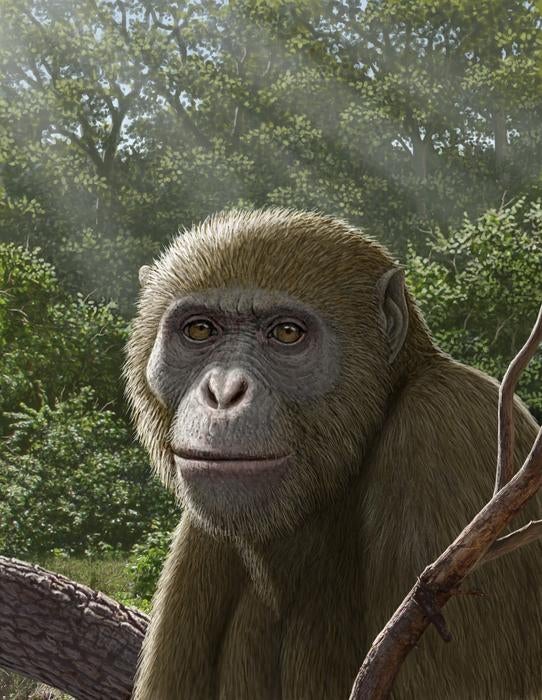
“The study interprets its chewing anatomy as evidence of a flexible, mainly fruit-based diet, with the ability to process harder foods such as nuts or seeds when needed,” said Shorouq Al-Ashqar, an author of the study published in the journal Science.
“This flexibility would have helped Masripithecus to thrive at a time when climatic changes were leading to more pronounced seasonality in northern Africa and Arabia,” Dr Al-Ashqar said.
The finding suggests that North Africa and the Middle East may have played a more central role in the emergence of the evolutionary lineage that eventually gave rise to all living apes, including humans.
Until now, early apes and their close relatives were thought to have been concentrated mainly in regions farther south in Africa.
While ancient monkey fossils have been found in North Africa from the Early Miocene, there has been no definitive evidence of apes in this region from the same period.
This has shaped prevailing theories about ape evolution.
The findings challenge the long-standing assumption that the evolutionary roots of all modern apes were centred in or around East Africa.
Now, the latest discovery suggests northern Africa and the Middle East were most likely the geographic home of the common ancestor of all modern apes.
This adds to the understanding of the origins of Hominoidea, the evolutionary group that includes gibbons, orangutans, gorillas, chimpanzees, and humans, and the last common ancestor of all living apes and its descendants.
“For my entire career, I considered it probable that the common ancestor of all living apes lived in or around East Africa,” said study co-author and palaeontologist Erik Seiffert from the University of Southern California.
“But this new discovery, and our new and novel analyses of hominoid phylogeny and biogeography, now strongly challenge that idea,” Dr Seiffert said.
Scientists hope further exploration of North Africa and the Middle East for fossils could reveal more species and help find when the modern ape family tree began to emerge.