










Want to bookmark your favourite articles and stories to read or reference later? Start your Independent Membership today.
Join today
Already a member?
Log in
Potentially toxic microplastic and nanoplastic particles are raining down on Mount Everest year-round, scientists warn in a new study.
These ultra-small plastic fragments, less than 5mm in length, are now ubiquitous across our planet, discovered everywhere on Earth from the ice-covered peaks of the world’s tallest mountains to the depths of the oceans.
Studies have warned that these particles may pose a threat to environmental and public health, with research showing that they can induce inflammation, DNA damage, and hormone disruptions in humans and other animals.
Previous research has found these tiny plastic particles are present in samples collected from snow and stream water in the Mount Everest region. But the extent to which the world’s tallest peak is exposed to microplastics remained unclear.
Now, a new study involving months of monitoring on the mountain’s northern slope reveals that Everest receives a year-round supply of airborne microplastics and nanoplastics.

Chinese researchers discovered that the atmosphere itself is proving an efficient pathway for plastic delivery to the Third Pole.
Scientists found that the Qomolangma Station, a high-altitude research facility in Tibet, received 64 microplastic particles per square metre per day.
In comparison, Everest Base Camp recorded 23 particles per square metre per day.
“Microplastic deposition fluxes at Qomolangma Station (64.0 n m−2 d−1) significantly exceed those at Everest Base Camp,” scientists wrote in the study published in the journal Communications Earth & Environment.
The plastic particles mainly found at the site included polyamide, polyethene terephthalate, and polyethene.
There were also higher levels of smaller nanoplastics found at the Qomolangma Station than at Everest Base Camp, including particles of polyethene, polyethene terephthalate, polyvinyl chloride, and polypropylene.
Overall, scientists suspect that more than 56 tons of microplastic particles could be accumulating every year in the Tibetan Plateau at altitudes above 4,000 m (13,123 ft).
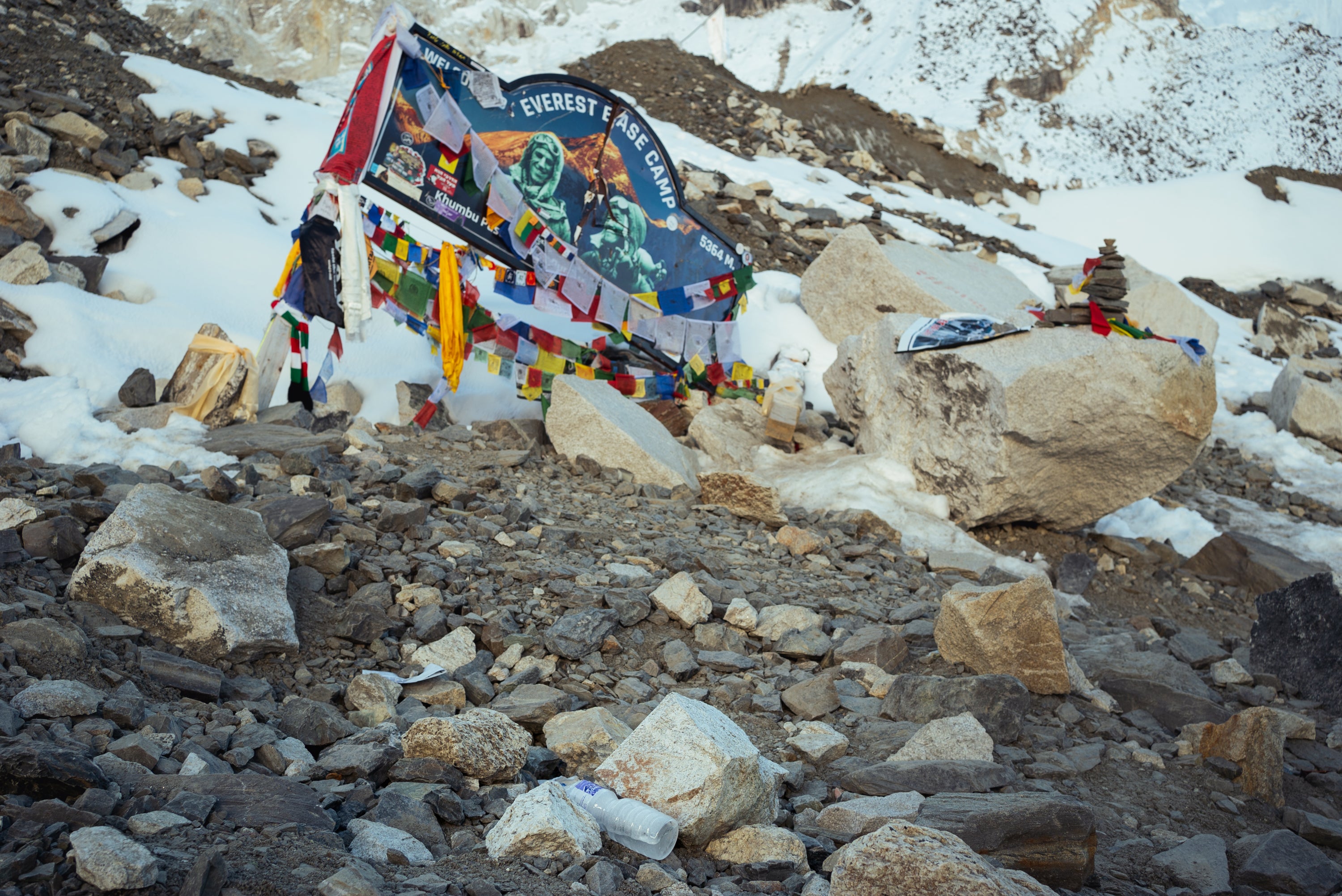
The latest findings show that even the tiniest plastic particles reach the most remote terrains on Earth.
Crucially, the study points out that Everest is not just accumulating plastic from climbers and tourism, but also via atmospheric circulation, which is continually delivering plastic pollution to the Third Pole.
Researchers found that monsoon periods increased microplastic volumes via wet deposition, the process by which pollutants are brought down to the surface by rain, snow or mist.
Such particles are generally suspended in the atmosphere, but water droplets or ice crystals tend to capture some of them as clouds form.
They are eventually carried down to the mountain’s surface during precipitation.
“These results identify the atmosphere as an efficient pathway for plastic delivery to the Third Pole, with potential ecological risks,” researchers concluded.