









Want to bookmark your favourite articles and stories to read or reference later? Start your Independent Membership today.
Join today
Already a member?
Log in
The special colour-changing effect of the ancient Roman Lycurgus Cup has been recreated for the first time, revealing insights into the nanotechnology behind the 1,600-year-old creation.
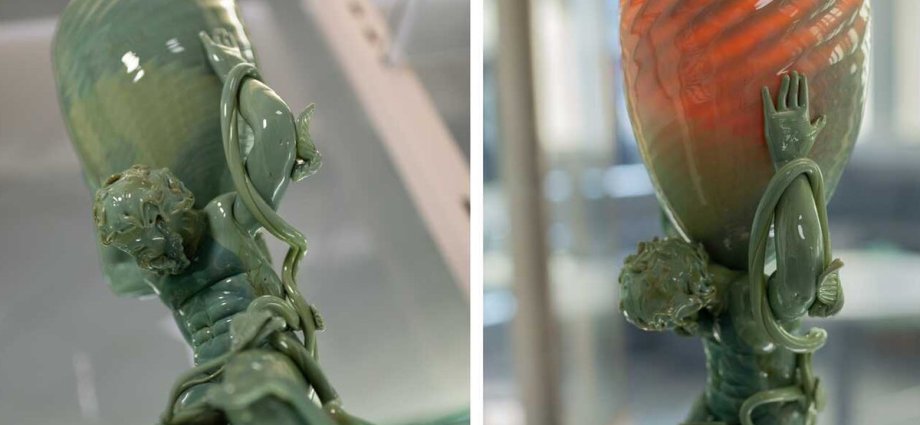
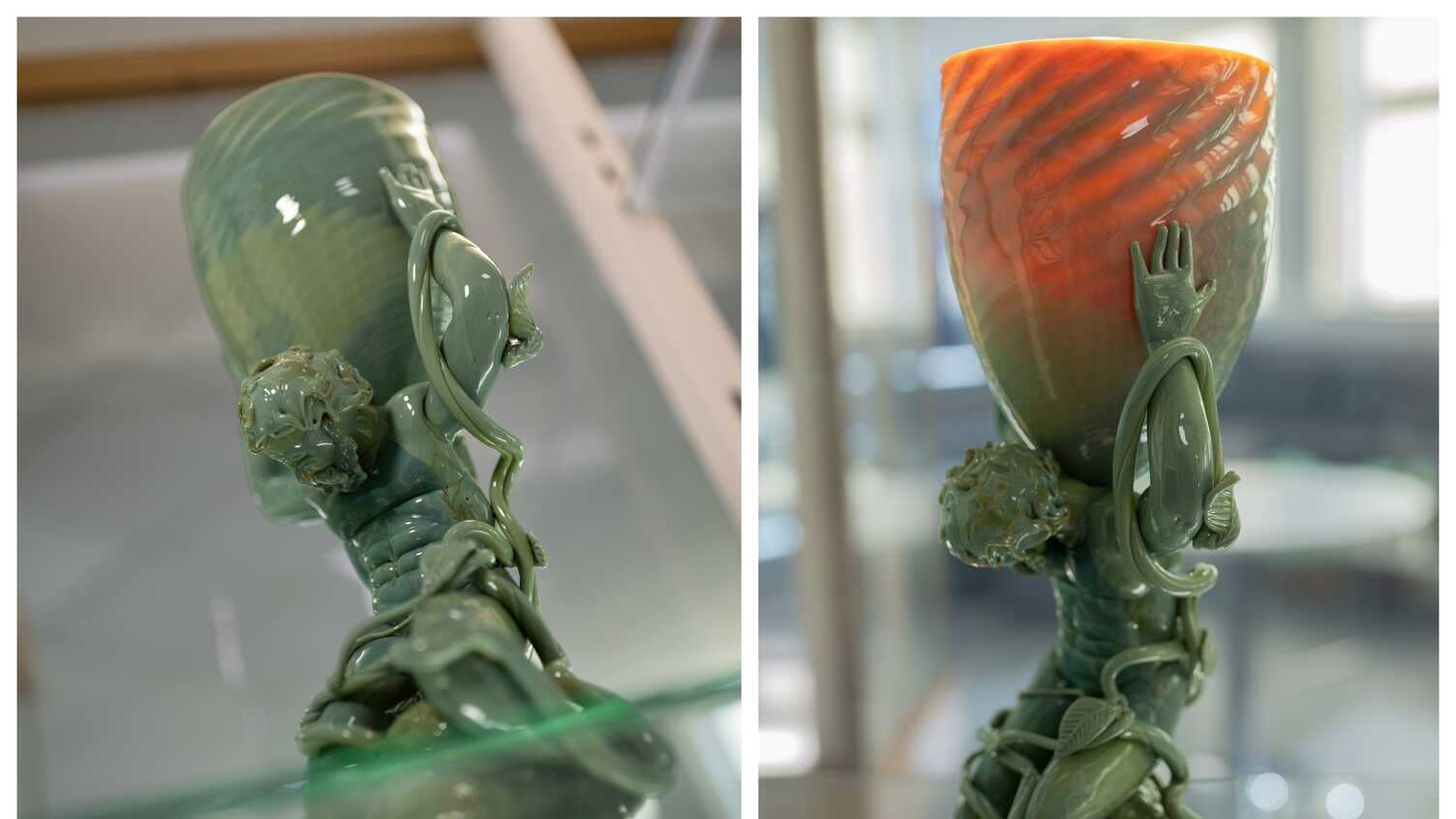
The 4th-century artefact housed in the British Museum is made of a special type of “dichroic” glass that shifts from jade green to ruby red, depending on where the light source is positioned.
Observers can see the cup in two distinctive contrasting colours, based on whether they see reflected light or light directly passing through it.
Only 40 surviving glass cups from the period exist, and the one at the British Museum is the most complete.
Despite its popularity, the scientists behind the cup and the artistry behind it have confounded historians and glassmakers for centuries.
Exactly how Roman glassmakers created the cup’s famous colour-changing effect has remained a mystery.
Experts believe that Romans achieved the effect by adding tiny amounts of gold and silver, which, under the right conditions, formed a layer of light-absorbing ultra-small nanoparticles.
Since nanoparticles are smaller than the wavelengths of light, they absorb light strongly and display vibrant colours depending on their size and shape, researchers theorised.
However, this dichroic effect has not been widely reproduced in a repeatable recipe to produce glasses like the Lycurgus Cup – until now.
Experts at the University of Sheffield successfully reproduced the effect observed in the famous artefact, finally solving the age-old mystery, the university announced on Monday.
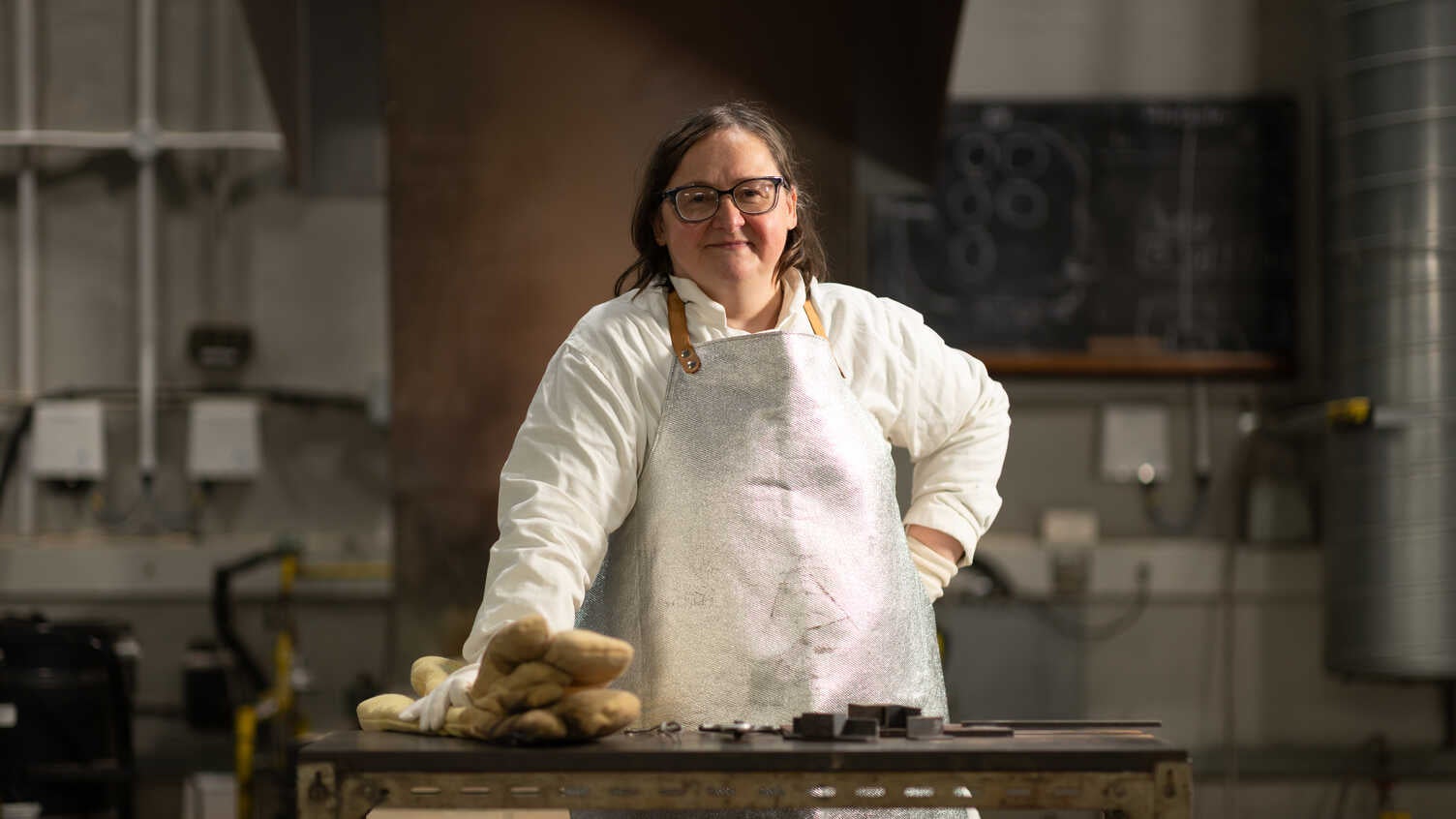
“I knew that making a glass of this type was likely to be a complex task, as it is not just a case of adding nanoparticles to glass,” said Lisa Hollands, a glass technician from the University of Sheffield’s School of Chemical, Materials and Biological Engineering.
Dr Hollands worked with leading Roman glass expert Caroline Jackson to study what was already known about glass of the time and developed a base glass using modern materials.
She then experimented with different furnace types, starting materials and oxygen levels to finally arrive at a glass recipe that appeared opaque green in reflected light and red when a light was shone directly through it.
Under the right conditions, researchers found that nanoparticles thousands of times smaller than a grain of sand formed.
“We approached Elliot Walker, one of the UK’s finest glass artists and winner of season two of Netflix’s Blown Away, who accepted the challenge and was commissioned to create a contemporary sculpture using Dr Hollands’ recipe,” project manager Christina Metcalfe said.
In the case of the Lycurgus Cup, gold and silver nanoparticles embedded inside the glass interact differently with light that is reflected and light that passes through it.
When one looks at the cup normally, it looks green, as light simply bounces back off the glass onto the person’s eyes.
But when light is shone through the cup, the metal nanoparticles in it absorb some colours more strongly than others, making the light that emerges richer in red and making the cup glow like a ruby.
A better understanding of the cup gained through the latest experiments can lead to new photonic materials and advanced glasses for radioactive waste management, researchers say.
While the Sheffield University experiments recreated the glass’s colour-changing behaviour, experts still have not unravelled every detail of the original manufacturing process Romans used to make the Lycurgus Cup.