









Want to bookmark your favourite articles and stories to read or reference later? Start your Independent Membership today.
Join today
Already a member?
Log in
The prospect of driving a clown car through a novel by Nobel Prize winner Kazuo Ishiguro sounds fairly doomed from the start. Yet, to writer-director Taika Waititi’s credit, his Oscar-winning Jojo Rabbit (2019) took enough of an iconoclastic stance on its (comparatively far darker) source novel, Christine Leunens’ Caging Skies, to confidently mould itself into a Mel Brooks-approved farce about fascist indoctrination.
Klara and the Sun, unfortunately, is far more faithful to its source book. As a result, it’s both a betrayal of Ishiguro’s quiet, meditative vision and a poor imitation of Waititi’s own, pre-Marvel work, most notably Boy (2010) and the Sam Neill-fronted Hunt for the Wilderpeople (2016).
Those films had a New Zealand-dry, witty-but-absurdist sense of humour to them, populated either by broken people laughing off their brokenness or by men with extremely fragile egos. They were funny and sort of sad at the very same time. Klara and the Sun can do one or the other, but never the two at the same time. It’s like watching a light switch be flicked on and off, on and off.
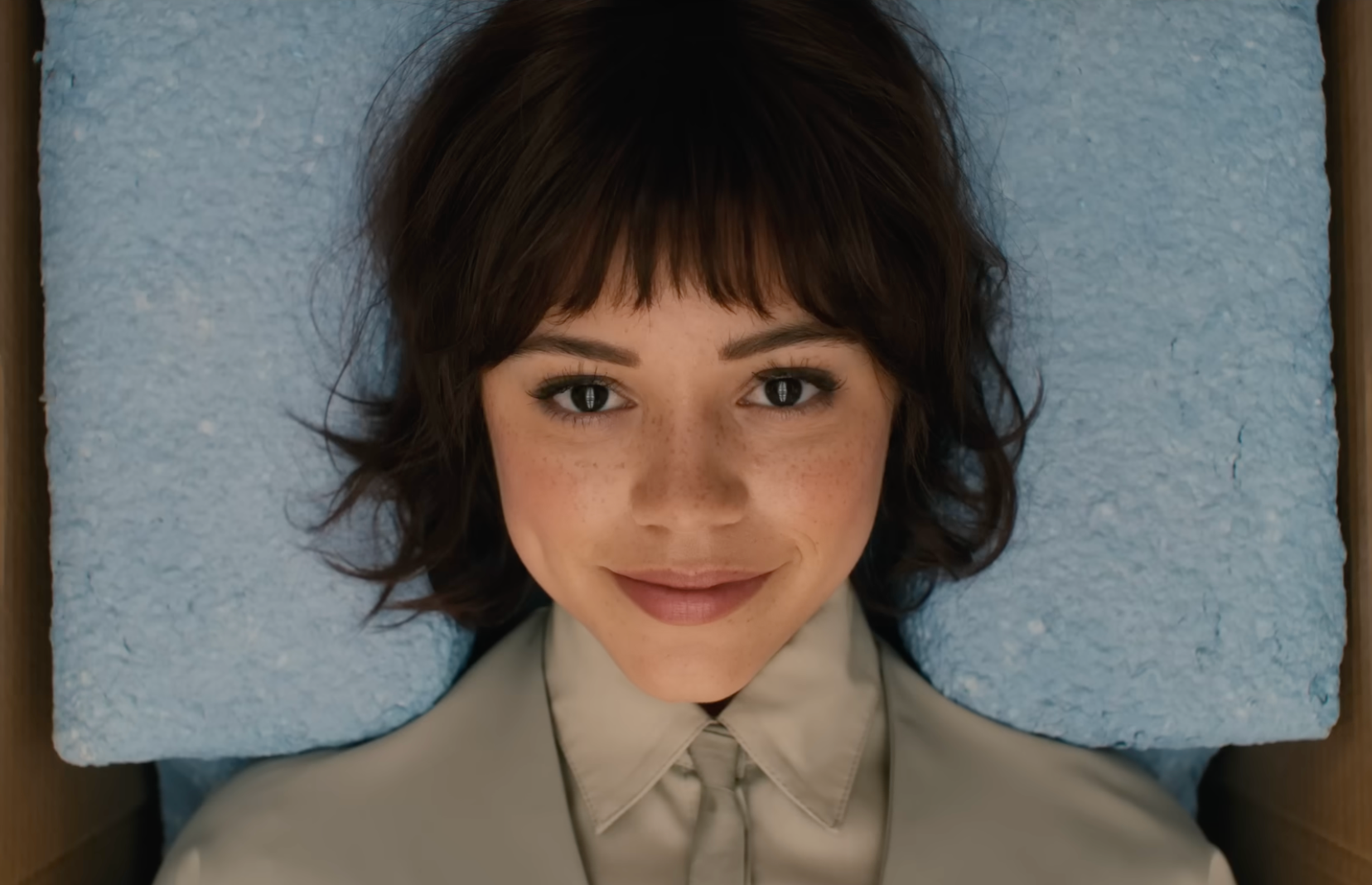
Ishiguro’s story adopts the perspective of a robot named Klara (here played by Jenna Ortega), an AF, or “Artificial Friend”, who’s noted by the manager of the store she’s sold at (Natasha Lyonne) to possess unique powers of observation. She’s interested in people, why they act like they do, and what fuels them – the latter, she assumes, is the same as what powers her: the sun. She’s purchased one day by the mother (Amy Adams) of a teenage girl named Josie (Mia Tharia), who is very sick.
The novel is light and airy, with space to breathe between sentences, and to work over the various speculative fictions Ishiguro alludes to. It’s not only about the question of how artificial intelligence challenges the existence of the human soul, but whether technology will only further class divides, via the obsoletion of work and the prospect of gene editing.
Waititi and his co-writer Dahvi Waller have dutifully copied over these base concepts, but they state them early, briefly, and explicitly (as opposed to Mark Romanek’s 2011 adaptation of Ishiguro’s Never Let Me Go, which shares the novelist’s more enigmatic qualities).
Those spaces between sentences have been pumped full of jokes. Their Klara is an oddity among machines. She stands on one leg like a flamingo and tends towards whimsical language, like “super duper nourishing nourishment” and “crappy pile of crap”. Her naïveté is endlessly mined for humour, and sarcastically rebutted by the family’s housekeeper Melania (Rachel House).
Ortega’s surely keen to flex all those facial muscles left unused in her deadpan Wednesday Addams over at Netflix, but the real joy of watching any actor play a robot – the imitation smiles, the “more human than human” sincerity, to quote Blade Runner – is traded in largely for a cartoon character bounce and plenty of physical comedy.
And, when it’s time to discuss the nature of Josie’s illness, Adams is merely pushed into frame and expected to cry (which she does dutifully, even with no real surrounding sense of character). Her role is to be the film’s emotional weight, bolstered only by the schmaltzy swell of Michael Giacchino’s score.

Watch Apple TV free for 7 day
New subscribers only. £9.99/mo. after free trial.
Plan auto-renews until cancelled.
ADVERTISEMENT. If you sign up to this service we will earn commission. This revenue helps to fund journalism across The Independent.
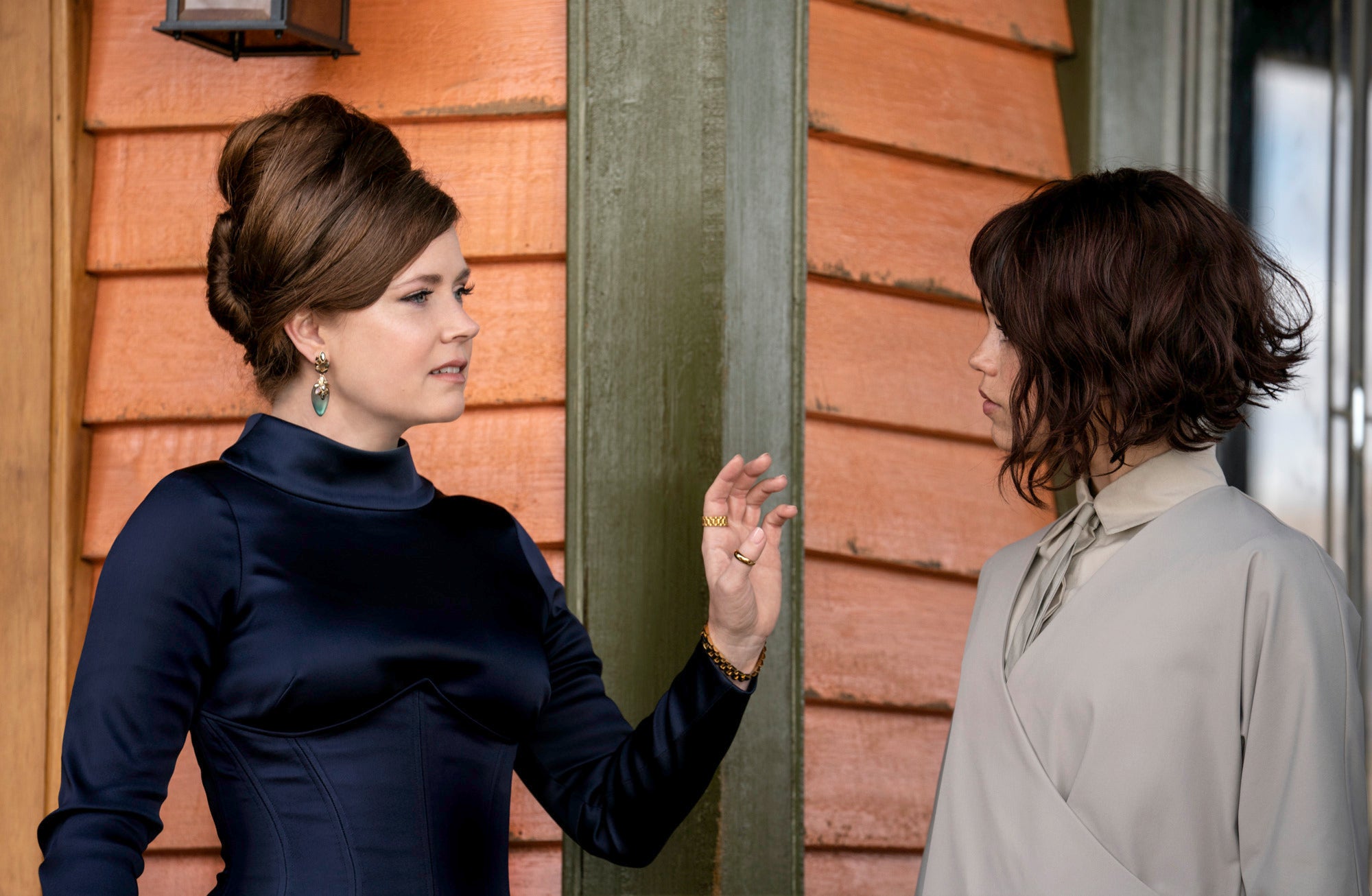
Klara and the Sun presents another retrofuturistic dystopia, a result of, post-World War III, the internet being confiscated by unknown powers. Those at the top of the social class, with access to the kind of technology that can improve their minds and bodies, all dress like extras from Zoolander and beat their AFs with belts; those without that access are represented by Josie’s neighbour Rick, who wears flannels and is played by Cillian Murphy’s son Aran with all of his father’s gentle nonchalance.
The overall effect is a little as if Robert Zemeckis, with his wackier imagination, had tried to remake Steven Spielberg’s AI. Yet, to take Ishiguro’s story and rob it of its central character’s incisive, observational nature, is to inhabit this strange and prescient world while keeping its eyes glued firmly to the floor. The book was about who we fundamentally are, now and tomorrow. The film is about the power of love and friendship. That seems like quite the downgrade.
Dir: Taika Waititi. Starring: Jenna Ortega, Amy Adams, Mia Tharia, Aran Murphy, Steve Buscemi, Natasha Lyonne. 12A, 116 mins.
‘Klara and the Sun’ is in cinemas from 23 October