










Want to bookmark your favourite articles and stories to read or reference later? Start your Independent Membership today.
Join today
Already a member?
Log in
The end of the world is just a month away, according to a scientific paper published 66 years ago.
The 1960 paper, published in the prestigious journal Science, predicted the date of Doomsday would be Friday 13th of November, 2026.
Written by Austrian American physicist Heinz von Foerster alongside researchers from the University of Illinois, the study analysed historical demographic trends to conclude that world population growth was hyper-exponential.
“At this date human population will approach infinity if it grows as it has grown in the last two millennia,” the paper stated.
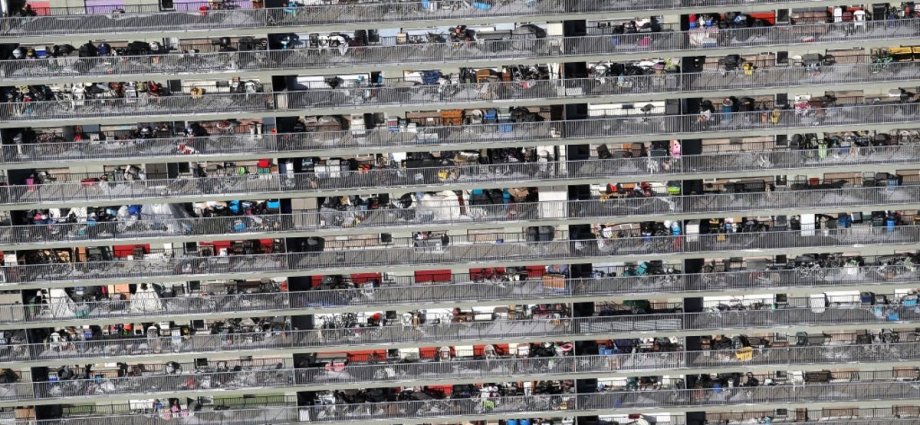
“Our great-great-grandchildren will not starve. They will be squeezed to death.”
The paper’s publication proved controversial among demographers at the time, but its predictions about global population remained accurate until the 1990s.
Birth rates have since plummeted and recent forecasts from the United Nations World Population Prospects suggest the world’s population will peak at around 10.3 billion in 2084 before declining.
The shift has led modern economists to warn that declining fertility could pose a bigger threat to society than overpopulation, as it could lead to economic stagnation and a greater strain on healthcare systems.
Published at the height of the Cold War, the study came at a time of increased concern about the possibility of a civilisation-ending catastrophe due to resource scarcity or through nuclear proliferation.
Six decades later, apocalyptic warnings are once again being raised amid the rapid rise in capabilities of artificial intelligence.
A Doomsday Clock, set up by the Bulletin of the Atomic Scientists in 1947, currently stands at 85 seconds to midnight – down from 89 seconds last year.
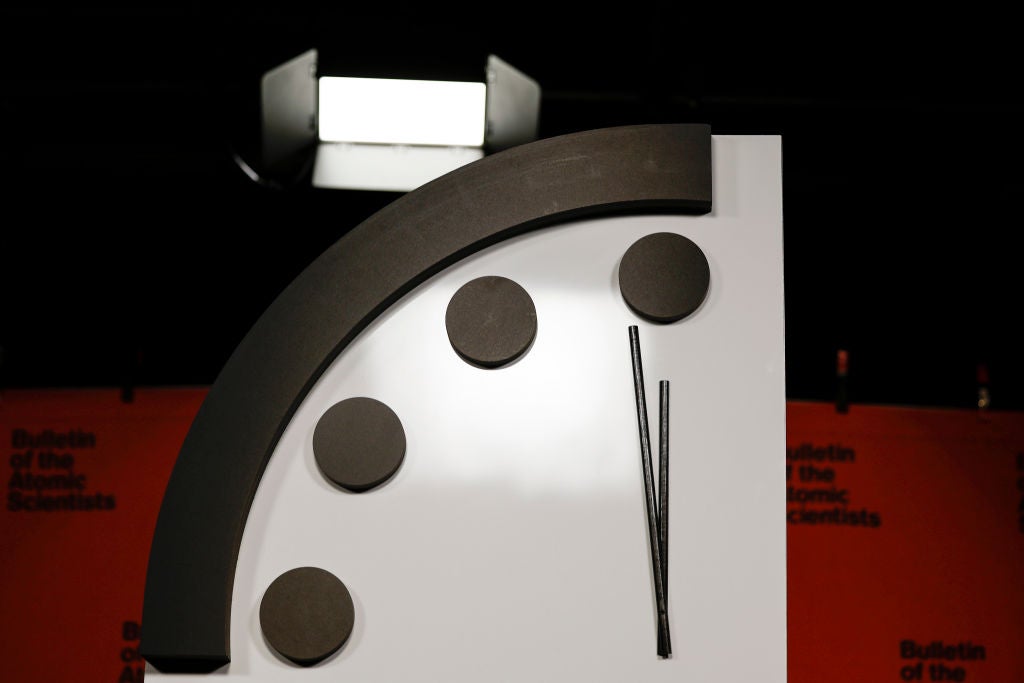
It is the closest it has ever been to midnight, with world leading scientists pointing to the dangers of global war, climate change, and out-of-control AI.
“Our current trajectory is unsustainable,” John Mecklin, editor of the Bulletin of the Atomic Scientists, said at the unveiling of the latest Doomsday Clock in January.
“National leaders – particularly those in the United States, Russia, and China – must take the lead in finding a path away from the brink. Citizens must insist they do so.”