










Want to bookmark your favourite articles and stories to read or reference later? Start your Independent Membership today.
Join today
Already a member?
Log in
Sharks can hear sounds from considerable distances underwater and even tell where they’re coming from, according to a new study that debunks the common misconception that the predators can only detect nearby sounds.
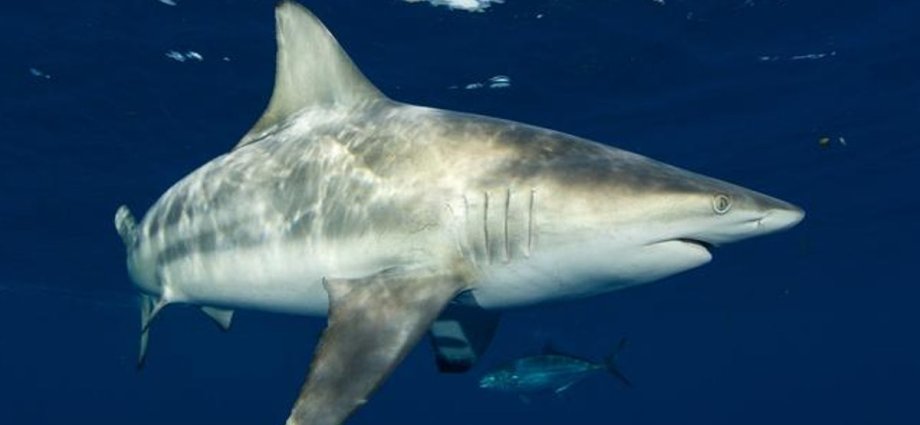
Researchers say blacktip sharks can hear from about 75m away and respond by quickly changing direction. Since blacktips seasonally gather off southeast Florida, they offer a rare opportunity to observe free-swimming sharks in clear, shallow water.
Blacktip sharks gather in large numbers along the Palm Beach County coast every year.
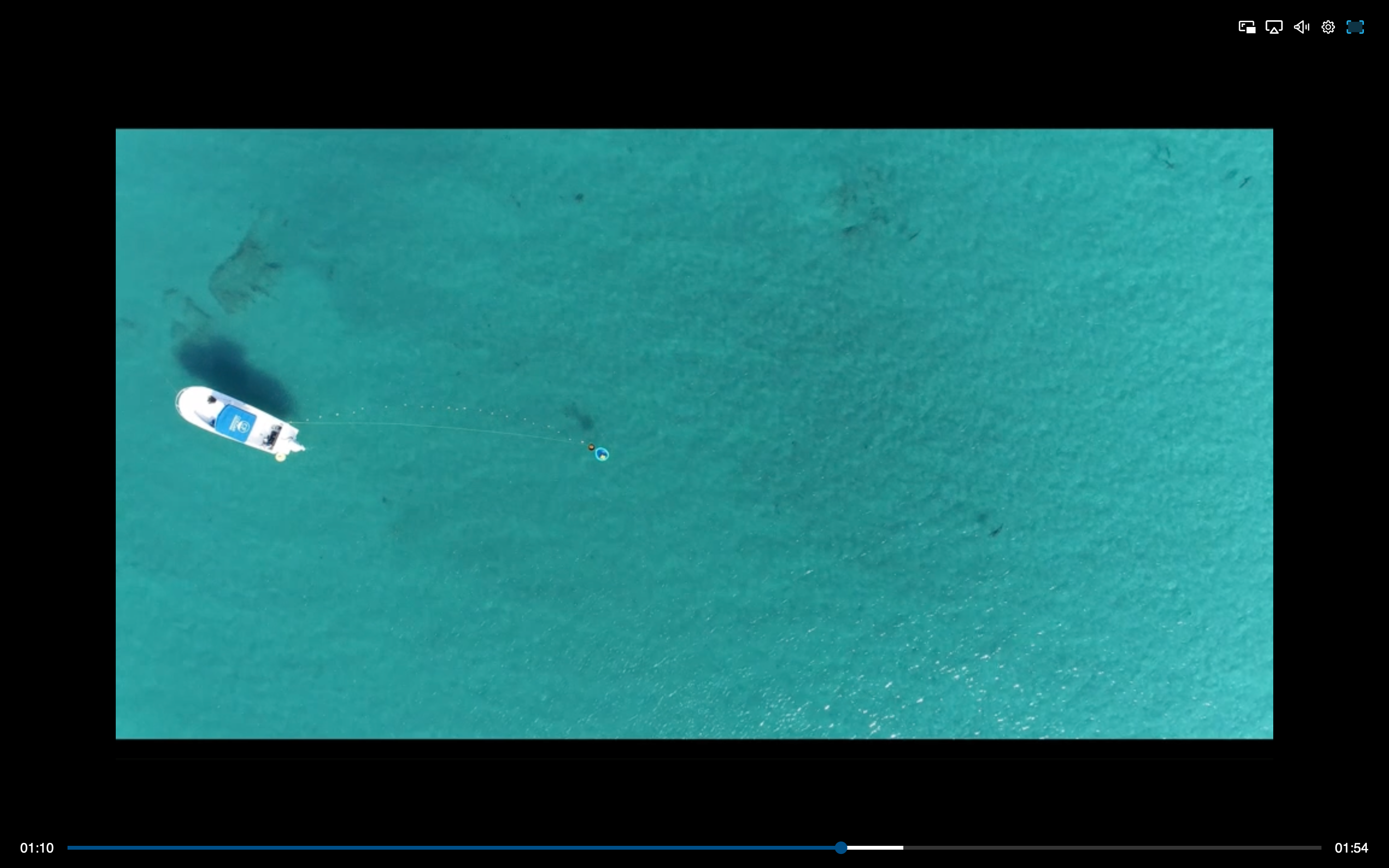
Researchers anchored a boat in the shallow nearshore waters of Palm Beach County and deployed an underwater speaker that drifted with the current up to 19m away to minimise the boat’s influence on the marine animals. They tested three ranges of high-intensity, low-frequency sounds – 100-200Hz, 200-400Hz, and 400-800Hz – along with a 10-kilohertz control sound outside the hearing range of sharks. The intention was to startle the sharks rather than try to attract them.
Sound travels through water, carrying clues about potential prey and predators.
Researchers mapped sound levels at various distances to see exactly what the sharks heard when they responded.
An aerial drone tracked sharks from 40-50m above the water, with video analysis used to measure the response distances and swimming-direction changes.
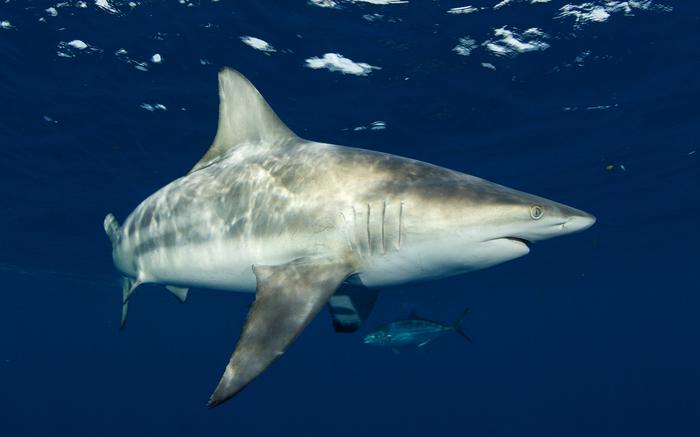
They found the sharks detected low-frequency sounds from up to 74m away, significantly farther away than previously demonstrated under similar conditions.
The sharks rapidly changed course away from the source, indicating they could determine the direction of the sound. “This suggests that they are detecting the particle motion associated with sound even at considerable distances from the source, something we haven’t previously been able to demonstrate in free-swimming sharks,” said Stephen Kajiura, author of the study published in Integrative Organismal Biology.
The finding is fascinating because sharks, unlike many bony fish, don’t possess gas-filled swim bladders, which can help detect sound pressure.
Instead, sharks seem to rely on their inner ears, including a specialised structure to detect movement and vibrations produced by sound travelling through water.
Researchers hope to conduct further studies to understand how the shark sensory system allows the predator to pick up and interpret distant sounds.
The study also shows the value of studying sharks in the wild instead of in laboratory tanks, researchers say.
“Trying to do hearing experiments in a tank results in the sound bouncing off the walls, which causes complex and confusing signals,” Caroline Sullivan, another study author, said.
“It’s like being in a house of mirrors.”
“This is why it is so important to do these types of experiments in the ocean with wild sharks to get a natural response,” Dr Sullivan said.