








Want to bookmark your favourite articles and stories to read or reference later? Start your Independent Membership today.
Join today
Already a member?
Log in
As war rages inside Sudan and the humanitarian aid network nears collapse, millions of refugees both inside the country and in neighbouring nations are losing hope they will ever be able to return home safely.
Instead, they fight for survival in isolated refugee camps, which are bursting at the seams.
The Independent visited four Sudanese refugee camps in eastern Chad, where more than one million Sudanese refugees currently reside in isolated desert camps.
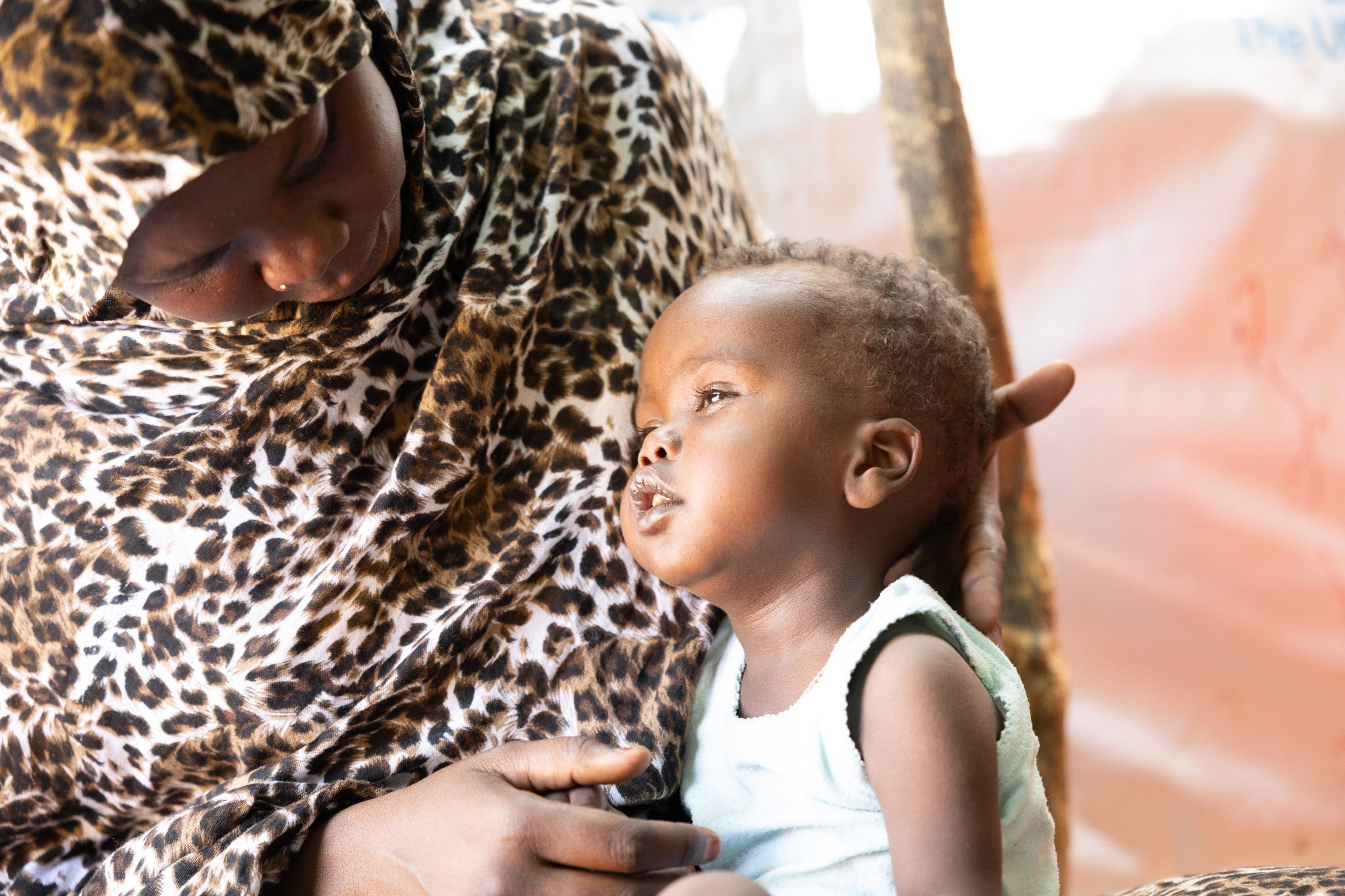
Inside a 6m² shelter in the Goudrane Camp in Chad, a baby born in the battle for the city of El Fasher in western Sudan, wriggles on the carpet.
Inside the tarpaulin walls, his mother, Maymauna, 27, cushions the back of her son’s head. For a moment, his crying stops. Then, as she slides her hand down past the nape of his neck, the boy’s head lolls backwards. “Please tell me why his body stopped working,” Maymauna pleads, sweat covering her brow. “Tell me what to do.”
Maymauna tells The Independent that her son, Mayamat, lost the motor neurone skills learnt at five months old when artillery shelling pummelled his family’s home in the city. “After the bombs hit our neighbourhood, his body just went limp,” she says. “And here, there is nobody who can help us.”
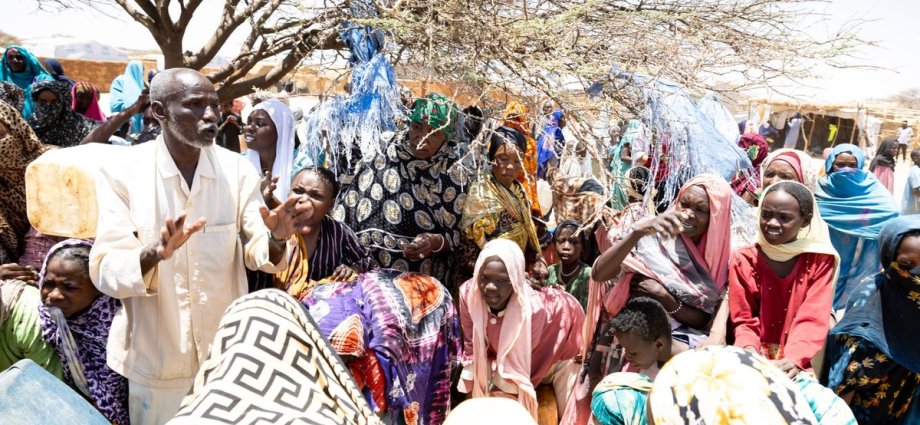
In eastern Chad, 87 per cent of Sudanese refugees are women and children and most live together in dismal, desert shelters like Maymauna’s family.
During interviews with dozens of survivors across the region, all had lost relatives to the war.
Many say they bore witness to public executions and the burning of civilians, both alive and dead. Many say relatives were victims of rape and torture at the hands of the rebel militia group, the Rapid Support Forces (RSF) who have been wrestling for control of Sudan with the Sudanese Armed Forces since April 2023. The paramilitary group has denied responsibility and blames the violence on local militias.
The type of violence described to The Independent was deliberate and humiliating. Common in many of accounts of harrowing town and village captures was a psychological component to the attacks; a mental trauma inflicted on all witnesses by the public nature of hideous executions and beatings of men and boys, and the widespread and sometimes repeated rape of women and girls.
Families also recount how they were specifically targeted and massacred by RSF soldiers, a predominantly Arab group, because they were members of the Masalit tribe, one of the largest ethnic African tribes in western Sudan before the war.
Human rights investigators have since called attacks initiated by the RSF and allied Arab militias examples of ethnic cleansing, while the United Nations found ‘hallmarks of genocide’ in El Fasher. The US has also accused the RSF of committing genocide against Darfur’s non-Arabic population. The RSF has sought to deny all such allegations.
The scale and nature of the violence, and the shocking lack of humanitarian aid means the current situation in Sudan is widely known as the world’s worst humanitarian crisis.
For many of the survivors, their suffering has followed them to Chad.
In Chad’s Touloum refugee camp, about 20 miles away from the Goudrane Camp, young refugee mothers who struggle with access to clean water are facing an impossible choice.
“Last month, three mothers buried their children, who had little chance of survival, alive in the sand,” the president of the Camp, Sheikh Abdul Aham says. “For them, suffocation stops the slower, more painful death from thirst and starvation.”
Both camps, which together host almost 100,000 Sudanese refugees are located in the sparse desert region of Wadi Fira in eastern Chad, which is the one of the poorest in the country and faces extreme water scarcity, especially in summer, when temperatures soar to 45°C.
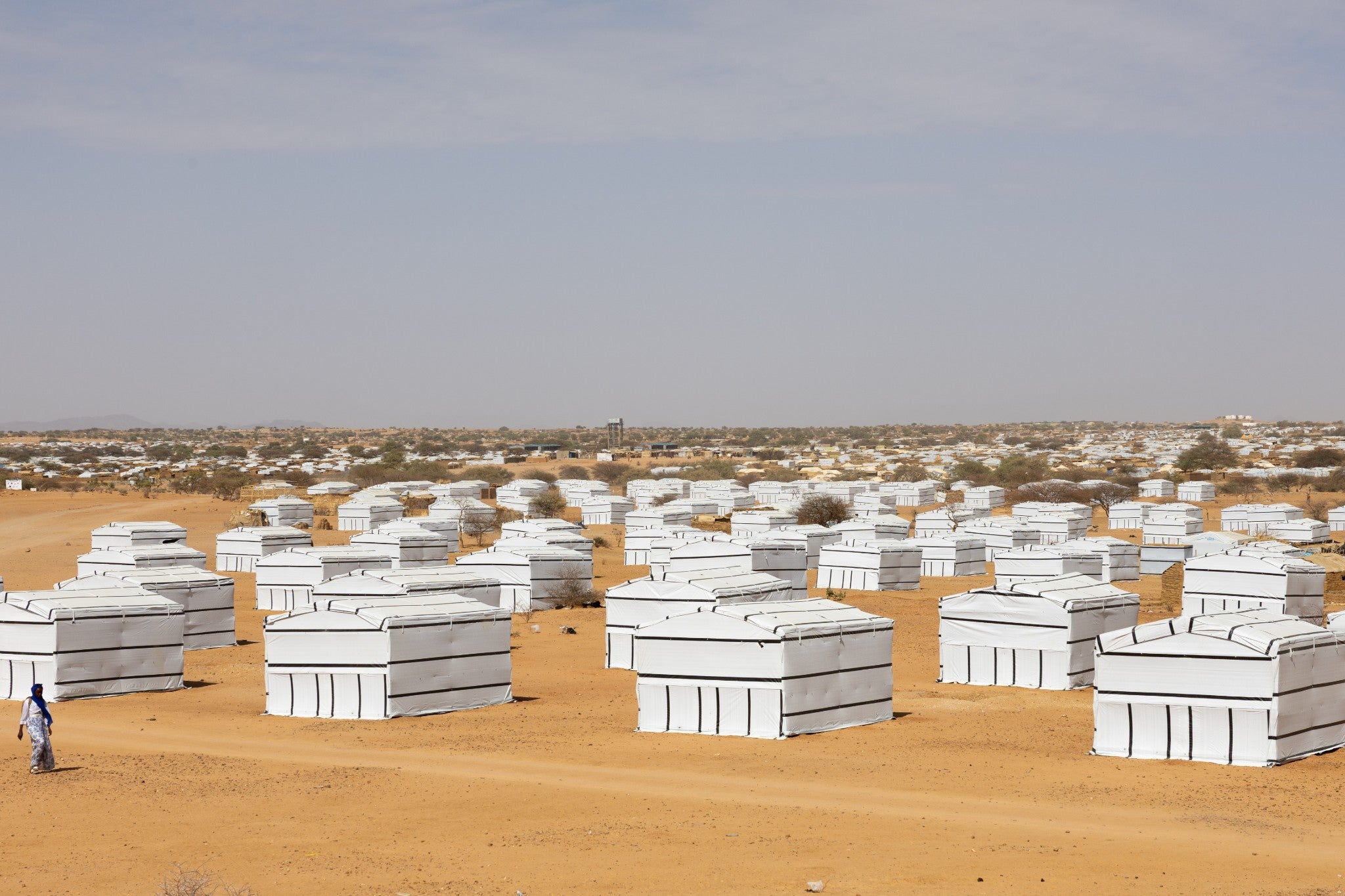
Most days, Touloum camp resident, Hawa Idriss Adan, 66, waits alone in her shelter for her daughter to arrive with water. As her family fled the siege of El Fasher, Hawa was hit by a car. Since then, she has not been able to walk unaided, which makes it impossible for her to reach the nearest water distribution point 30-minutes away by foot.
Whilst Hawa waits for water, she wonders where her grandson is.
Two years ago, during a violent attack on her neighbourhood by RSF and allied militia fighters, he vanished. He was just 13-years old. An investigation by Reuters earlier this year, alleged that the RSF kidnapped young children to be used as slaves, specifically in El Fasher. The RSF has also sought to deny this.
As water sources run low in the camps and refugee populations increase, the French NGO, Solidarités International, is racing against the clock to build urgent infrastructure to improve water access in overwhelmed refugee camps across the east of Chad.
Construction is underway on new boreholes, pipelines, reservoirs, water towers, pumping stations, and distribution networks across eastern Chad.
But last month, despite digging more than 128 metres deep into the Goudrane camp’s dusty ground, no water was found in the east part of the camp.
“There’s a stark need for water across Wadi Fira,” Paulin Kitungwa, Solidarites International’s project manager, says. “We need to create long-term solutions quickly because the need right now is so great in the camps.”
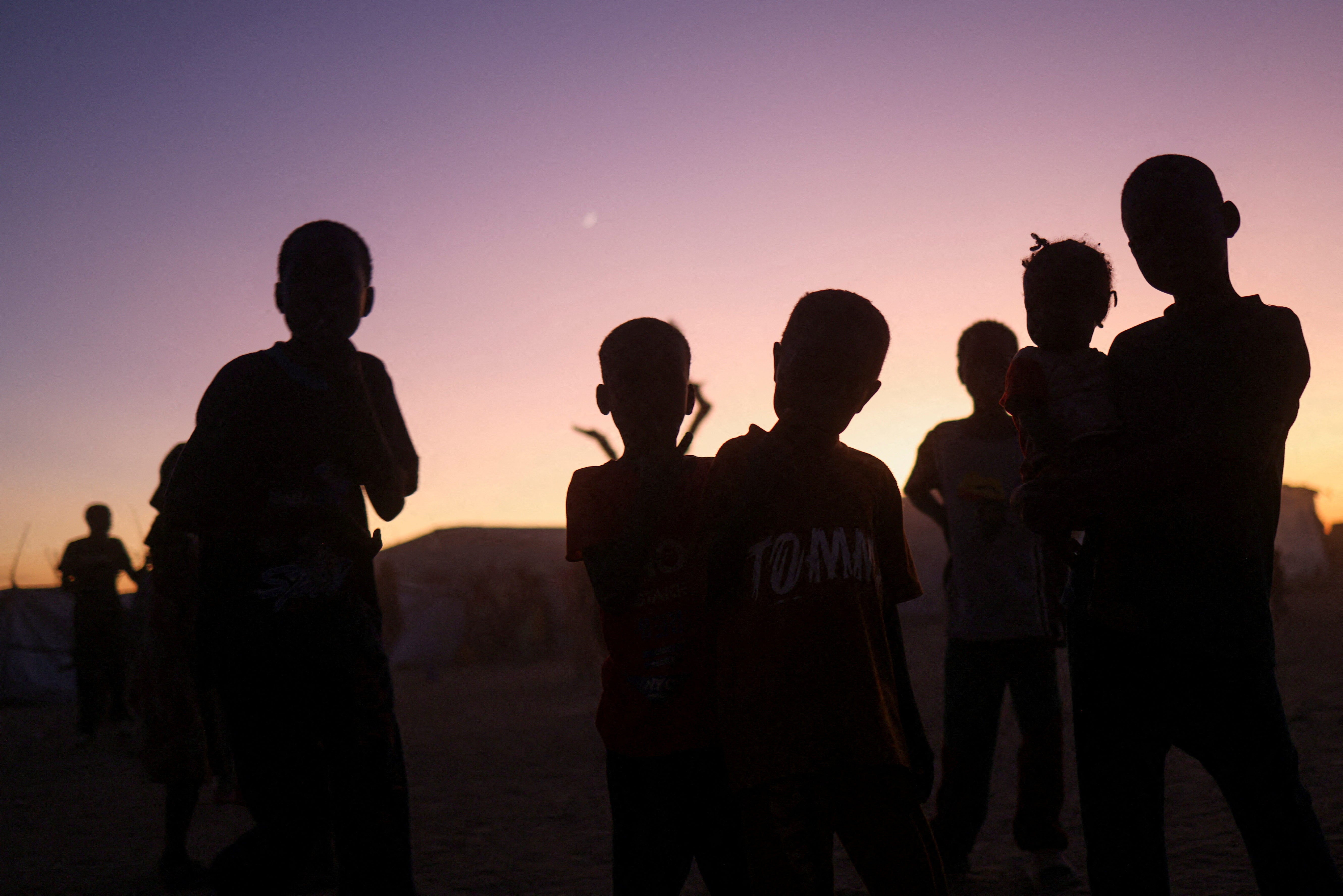
The desperate, daily search for clean water is fuelling physical disputes in camps, which often break out as hundreds charge towards isolated water points when water is available.
“When people know their children might not have water, they do anything to get it,” says one refugee queuing at an empty water point in the burning sun with an empty, mouldy jerry can in the Iridimi Camp.
Soon, heavy rains will come to eastern Chad. Access roads for water trucks will be flooded, and dirty water will contaminate clean water storages. Flimsy wooden shelters, already rotted and infested with termites, will be shattered by gushing water from overflowing rivers. Stagnant water will bring swarms of mosquitos and a sharp rise in malaria and dengue fever.
Alongside warnings from the International Criminal Court (ICC) of further “mass atrocities” unfolding in El Obeid, a central Sudanese city of 500,000 people, drone attacks in the west of Sudan have been edging steadily closer to the border with Chad this year.
In August, an air strike hit a military convoy 62 miles inside Chadian territory. Then, less than one week later, an air strike killed at least 12 people at a border fuel market on Thursday, according to Chadian officials.
In response, the United States condemned the strikes, blaming Sudan’s army, and the Chadian army raised its alert level in the area to its highest point. The Sudanese government has denied responsibility for both strikes.
While world leaders meet at the UN General Assembly in New York last week to discuss ending the intensifying war in Sudan, it is the clang of foreign-funded machine guns and drones never previously seen or used in Sudan, which have drowned out any previously meek calls for resolution.
At the UN, Sudan, Chad and the United Arab Emirates (UAE) traded accusations over the war, with Sudan accusing the UAE of arming the RSF. The UAE has dismissed all such allegations.
Speaking to The Independent, Mona Rishmawi, an expert member of a UN investigative mission which produced a new investigation into the war which also alleged involvement from the UAE, said that in her view: “The moment the supply of weapons stops, the war would effectively stop, too.”
In Sudan, air strikes in border areas are increasing. There is now a palpable fear that Africa’s largest war will spread into the country where over a million refugees currently reside along the increasingly unstable border region.
“There is an urgent situation unfolding here in eastern Chad,” Mathieu Vernusse, Chad country director at Solidarites International tells The Independent.
“People are living in constant insecurity and without sufficient access to water and food,” he adds. “The funding is simply not enough to support their basic, lifesaving needs as the war continues.”
This article has been produced as part of The Independent’s Rethinking Global Aid project