










Want to bookmark your favourite articles and stories to read or reference later? Start your Independent Membership today.
Join today
Already a member?
Log in
When does a story become a myth? At some point in its telling and retelling, there must be a moment where ownership of the narrative transcends authorial bounds and becomes part of the fabric of a. Stephen King might still be gripping onto the spine of his novel Carrie, but after a celebrated 1970s adaptation starring Sissy Spacek, feature film versions in 2002 and 2013, and now an eight-episode TV adaptation from Amazon Prime, the story of a bullied high schooler who exacts bloody revenge on her tormentors must be halfway into our modern mythology.
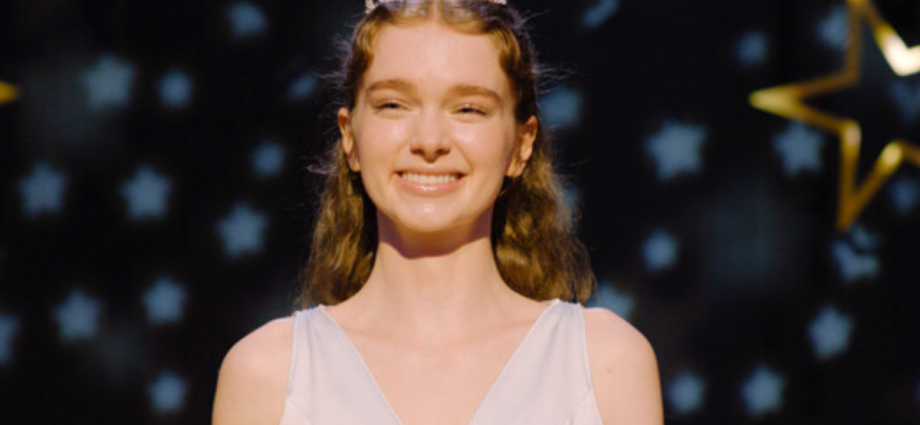
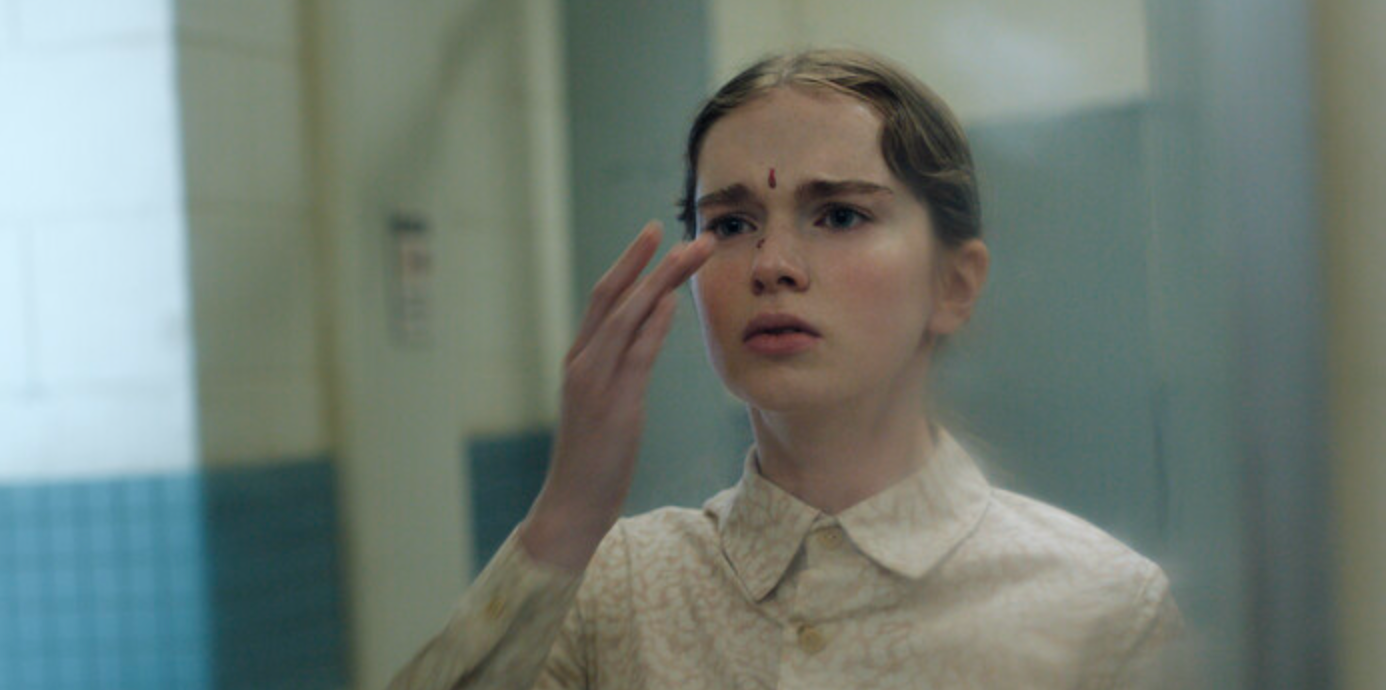
When social workers enter the house of a deceased construction worker, they find, to their surprise, a teenage girl and her mother. The girl, Carrie White (Summer H Howell), has spent her life locked up with her survivalist father and overbearing mother, Margaret (Samantha Sloyan). When she is suddenly thrown in as a sophomore at Ewen High School, she must learn to navigate both the intricacies of algebra and the nuances of social life. That means dealing with Sue Snell (Siena Agudong), an aloof but well-meaning classmate, and Christine Hargensen (Alison Thornton), the horrible Queen Bee whose life is imploding. But just as Carrie is dealing with all these new experiences, she starts to notice strange things happening around her. “I don’t think I realised how small my life was before,” Carrie confesses as infinite possibilities – boys and computers and telekinetic superpowers – unfurl before her.
Part of the reason for Carrie’s enduring popularity is that it is a coming-of-age story that births its protagonist into a world of anger and violence. This is not simply a tale of a naif who comes to realise the complexities and opportunities of adult life. Here, the girl is different, is victimised for those differences, and rather than finding her people or conforming to society’s demands, she exacts a catastrophic revenge. It is Mean Girls, but everyone gets hit by the school bus. As such, it is a story that is suited to dark moments in the American national psyche. Brian De Palma’s 1976 version was released in the aftermath of the Vietnam War, the 2002 adaptation came out as America embarked on the War on Terror, and this new TV series arrives in the midst of the country’s ongoing identity crisis. The world of Carrie, like our present moment, is unjust, cruel and relentless.
Mike Flanagan, the show’s creator, is, in some ways, the inverse of Ryan Murphy, the TV-maker behind the Monster and American Horror Story sagas. Where Murphy favours schlocky true crime ramped up to grotesque extremes, Flanagan prefers to rework literature for modern times. Where Murphy favours the hyper-saturation of gore, Flanagan favours moody, gothic tones. He has previously adapted Henry James, Edgar Allen Poe and Shirley Jackson for Netflix and here drags King’s debut novel, released way back in 1974, into the present day. The bullying Carrie experiences happens largely online, via an anonymous Instagram account called “Carrie Red”. It’s one of the most accurate portrayals of social media victimisation – from crowdsourced dogpiles to sock-puppet alts – in recent years. Frankly, I’m amazed that Meta agreed to the Instagram interface being used like this, on screen. “We can’t police the internet!” laments the school’s Principal (Matthew Lillard), and that is a real tension felt by teachers and parents in the present moment. The social landscape of high school might have changed in the past 50 years, but the question of bullying, of pointless, nihilistic othering, feels incredibly pertinent.
As Carrie, 22-year-old Howell is a totally convincing ingenue. She looks smaller and younger than her classmates, her eyes filled with wonder – until they’re not. Across the board, the cast give it their all, with Amber Midthunder a standout as Miss Desjardin. Here, Carrie’s favourite teacher is given a backstory and more emotion to wrestle with. “A few years ago, it would’ve been me torturing Carrie White in that locker room,” she observes ruefully. Yet, in a quirk of linear time, the spectre that looms over this Carrie is a show that was strongly influenced by the original Carrie. Amazon clearly feels that this could be a successor to Stranger Things as an uber-popular supernatural high school drama. That necessitates the messy creation of a shadowy world of telekinetics who are tracking Carrie, as well as the introduction of a new character Emaline (Thalia Dudek), who sits as the devil on Carrie’s shoulder.
All of that feels like a distraction, introduced to raise the possibility that the series could be extended beyond the pages of King’s slim novel (Flanagan has said that he envisages the show running for three series). But even if the ending feels more like world-building than a final act, Flanagan has done a good job of engaging with and updating the Carrie myth. This is a confident, well-paced adaptation with all the vibrance and slickness of a bucket of blood.