









Want to bookmark your favourite articles and stories to read or reference later? Start your Independent Membership today.
Join today
Already a member?
Log in
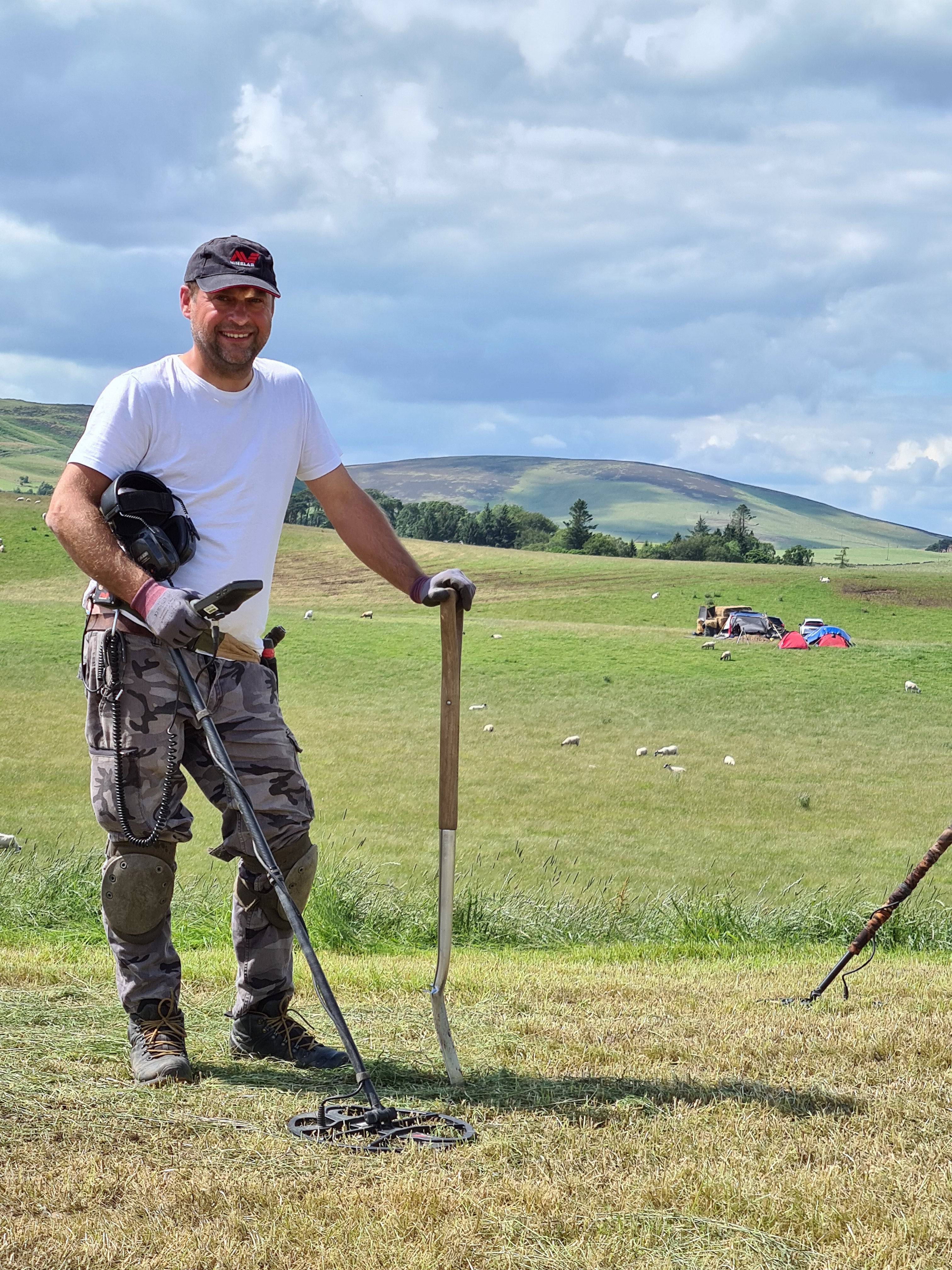
A metal detectorist has described it as “quite extraordinary” to have unearthed a second Bronze Age hoard within two years in the Scottish Borders.
Mariusz Stepien’s latest discovery, made in 2022, came at a spot just seven miles from where he found the Peebles Hoard in 2020.
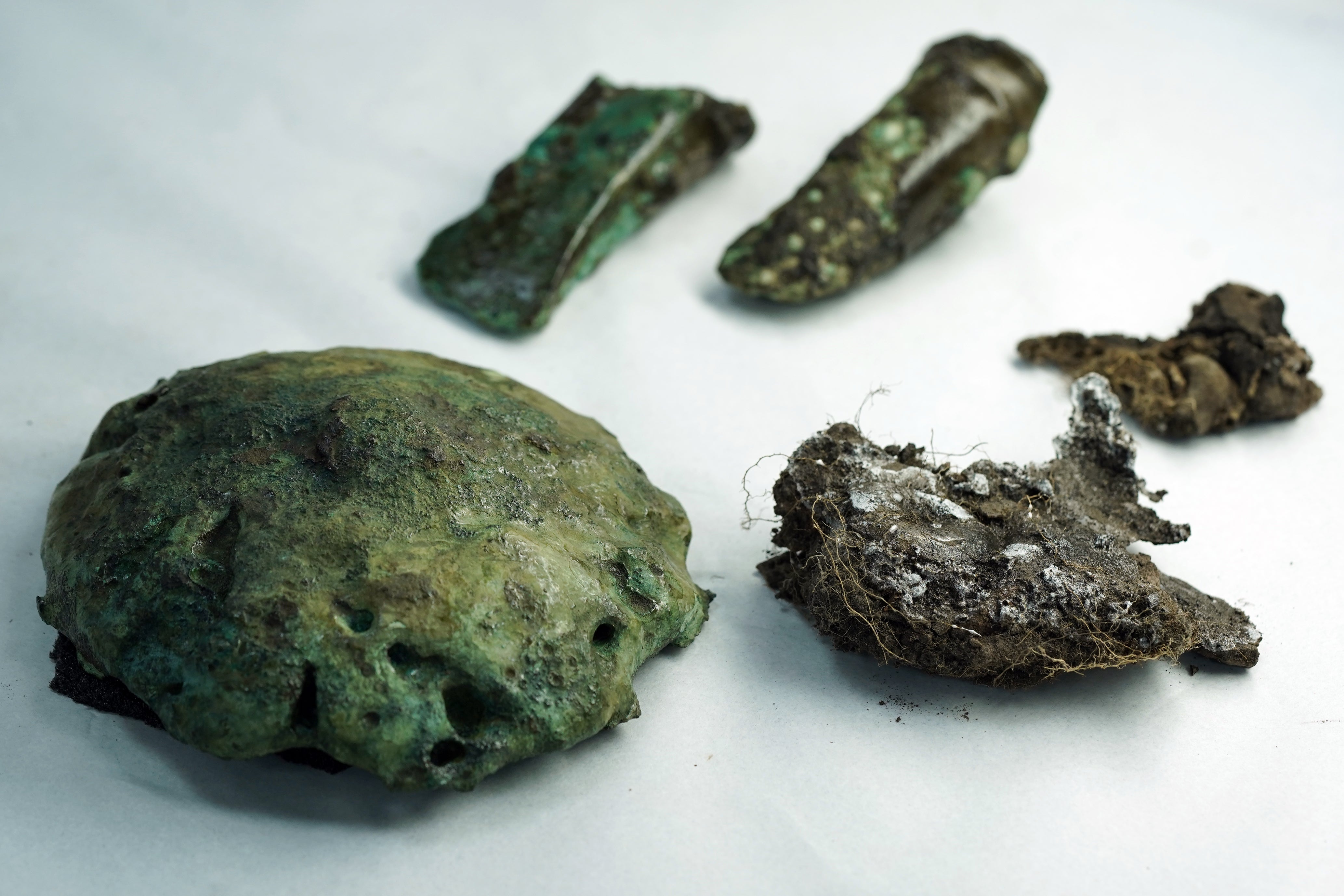
The latest haul, known as the Blyth Hoard, contains objects dating from the Late Bronze Age, circa 1150 to 800BC.
Among them are two bronze axe-heads and clay moulds that may have been used to make some of the unique bronze fittings found in the nearby Peebles Hoard.
The find also includes a complete copper ingot, which is said to be the first of its kind found in Scotland.
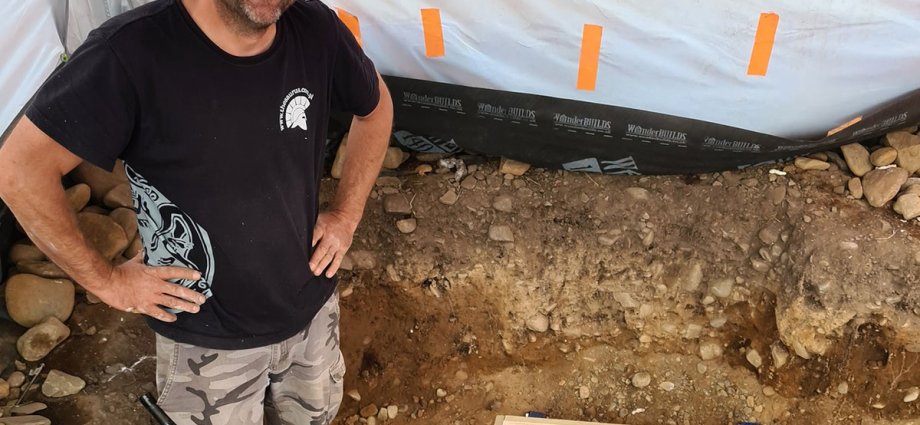
Excavation by archaeologists additionally revealed an ancient stone cairn.
The moment of discovery came when Mr Stepien first detected an axe head and then noticed other bronze objects in the ground.
He reported the find to the Treasure Trove Unit, which in turn notified archaeologists from National Museums Scotland (NMS).
The hoard has now been taken to the National Museums Collection Centre in Edinburgh for conservation and analysis.
Experts hope that analysis of the ingot might point towards the geographical source of the metals used to make the bronze objects in both hoards.
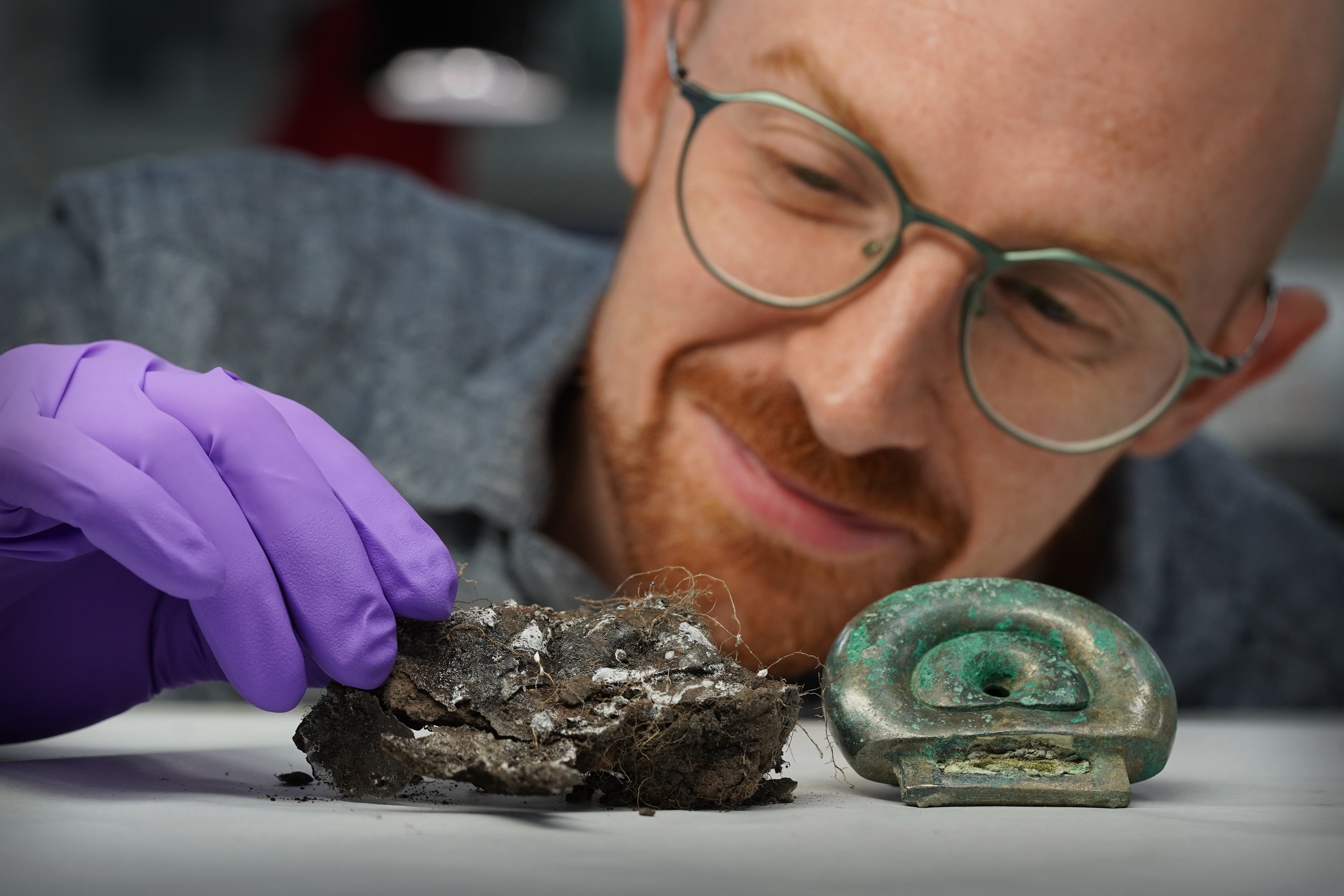
Dr Matthew Knight, curator of prehistory, Bronze Age collections at NMS, said: “This is one of those classic archaeological finds that initially doesn’t look like much, but is actually really incredible and has many stories to tell.
“It’s really rare for mould materials to survive at all, so it’s a special find in its own right, but the proximity and relationship to the Peebles Hoard makes it all the more extraordinary.
“We must thank the finder who, just as he did with the Peebles Hoard, reported the find to the Treasure Trove Unit right away, which enabled us to better understand this important context and excavate the material swiftly and safely.”
Mr Stepien said he is now looking forward to seeing what further research can reveal about both hoards – and about the people behind them.
“When I first discovered the Blyth Hoard, I was excited to have found more Bronze Age material in an area that I already knew was archaeologically significant,” he said.
“At that stage, I had no idea just how important the discovery might turn out to be.
“Having previously discovered the Peebles Hoard, it is quite extraordinary to think that two discoveries I made so close to one another could be connected.
“Finding something is one thing, but seeing the amount of work that goes into understanding, preserving and researching, it has been a really interesting part of the whole experience.
“I’m very pleased to have been able to play a small part in that process, and I’m looking forward to seeing what further research and conservation can reveal about both hoards and, ultimately, about the people behind them.”
Under Scots law, archaeological finds discovered in Scotland must be reported to the Treasure Trove Unit, based at NMS, where they are recorded and assessed.
Significant finds may be claimed on behalf of the Crown by the King’s and Lord Treasurer’s Remembrancer and allocated to museums through the Treasure Trove system, where they can be preserved and enjoyed for public benefit.
Since the Peebles Hoard was allocated to NMS, cleaning and conservation revealed an unexpectedly silver hue to the bronze material, which has been attributed to high levels of tin on the surface.
This is thought to be the product of a deliberate enrichment technique by highly skilled craftspeople.
The NMS said further research into both the Peebles and Blyth Hoards will continue.