










Want to bookmark your favourite articles and stories to read or reference later? Start your Independent Membership today.
Join today
Already a member?
Log in
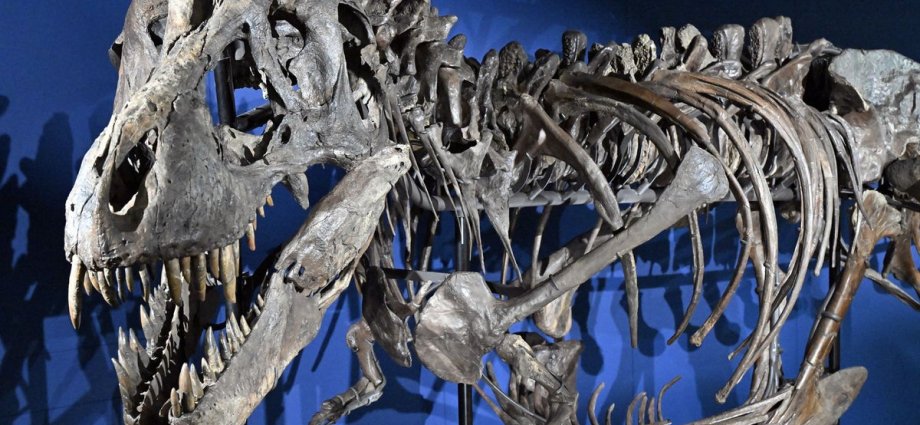
An ancient set of footprints preserved in the United States has provided scientists with the first known trackway belonging to an adult Tyrannosaurus rex, offering palaeontologists a rare glimpse into the animal’s living mechanics.
The discovery – first spotted by Kent Hups, a high school science teacher volunteering on a fossil dig in North Dakota – reveals that the apex predator likely ambled along at a casual human walking pace.
Spanning seven metres, the sequence of four footprints indicates the dinosaur was moving at between 1.5 and 2 metres per second – a speed roughly equivalent to a brisk human walk.
While isolated adult T. rex prints have been found before, a full trackway has allowed researchers to examine the dinosaur’s foot placement and stride length for the first time.

“Bones tell us an enormous amount about these animals, but footprints capture a moment of behaviour,” explained Dr Tyler Lyson, senior curator of vertebrate paleontology at the Denver Museum of Nature & Science. “With a trackway, we can actually follow an animal as it moved across the landscape. That is incredibly rare for T. rex.”
Dr Peter Falkingham, a palaeobiology professor at Liverpool John Moores University and lead author of the study, noted that age plays a critical role in gait mechanics, as younger and older dinosaurs moved differently, much like human toddlers when compared to adults.
Mr Hups uncovered the prints while exploring a steep slope in the fossil-rich Hell Creek Formation in North Dakota during an expedition led by Dr Lyson.
The footprints were preserved through an unusual geological process, where soft mud filled the depressions before hardening over millions of years, leaving three-toed sandstone casts protruding from the hillside.
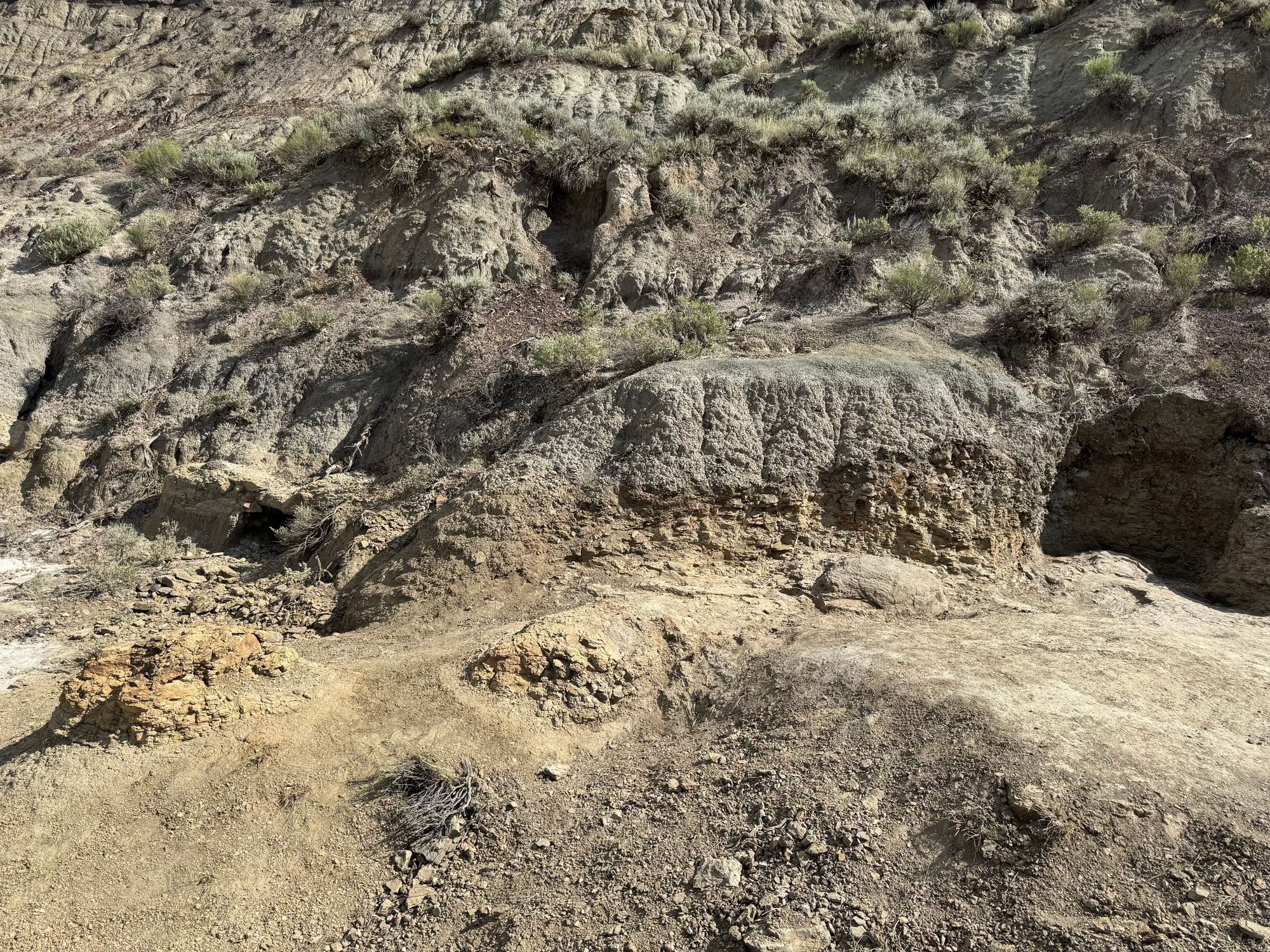
Measuring around one metre in length each, the massive prints were identified as belonging to an adult T. rex due to their scale, tridactyl shape, narrow toe angles, and the abundance of T. rex skeletons unearthed in the immediate vicinity.
Although heavy fracturing on the surface of the casts meant fine skin or pad details were lost to time, the 13-foot stride lengths provided researchers with crucial biomechanical data.
The site – located roughly 33 metres below the Cretaceous-Paleogene boundary layer – dates back 66.5 million years, meaning the tracks were made shortly before the asteroid impact believed to have ended the age of dinosaurs.
“As a teacher, I’m always telling my students that science starts with curiosity, passion and careful observation,” said Mr Hups. “I never imagined that could lead me to a discovery like this.”
Further excavation at the site remains ongoing, with researchers suspecting a fifth footprint remains buried beneath the hillside, waiting for natural erosion to safely expose the next step in the prehistoric path.