









Want to bookmark your favourite articles and stories to read or reference later? Start your Independent Premium subscription today.
Subscribe
`;
document.body.appendChild(modal);
modal.addEventListener(‘click’, () => {
document.cookie=”mos-plan-select=; Max-Age=0; path=/; expires=Thu, 01 Jan 1970 00:00:00 UTC;”;
});
modal.querySelector(‘.subscribe-link’)?.addEventListener(‘click’, (e) => {
e.preventDefault();
document.cookie=”mos-plan-select=; Max-Age=0; path=/; expires=Thu, 01 Jan 1970 00:00:00 UTC;”;
setTimeout(() => {
window.location.href=”https://www.independent.co.uk/subscribe/app”;
}, 500);
});
});
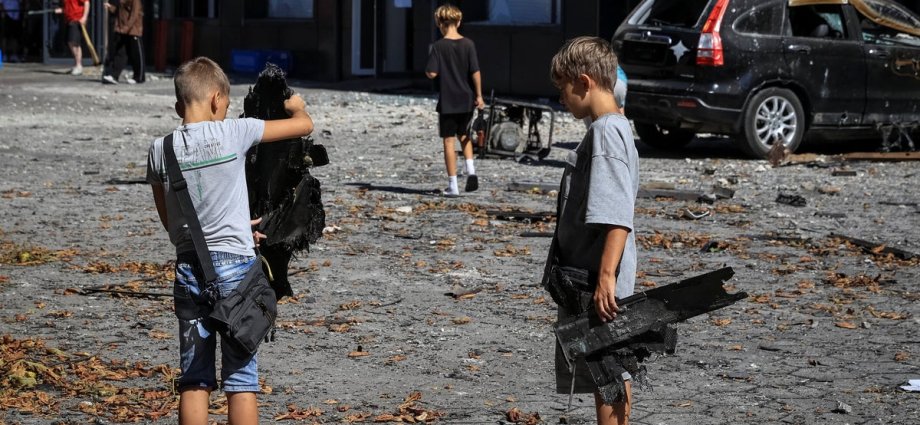
The growing use of drones and artificial intelligence in conflict is exposing children to new threats at a time when more than five a day are already being killed or injured by explosives around the world.
Children accounted for nearly half of civilian casualties from landmines and explosive remnants of war between 2020 and 2025, according to new research by Save the Children (STC). More than 12,000 were killed or injured.
Now, rapidly evolving military technology is changing civilian exposure to conflict at a time when rights groups say the international norms designed to protect children and their families are being weakened.
Air-launched explosives, including from attack drones, accounted for around two-thirds of incidents of civilian harm last year globally, with health workers carrying out medical procedures by phone light to avoid attracting their attention, STC said.
In Ukraine, drone attacks on schools increased by 358 per cent last year, while drone attacks accounted for the vast majority of child casualties in Sudan in the first months of this year.

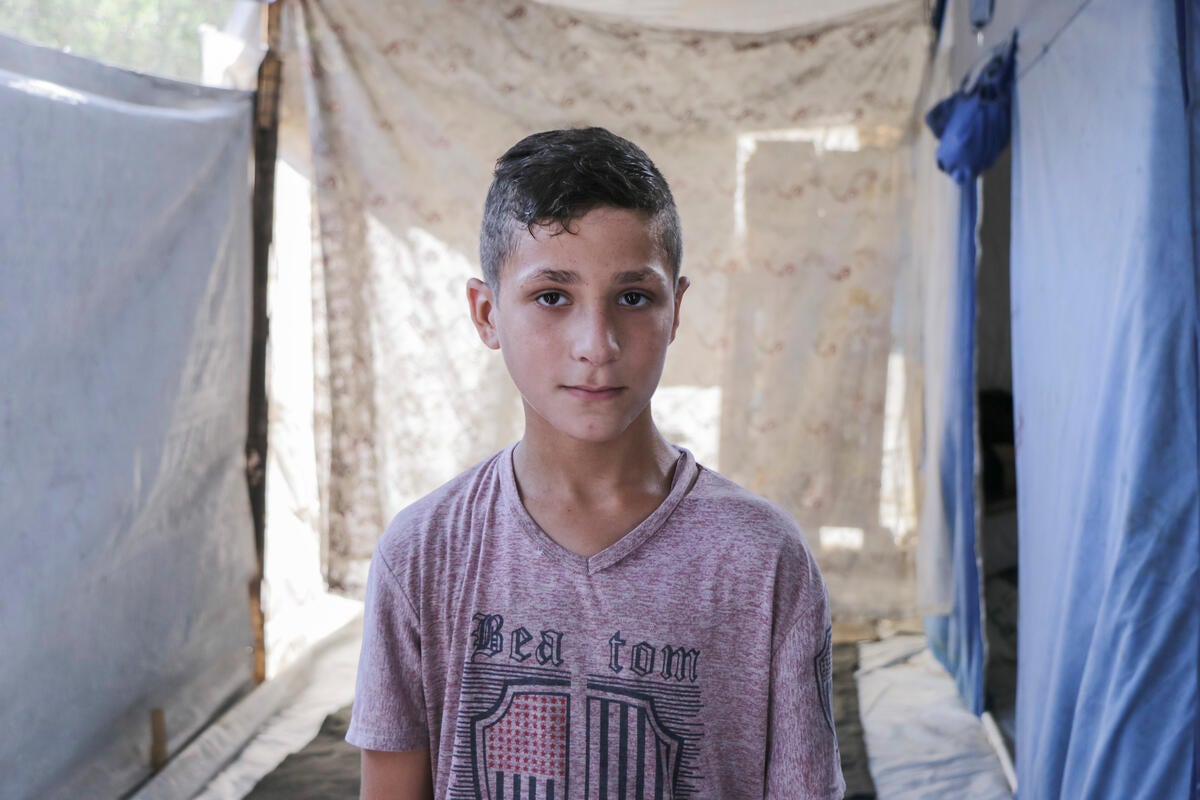
Khaleel, 10, was playing football near a school in Gaza when the ball rolled into an area containing an explosive remnant of war. When he went to retrieve it, an explosion left him with shrapnel wounds to his face, both eyes and one ear.
He has since suffered severe vision loss, persistent pain and hearing problems, and struggles to read the board at school or play with other children.
“Seeing him covered in blood and unable to open his eyes was one of the most painful moments of my life. He is my only son after many years of waiting, and watching him suffer has been devastating,” his mother, Mona, 42, said.
Mona and Khaleel’s names have been changed for their safety.
STC also highlighted Gaza as an example of a new phase in modern warfare, in which drone surveillance, AI-supported targeting and other unmanned systems are being used at an alarming scale in densely populated areas.
AI technology has already changed how wars are fought, bringing the time it takes to identify targets from tens of minutes to, in some cases, seconds. Its growing use in warfare also raises concerns about how decisions to use force are being made, particularly when children and other civilians are present.
In a report published on Thursday, the UN’s top human rights body said they had found “reasonable grounds” to believe the US committed war crimes in two strikes in Iran, including on a school in Minab, that killed at least 177 civilians. US officials have previously confirmed that AI was used during the operation to process intelligence and assist analysts in identifying targets. The US department of defence has investigations into the incidents ongoing, but the US has denied committing war crimes. White House spokesperson Anna Kelly said in a statement, “The only party in this conflict that has committed war crimes is the Iranian regime.”
Speaking during a visit to Imperial College London’s I-HUB innovation centre also on Thursday, Harry, the Duke of Sussex, pledged his commitment to children injured in conflict, saying that “whilst children continue to suffer, I will keep working to ensure they can live life to the full”.
“Children should not be exposed to conflict. They should not be losing limbs to blast,” he said.
The university hosts the Centre for Paediatric Blast Injury Studies, which has pioneered prosthetic technology and long-term rehabilitation techniques for children who have suffered blast injuries.
It comes as monthly child casualties in Ukraine have reached a four-year high, according to Unicef, while they have also surged in Sudan in recent months.
In June, a report by an independent United Nations inquiry found that Israel’s ongoing killings of children in Gaza after a truce was called in its war against Hamas could amount to genocide. It said that Israeli military operations have continued causing “unprecedented death, injury and trauma” to Palestinian children. Israel has repeatedly denied any suggestion it has committed war crimes inside Gaza.
“Governments must ensure that the laws and protections designed to keep children safe evolve with changes to warfare,” said Claire Sanford, conflict and humanitarian director at STC UK. “Children’s rights and safety must remain at the centre of decisions about how emerging technologies are developed and used.”
This article has been produced as part of The Independent’s Rethinking Global Aid project