









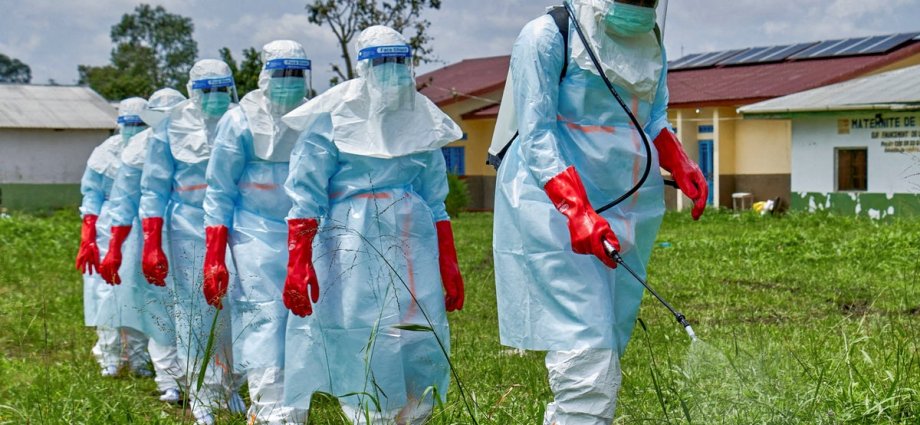
More than 2,000 people have now died of Ebola in the Democratic Republic of Congo (DRC), with the outbreak continuing to outpace the response because it spread for months undetected before being declared.
Government data shows the outbreak has recorded a total of 4,381 confirmed cases. The ongoing outbreak has so far had a case fatality rate of 45.9 per cent, more than the 39.6 per cent rate recorded in the 2014-2016 West Africa outbreak, which infected more than 28,000 people and killed at least 11,000.
That makes this outbreak the fastest growing in history. It actually began in February, the World Health Organisation (WHO) has said. It was not officially declared until 15 May, meaning there was a significant lag in containment efforts.
As a result, the virus remains “ahead of us”, a WHO official said during a press briefing as the death toll continues to gather pace. The first 1,000 deaths were recorded over nine weeks, but the second took just three weeks.
Early cases were wrongly attributed to malaria, typhoid or a more common type of Ebola, but genetic sequencing timed the outbreak as earlier than had been thought.
Aid agencies have warned that fear of infection and misinformation have also kept people away from seeking care, while the outbreak has disrupted essential healthcare services like routine vaccination and childbirth.
“One doctor told our team that before the current outbreak, his facility saw an average of 500 patients a month but that has dropped to almost nothing,” said John Agbor, Unicef’s representative in the DRC.
At more than 4,300 confirmed cases, the outbreak has caused eight times more cases than were recorded during the same period of the West Africa outbreak (2013-2016), which was caused by the Zaire strain of the virus.
The rare Bundibugyo virus responsible for this current outbreak has no approved vaccines or treatments.
The WHO warned that there is a need to “urgently intensify” response efforts because the virus continues to spread and too many patients are receiving treatment too late.
“Village centres outside of Bunia, they don’t have these services,” said Dr Mohamed Janabi, WHO Regional Director for Africa, referring to treatment centres. “As a result, everyone comes to Bunia. Unfortunately, they come late.”

More than two-thirds of Ebola deaths are happening in the community rather than in treatment centres.
Between April and June, there was a 42 per cent drop in the use of essential health services in outbreak hotspots, according to Unicef.
The outbreak is unfolding under extremely challenging conditions, with local health workers striking over pay, conflict from rebel groups as well as mass displacement and widespread misinformation that Ebola isn’t real or is spread by aid agencies.
Response efforts have also been hampered by abrupt cuts to international aid, which have heavily impacted health programmes in already vulnerable countries like the DRC and disease monitoring.
In 2018, the US Agency for International Development (USAID) coordinated efforts to train thousands of local health workers, conduct contact tracing, increase laboratory capacity to test for Ebola, and vaccinate people against the disease. The July 2025 dismantling of USAID saw the vast majority of projects terminated.
Studies have been planned to find out if the virus is actually mutating, contributing to the severity of the outbreak, officials have said.
Clinical research trials are also currently underway on the use of MBP134 and Remdesivir to treat the Bundibugyo virus strain.
This article has been produced as part of The Independent’s Rethinking Global Aid project