










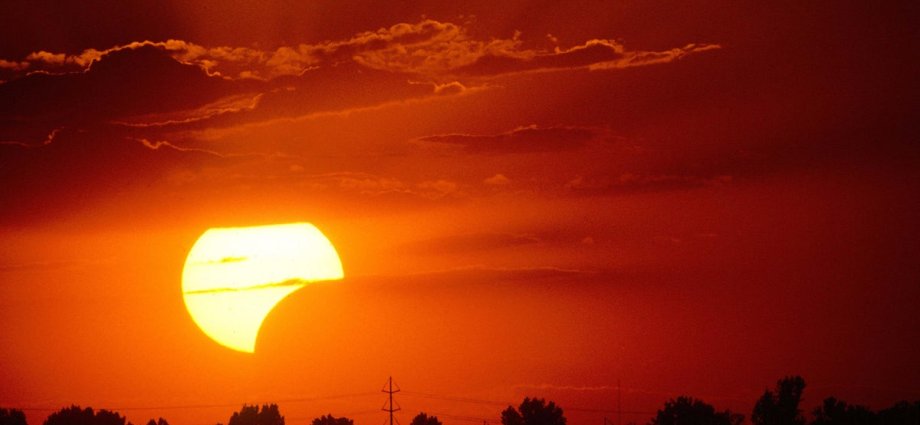
The UK will see its fullest solar eclipse for the next 54 years on Wednesday – and the safest way to view it at home is through a colander, according to experts.
More than 90% of the Sun will be obscured by the Moon between 6.17pm and 8.06pm on August 12, the most it has been blocked above UK skies since the total eclipse in 1999.
But the Royal Greenwich Observatory has warned the public that sunglasses are not a safe enough method to view the cosmic phenomenon.
Imo Bell, a planetarium astronomer at the observatory, told the Press Association: “It’s not a total eclipse, but over 90% is really exciting. We’re not going to get one this good for a really long time.
“So it’s important not to miss it, and to be prepared. You can’t just go out and expect to have a look because it’s really dangerous for your eyes.
“So you can use solar eclipse glasses, which are very, very different from sunglasses – they block out so much light that you can’t see anything through them except the Sun, because that’s how much light they need to block for the damaging light of the Sun to be safe to view.
“Ideally a solar telescope is an amazing way to witness it, and if you don’t have one of them then you can look into whether your local astronomy society is doing any events.
“And if all else fails, you can project the image of the eclipse using a household item like a colander which has lots of holes in – point the colander towards the Sun with your back facing it, and in the shadow of the colander you’ll be able to see the eclipse in the holes, which is really cool.”
The next time the Moon obscures as much of the Sun will be in 2081, and the next total solar eclipse in the UK will be in 2090.
The maximum point of coverage is expected to be at around 7.13pm.
Ms Bell advised getting to a vantage point facing west, with minimal buildings around, as the best way to view the eclipse.
“We might notice the sky getting a little bit dark, so if you’re looking safely, it’ll look a bit like the Moon is taking a bite out of the Sun, you’ll see something that looks a bit like a crescent Sun.”
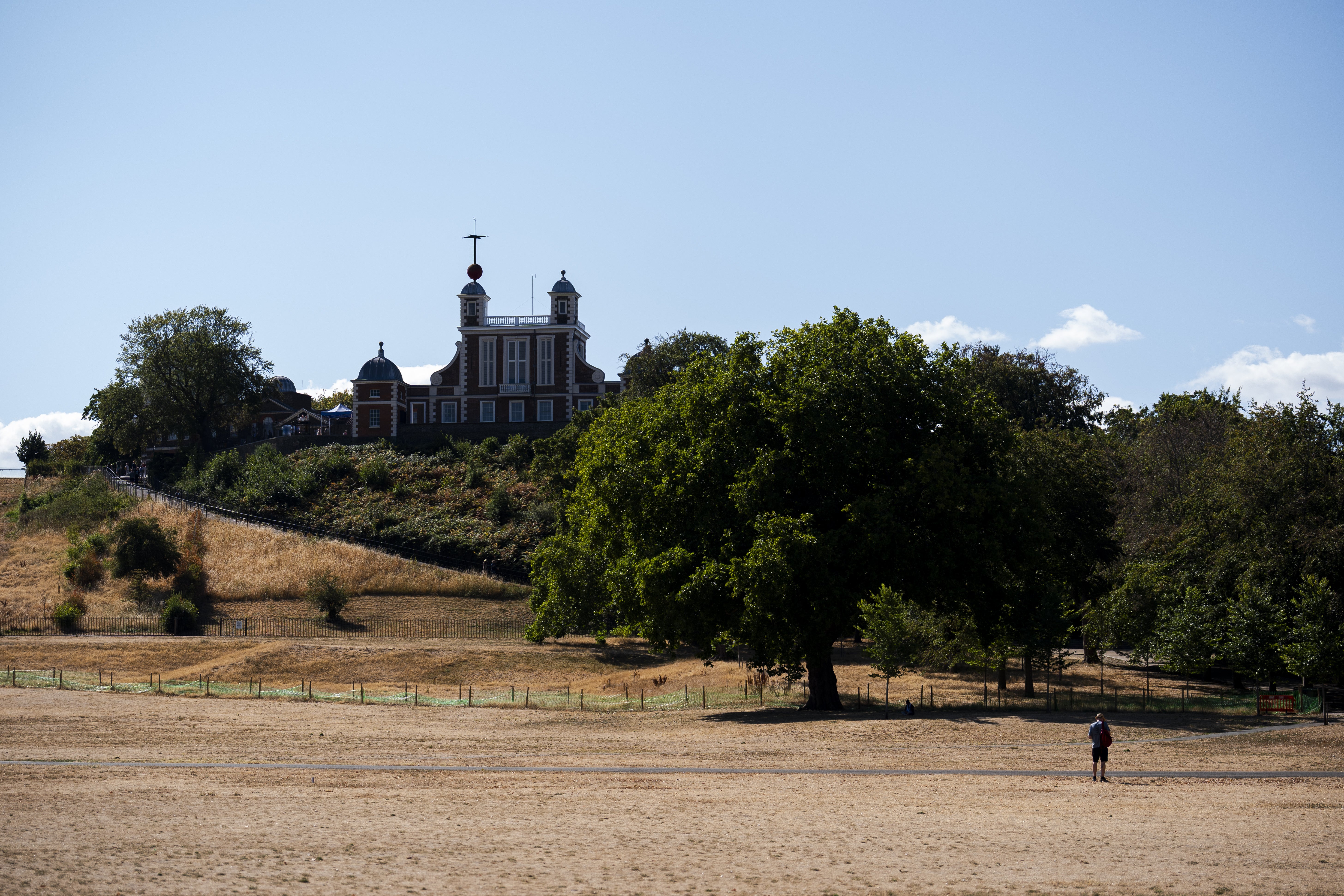
The Met Office said it is too early to tell where the clearest skies will be to see the eclipse, but its long-term forecast said more changeable conditions are likely in the north with showers and stronger winds, while parts of the south will see warm and dry conditions.
Meteorologist Tom Morgan told PA that Northern Ireland, Scotland and western parts of England have a “slightly lower” chance of seeing the eclipse, with southern and eastern parts of England the best places to view it.
He said: “It’s still five days away though, so there’s still some uncertainty, but I’d say high pressure is going to be generally keeping it mostly dry away from the very far north west of the UK, where there could be some rain. So there’s a pretty moderate to high possibility that a good chunk of the UK will have clear skies for it but there’ll probably be at least some cloud in the west.”
He added: “At this stage, the lowest probabilities of seeing it are places or cities such as Glasgow, Belfast (and) particularly western parts of Scotland, where the cloud could be much more persistent and thicker. Most of England and Wales have a fairly reasonable prospect.”
Ms Bell said: “It’ll be a nice, long event which is really exciting. The Sun’s going to be really quite close to the horizon because it will be setting at that point towards the western horizon.
“So it’s really important that viewers from the UK find a good view of the western horizon and make sure their view of the Sun isn’t blocked by any buildings or hills.”
Reykjavik in Iceland and Spanish cities A Coruna, Oviedo, Zaragoza, Bilbao and Valencia will see a total eclipse on Wednesday, in which the Moon fully obscures the Sun.