









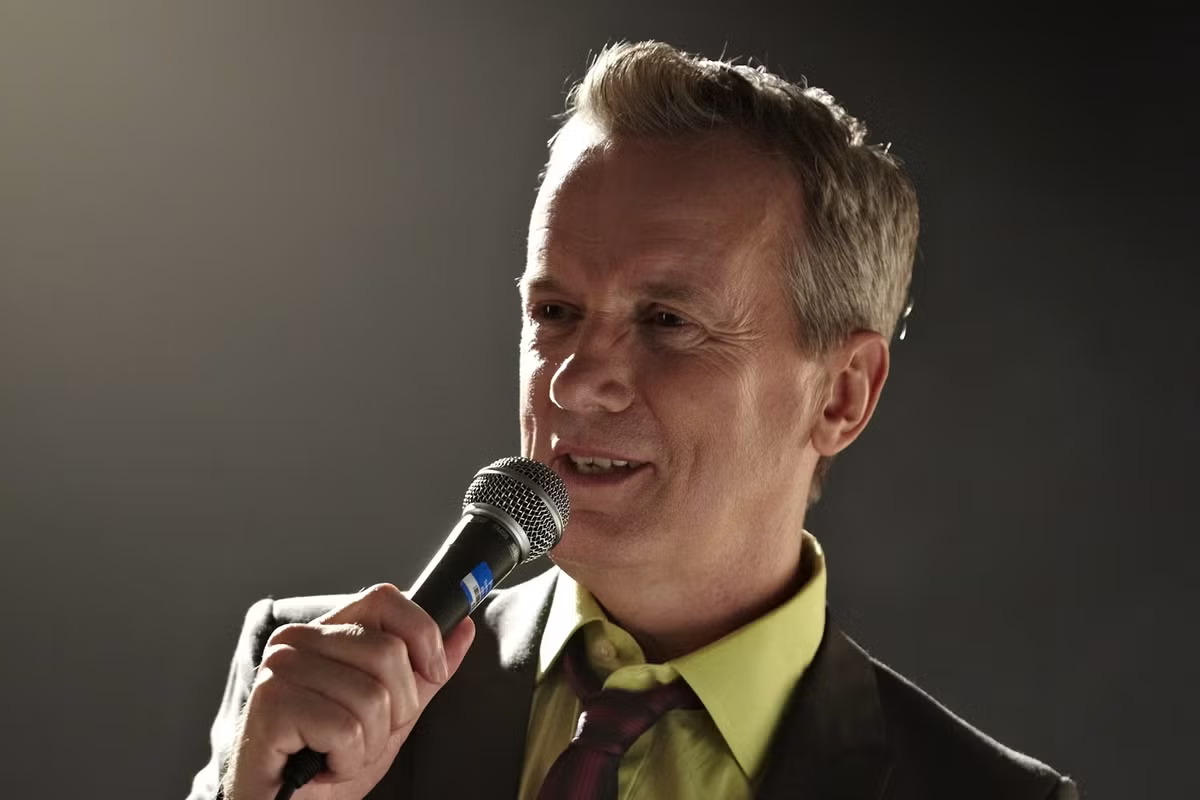
Frank Skinner exits the Starbucks bathroom and sits down opposite me. His publicist brings over our drinks; he sends her back, first for milk, and then for a stick to retrieve the teabag. “Sorry, I’m not normally screaming at women to do things for me,” he jokes. “I blame Alexa. She’s got me into a bad habit. Anyway, hello.”
There’s something charmingly, transparently incorrigible about the West Bromwich-born comedian: his is a mind foraging constantly for a punchline. Everything Skinner says carries with it a sort of stealthy, amused irony – an irony that’s stuck with him through his decades-long transmogrification from football-loving, filth-mongering figurehead of Nineties “New Lad” to the proudly Catholic, poetry-referencing MBE recipient that sits before me today. (Really, this was a shift more in perception than reality – Skinner was a sober, Christ-worshipping arts lover back in his rowdy heyday, and still now revels in football and sex jokes.)
We start easy. How’s life, I ask. Skinner grins: “Well, Richard Madeley said to me about an hour ago that I was ‘happier than ever’. He didn’t ask me, he just looked at me and said, ‘You’re happier than ever’. He’s very superficial, I was just laughing at the time.”
In Richard Madeley’s defence – a phrase I’d never thought I’d type – it’s easy to see how he might have reached this conclusion. There’s something boyishly upbeat about Skinner, a sort of impishness you don’t necessarily expect from a 69-year-old. He doesn’t seem to have aged at all in the last decade. He’s buoyed too by his imminent stint at the Edinburgh Fringe, performing two different shows – and says he likes doing interviews like these “because I don’t have many friends”.
“You get rubbish ones,” he says. “I don’t know how this one’s going to go, but you get the ones where they start digging, looking for weak spots for their knife. But even that… I think they’re interesting.”
He grins, again. “I was doing an interview recently and the woman started by saying, ‘Do you want a cockapoo?’ And I said, ‘No, I’ve got a dog already.’ She’d actually said ‘Do you want copy approval?’ and I’d just misheard. I thought, ‘I’ve started an interview showing that I have become Grandpa Simpson.’”

Back in the late 1990s, when he hosted his own talk show on the BBC, Skinner would often ask his guests one question to break the ice: when did you last fall over? “God, it’s been a while,” he says, when I ask him this. “Now that my bones have the consistency of Aeros, I’m a bit more careful. And I think not drinking has taken a lot of the falling out of my life.”
By this metric, Skinner’s peak falling days are some four decades behind him; he got sober in the mid-Eighties, shortly before he gave up his career as an English lecturer to pursue comedy. (He was the child of a working-class upbringing, born Christopher Graham Collins; now, he’s Frank Skinner to most of the world, including his wife.)
The first of Skinner’s Edinburgh shows is a work-in-progress standup residency; the second, Crowd Work, sees him lead a series of guest comedians in an hour of unrehearsed interactions with the audience. He’s a good compere, he claims, in part because he is a “brilliant audience member”. “I really, really laugh,” he says. “In fact, I got told off by my wife for clapping too loud at the circus.”
Skinner notes that there is a strong “support network” on the night between the three comics who join him – a far removed from the “savage” competition for laughs on something like Mock the Week. “I don’t know if you’ve ever been to a trout farm,” he says. “But there, you can get this feed that you walk around with in a cup. You throw it in the water and about 200 trout literally jump out the water, fighting over it. And that’s what Mock the Week feels like.”

He’s fond of an agricultural metaphor – later on, he likens panel shows to “battery farms” as opposed to the “free range” world of standup. There is a playful cleverness to Skinner’s idiolect in general. (“I like verbal dexterity; I like feeling the words on my lips.”) For years, he was able to indulge his linguistic flights of fancy, and his love of literary esoterica, on his radio show, where “working clean” is an Ofcom-mandated necessity. (Between 2009 and 2024, he hosted a Saturday show on Absolute Radio; since its cancellation in 2024, it has effectively continued as a podcast, Frank Off the Radio.) But translating this to the more resistant world of standup comedy is a Rubicon he’s yet to cross.
“For me now, pushing the envelope means doing a joke where the punchline is the word ‘syntax’, rather than talking about masturbation or whatever,” he says. “I’d like to be able to talk about what’s funny about TS Eliot’s The Waste Land, but I’ve tried it – audiences won’t tolerate it. What usually happens is I’ll do 10 warm-up gigs in Islington and think, ‘Great! They’re laughing at [the literary] stuff.’ And then I’ll go and do it in Oldham and think, no… Andy Burnham will never level this out.” He laughs. “For all my hifalutin plans early on, I end up doing a lot more knob jokes.”
Also coming up this month is the release of Thirty Years of Dirt, a filmed version of Skinner’s previous standup show, recorded in April at the Soho Theatre Walthamstow. It’s shot in black and white, a characteristically atavistic touch inspired, Skinner says, by the look of the 1973 Lenny Bruce biopic Lenny.
We went for a walk on the day of the marriage and she said, ‘Shall we not bother?’
Frank Skinner
Even away from comedy, Skinner says he has long been inspired by Bruce’s approach to radical, self-effacing honesty. “The last five minutes of Sunday Brunch yesterday was me talking about my career failures,” he says. “I don’t think there’s one celebrity in a thousand that would have that conversation – you know, when people say things like, ‘I’m leaving Coronation Street and I’ve got a big project lined up,’ I always think, ‘It’s a 1,000-piece jigsaw’. But I was strangely wallowing in it. I like to put salt in my own wounds.”
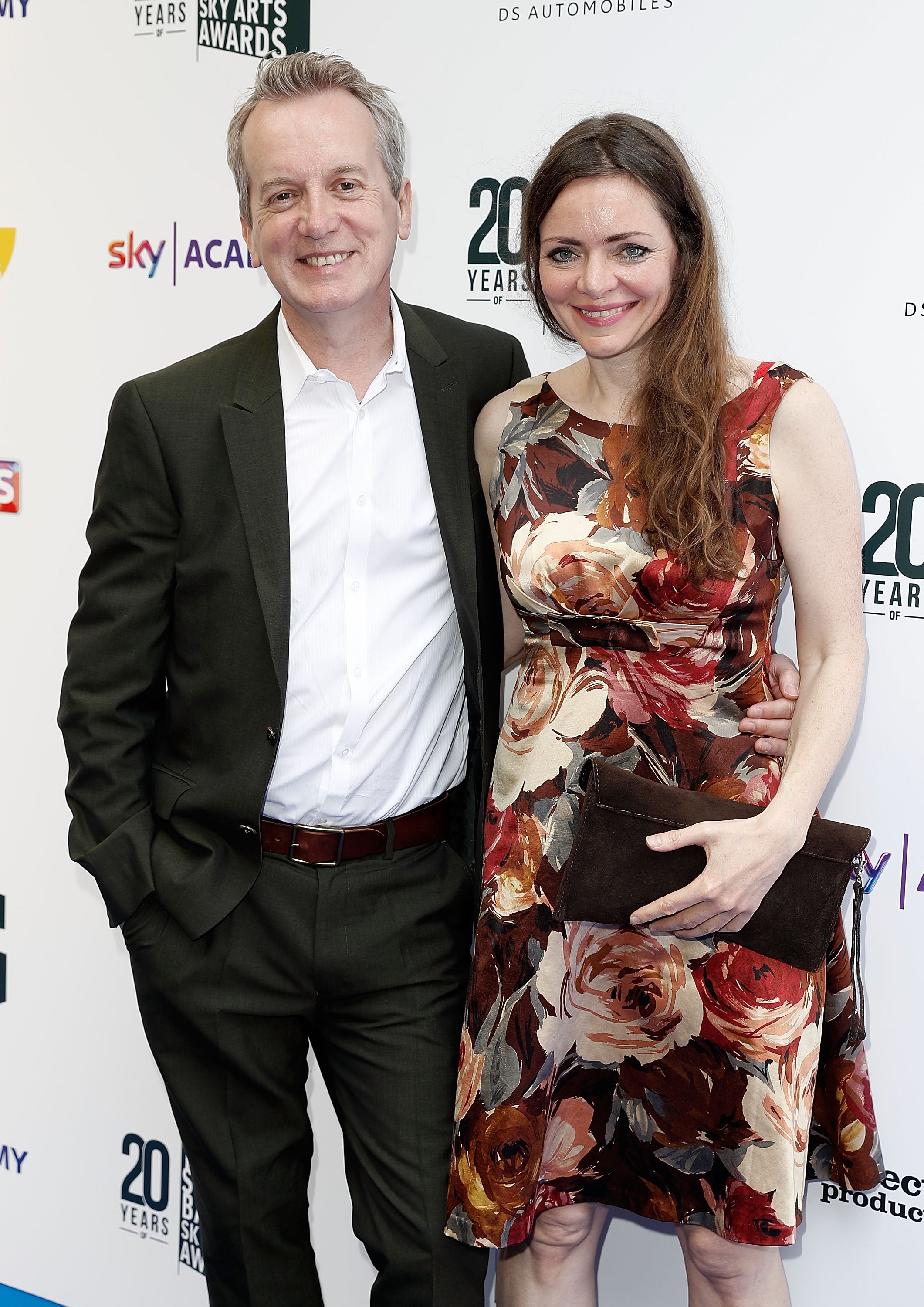
While there are a few wounds that might spring to mind – TV and radio series cancellations, or the aborted novel (Thunder Man and Jeff Phillips, about a superhero whose sidekick refused to change his name) that he had to return the commission for – life seems, in general, to be going swimmingly. Last year, Skinner married his long-term partner, Cath Mason, after 24 years together, in a registry office ceremony with no church, congregation, wedding dress, or rings. “We went for a walk on the day of the marriage and she said, ‘Shall we not bother?’ I think there was a bit of snobbery – we’ve been to weddings that feel a bit basic,” he says. “But I have felt some mystical warm glow inside me since we got married. And our recovery rate from arguments has accelerated.”
Plus, he says, one eye as ever on the material: “I find the rhythm and scan of gags works better with ‘wife’ than ‘partner’.”
Skinner and Mason share one son, Buzz, named after the astronaut Aldrin. Around the time Buzz was born in 2012, Skinner joked on the radio that the benefit of being an older father was that he “wouldn’t have to worry about the difficult teenage years”. Morbid kidding aside, I ask, are there anxieties around being a father to a young teenager while you’re nearly 70? “I suppose I’ve always thought I’d like to get him to university,” Skinner says. “Basically, you get to a stage where your child doesn’t necessarily want you around. I once went to a place called Kangaroo Island, off the coast of Adelaide. And there was a graveyard bit: when kangaroos knew their time was up, they instinctively went to this part of the island to die. And maybe I’ll do that when I’ve got my son into a good course.”
Much is made of the “masculinity crisis” facing boys and young men today; is this something Skinner butts up against as a father? “Well, I definitely wouldn’t want to go back to the old days,” he says. “I think at the moment, it’s at the extreme end. I’m hoping we can pick our way through the toxic masculinity stuff – but it is scary. I don’t want my son to grow up apologising for his whole life.”
He seems to mull the question for a moment. “Do I keep a real eye on what my kid is looking at on his phone? Probably not. Does that answer your question? I don’t know if it does. Were you blaming me for toxic masculinity?” I demur.
Nonetheless, he argues, there was even back in the 1990s “a lot more to the New Lads” than just “Elizabeth Hurley in her underwear on the cover of Loaded”.
“I think it was the first time I heard ordinary blokes talking about books, music, and fashion in a much more Nick Hornby-ish, thoughtful way. So a lot of stuff came with it.”
A big part of what propelled Skinner into the thick of the New Lads stereotype was, of course, football – along with David Baddiel, he created and starred in the comedy series Fantasy Football League. (Their musical collaboration with the Lightning Seeds, “Three Lions”, is still a mainstay singalong at England matches.)
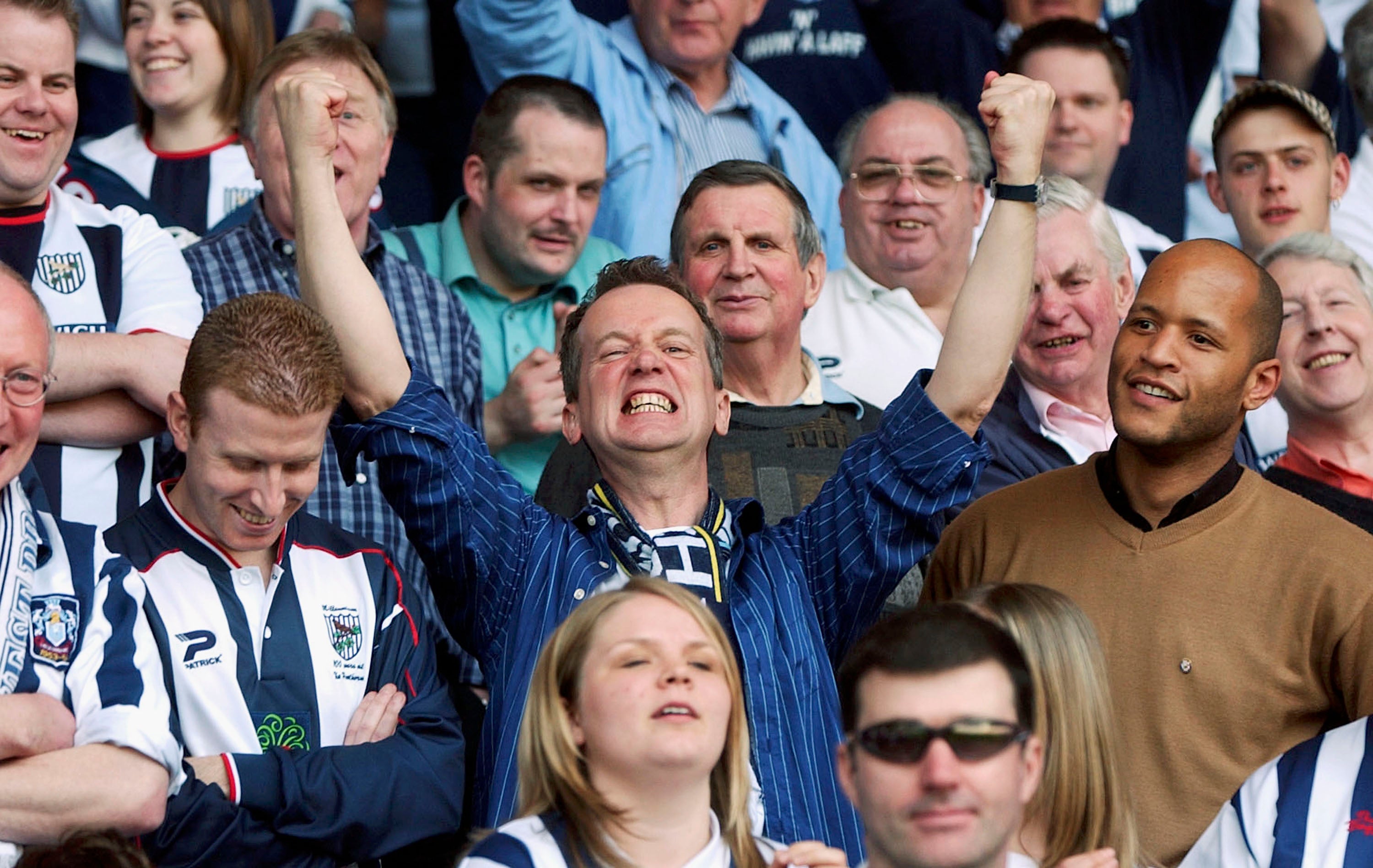
These days, he remains a football obsessive – but from a distance. “I realised that thing that no one must ever acknowledge, which is that football is much better on the telly than it is live,” he says. “Because you see stuff about four times, and someone explains it to you. There’s an old-fashioned view – it’s almost like signing on the dole – that you’re supposed to turn up. In that respect, I no longer qualify to call myself a football fan, even though I watch hours and hours of it, read about it and talk about it.”
There’s an irony, he says, in how little he actually understands the game he’s devoted so much of his life to – adding that he “longs” for “serious football analysis” on TV.
“It feels like Match of the Day, Sky, everything has to have jokes in it, has to be lighthearted… lots of bants,” he says. “I’d like to see a deep, detailed heat map looking at the commentator and co-commentator, establishing how much laughter between them was genuine and how much is just punctuation. They don’t really say anything funny, but there’s lots of ‘I don’t think you went that far up the pitch, did you?’ ‘Ha ha ha.’ It’s grotesque.”
Skinner finishes his tea, but we keep talking for a while – about his love of Laurel and Hardy and WC Fields; about his recurring daydreams (“In my head, I’m currently the player-manager of Barcelona”); and about the cuts at the BBC, Skinner’s on-again, off-again employer.
“I don’t like adverts like ‘What has the BBC ever done for me?’, as if it’s a religious institution,” he says. “But I just can’t believe the BBC would [crumble]. I can’t think of anything that’s disappeared that was so deeply ingrained in British. I guess the New Lads. Will there ever be a trailer that says ‘What have the New Lads done for me?’”
One final punchline – he pounces. “Actually… that could just be me in a big house in Hampstead.”
‘Crowd Work with Frank Skinner and Friends’ at the Edinburgh Fringe runs daily from 17-26 August. Tickets are on sale now
‘30 Years of Dirt’ is available on Sky and streaming service NOW from 14 August