








The European Union would be making the “biggest mistake” if it continues to cut foreign aid, the United Nations development chief has said, leaving it dealing with “one crisis after another”.
Alexander De Croo told Euractiv that shrinking aid programmes will undermine strategic priorities and that the EU must remain globally “engaged” rather than rely on “reactive” policies introduced only after disaster has struck, he said. Otherwise, “you will really face the high cost of dealing with one crisis after another,” Mr De Croo added.
“The biggest mistake you can make as Europeans is to say: ‘We are going to turn our back on the rest of the world’,” he said.
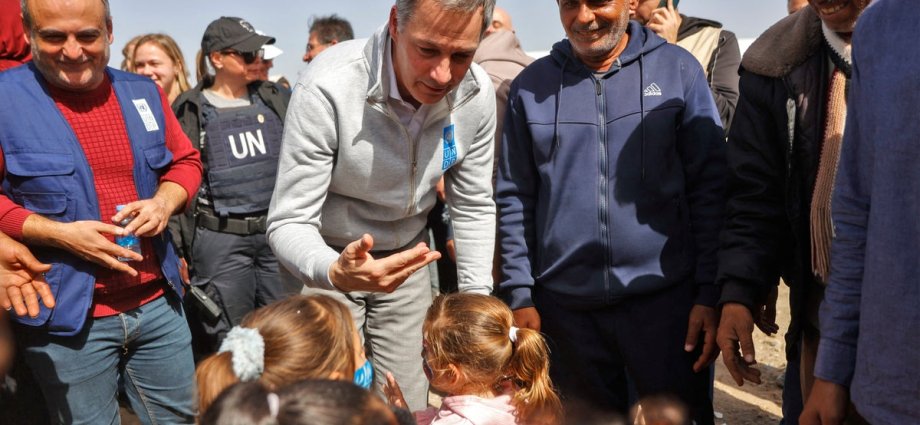
Mr De Croo, former prime minister of Belgium and administrator for the UN Development Programme (UNDP) since December, urged Europe to instead address increasingly frequent global crises through “proactive” development schemes that help reduce levels of armed conflict and mass migration.
It comes as Germany, Europe’s second-largest bilateral aid donor, is set to sharply reduce development spending. The government’s 2026 draft budget confirms a further cut to official development assistance as Berlin increases defence spending to meet new Nato commitments.
The latest UK aid allocations, published this month, show bilateral support to some African countries will be cut by as much as 90 per cent by 2029, with overall aid to Africa more than halved as the government also redirects spending towards defence and international institutions, rather than country-to country spending.
Countries experiencing some of the most pressing humanitarian emergencies in the world are set to see funding slashed, with aid to the Democratic Republic of Congo – currently in the midst of an Ebola outbreak – falling by 29 per cent, and aid to Lebanon also falling by 58 per cent.
Mr De Croo said that defence spending, if not complemented with development, is “not going to be very effective”.
In early 2025, the Trump administration began dismantling the US Agency for International Development (USAID), the world’s largest bilateral aid donor, freezing almost all foreign assistance and cancelling the vast majority of its aid programmes.

The abrupt withdrawal of funding left thousands of health and humanitarian projects without financing almost overnight, which has been compounded by cuts from European countries.
Humanitarian organisations have reported the closure of thousands of health facilities and the loss of tens of thousands of frontline jobs. There have been major disruptions to programmes providing maternal healthcare, childhood vaccinations, HIV treatment and nutrition services.
A study published in Science in May found that the abrupt dismantling of the USAID was associated with a sharp rise in violent conflict across parts of Africa that had previously relied most heavily on its funding.
The speed of the cuts left governments, UN agencies and charities unable to replace funding or safely transition services. Researchers publishing in The Lancet estimated that it could contribute to more than 14 million preventable deaths by 2030, including 4.5 million children under five.
A survey of HIV organisations published last week found more than 1,700 clinics and service sites had closed across 46 countries and more than 16,000 staff had lost their jobs, with programmes preventing mother-to-child transmission among those hardest hit.
Researchers warned the disruption risks reversing decades of progress against the HIV epidemic.
This article has been produced as part of The Independent’s Rethinking Global Aid project