










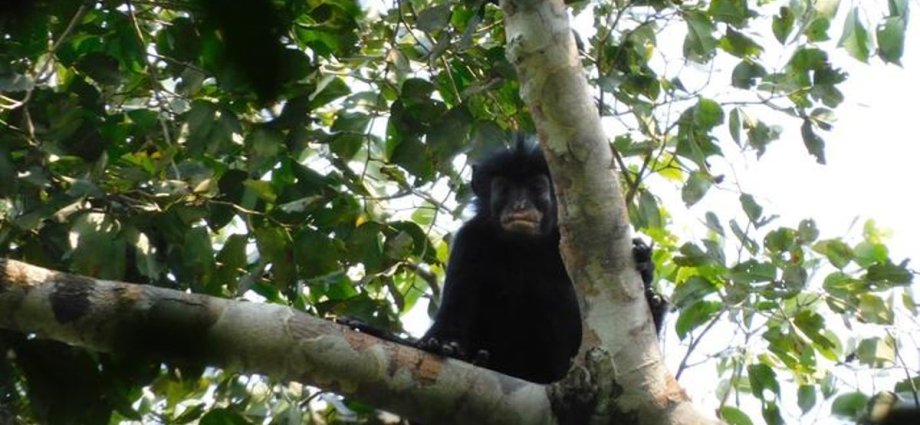
A new endangered monkey species with a conspicuous orange patch around the mouth has been discovered in the dense forests of Congo, shedding light on the richness of the region’s yet-to-be-documented wildlife.
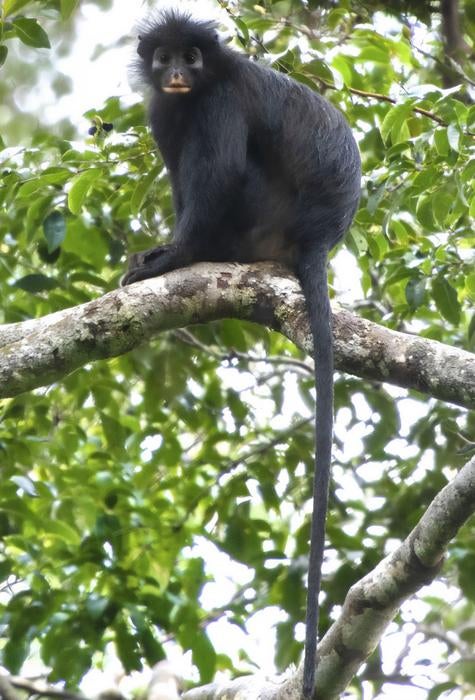
The species, named Colobus congoensis and known locally as the Likweli, has bare grey skin on its cheekbones contrasting with black skin around the eyes, resembling a mask.
It is only the fifth new species of African monkey to be described in the last 75 years, making it one of the rarest discoveries in modern primatology, researchers say.
“This discovery is both exciting and deeply personal, highlighting the extraordinary biodiversity of my homeland and how much remains undocumented,” said Junior Amboko, a co-author of the study published in the journal PLOS One.
“I was honoured to name the species Colobus congoensis, recognising the Congo Basin’s remarkable natural heritage and, we believe, marking the first primate named after the Democratic Republic of Congo itself – underscoring both its global importance and local pride,” said Mr Amboko, a PhD candidate from Florida Atlantic University.
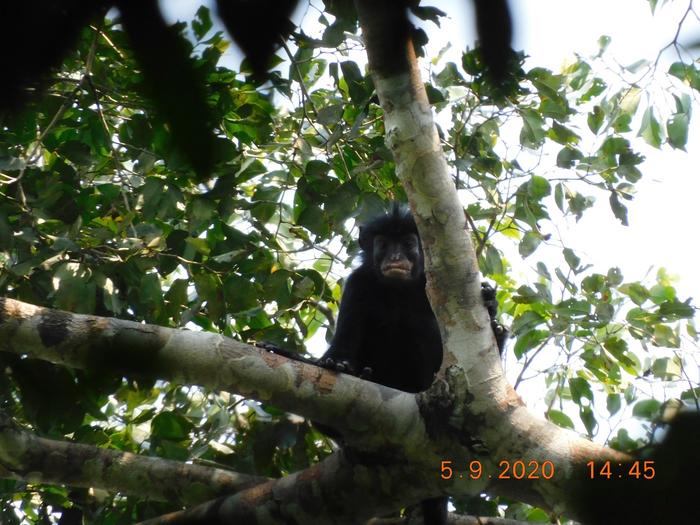
The discovery follows an unexpected sighting of the monkey in 2008, when a partially obscured photograph of the creature was obtained.
Researchers encountered the animal again a decade later and obtained a much clearer image.
Now, a new analysis of the monkey’s genetic, anatomical and audio data has confirmed that it represents a distinct species.
Scientists also compared the monkey’s features with extensive museum collections, including specimens housed at the Yale Peabody Museum and the American Museum of Natural History.
“We compared the skulls and pelts of C congoensis with other species of African colobines, which underscored how unique this new species is,” said study co-author Julia Arenson.
“This robust pool of information allowed us to pretty quickly and conclusively confirm C congoensis as a new species,” said Christopher Gilbert, another author of the study.
The new species could also be distinguished by its calls.
Researchers found that its deep, resonant roaring calls resemble those of related Colobus species but possess a distinct signature. To the untrained ear, the monkey’s call sounds like a frog or pig snorting, reported the Scientific American.
Only people living in eight Congo villages recognised the species or could accurately describe it, with locals referring to the monkey as “Likweli”, and “kasaba nkoni” – meaning “the branch shaker”.
Scientists found that the monkey lives in the interfluve region between the Lomami and Congo (Lualaba) rivers in east-central DRC.
However, researchers caution that the species may already be at risk due to its limited range, habitat loss and hunting pressure.
The monkey has glossy black fur with cape-like shoulders, a long sweeping tail, a vivid orange-cream patch around the mouth and nose, and a striking, mask-like appearance unlike any other known colobus monkey.
It is distinguished by sleek, light-reflecting fur, long black facial hairs, and large folded ears, researchers say.
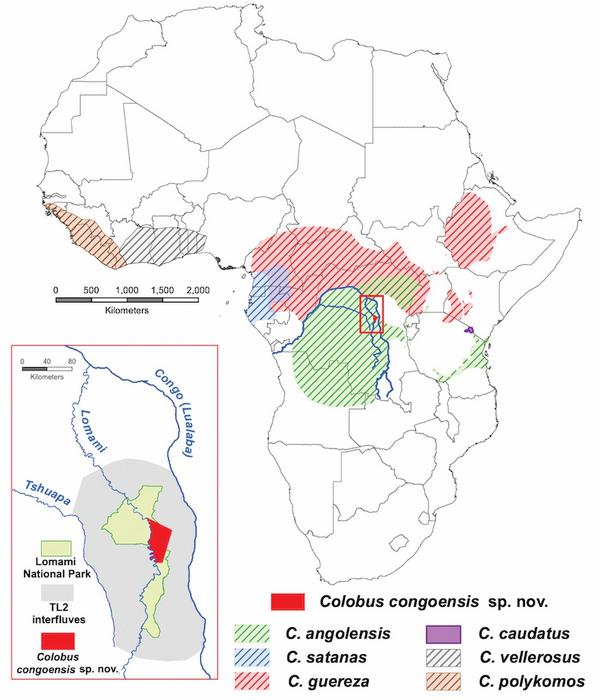
The findings highlight the importance of the Lomami National Park and its buffer zone in the DRC.
“We continue to be reminded that the Congo Basin remains one of the world’s last great frontiers for mammal discovery,” said study first author John Hart.
“Even in regions that have been scientifically explored, entirely new species are still coming to light. This discovery reinforces how much biodiversity remains undocumented in the Central Congo Basin,” Dr Hart said.
Due to the monkey’s extremely limited range, small population size, and growing hunting pressure and habitat loss, scientists have proposed that it be classified as an endangered species on the IUCN Red List.
“The discovery of Colobus congoensis is both a scientific triumph and a sobering reminder that some of Earth’s rarest creatures may vanish before the world even knows they exist,” said Kate Detwiler, one of the authors of the study.