










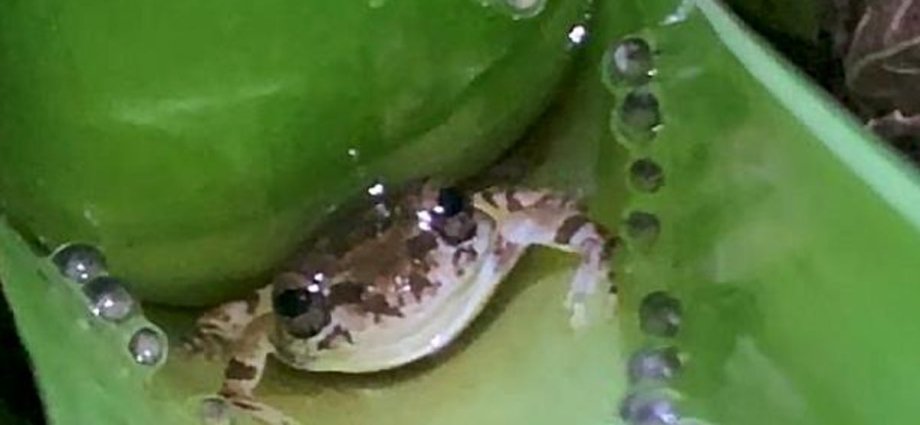
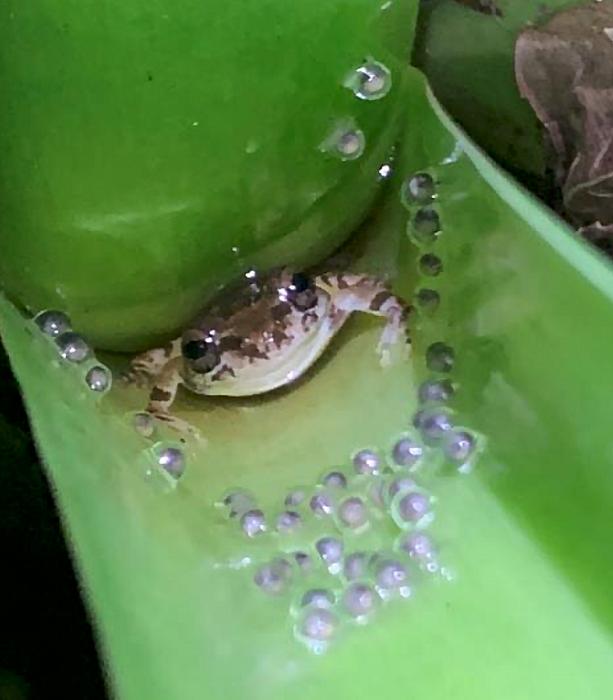
A bacterium that lives in the intestines of most amphibians can eliminate bowel cancer in mice, a discovery that may lead to new therapies against hard-to-treat tumours.
Researchers at the Japan Advanced Institute of Science and Technology isolated individual Ewingella americana, grew them in their laboratory and delivered them intravenously to attack tumours in mice.
They collected 45 strains of the bacterium from the intestines of Japanese tree frogs, fire belly newts, and grass lizards.
They reported in a new study, published in the journal Gut Microbes, that nine of the 45 strains of the bacterium showed promise for anti-cancer activity, with E americana producing the strongest results.
A single intravenous dose of E americana eliminated tumours, producing a 100 per cent response rate.
E americana attacked tumours directly and, at the same time, stimulated the immune system to fight them, the study found.
The bacterium thrives in both oxygen-rich and oxygen-poor environments and can multiply inside the oxygen-deprived parts of a tumour, researchers say.
Once injected, the bacterial population increased by roughly 3,000-fold within 24 hours, directly damaging cancer cells, the study found.
The bacteria also accumulated almost exclusively inside tumours, and did not colonise healthy organs.
E americana’s presence attracted the immune system’s T cells, B cells, and neutrophils to target the tumours, strengthening the body’s anti-cancer response.
“Mechanistic investigations revealed that E americana functions through a dual-action mechanism: direct tumour cell killing and robust activation of host immunity,” scientists wrote in the study.
The bacteria were rapidly cleared from the bloodstream, with a half-life of approximately 1.2 hours, with no signs of infection in healthy organs, including the liver, spleen, lungs, kidneys, or heart.
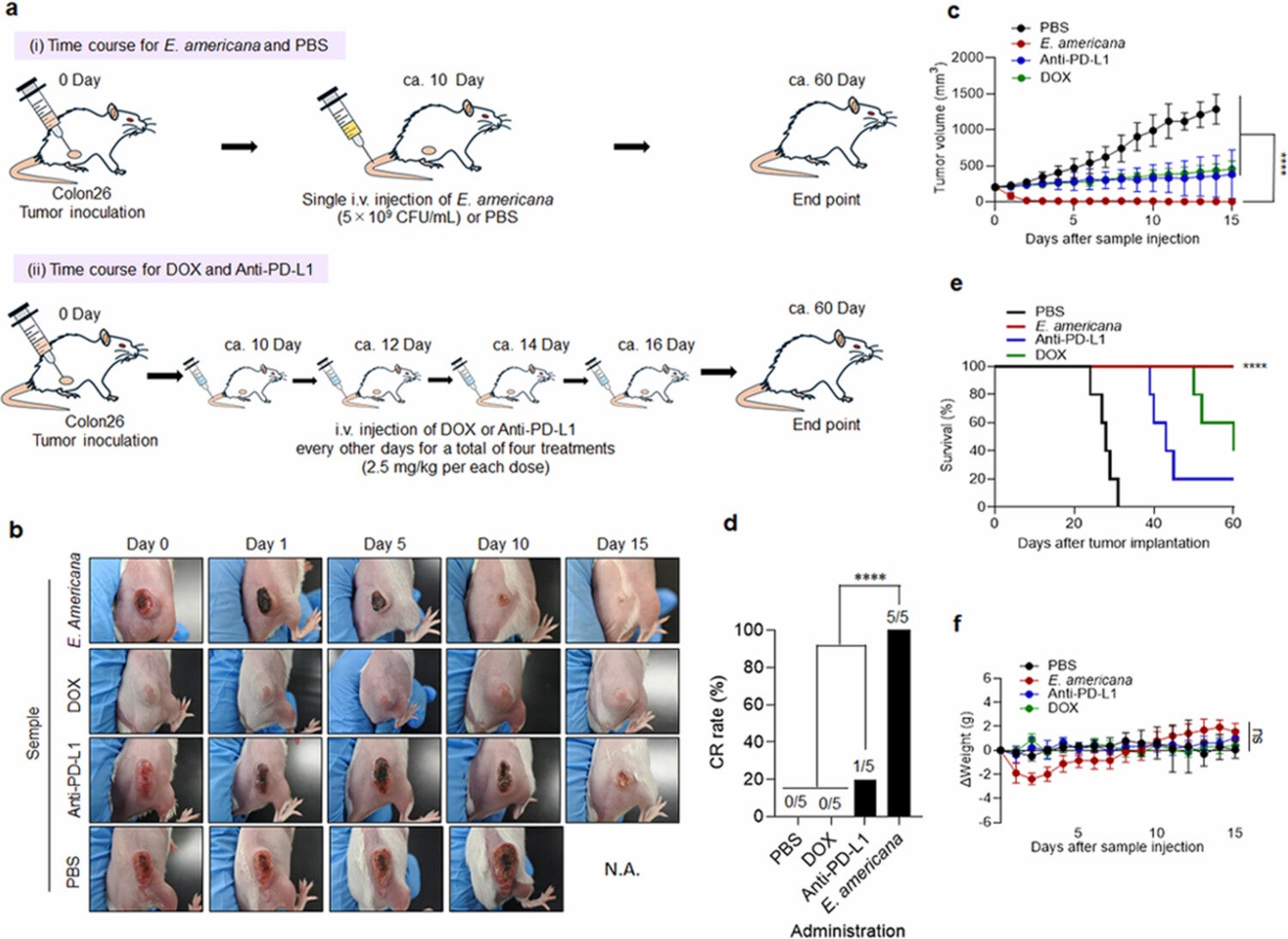
The findings, according to researchers, establish a proof of concept for using naturally occurring bacteria as a cancer therapy.
While the findings are limited to mice, researchers believe they provide an encouraging proof of concept for developing new bacterial cancer therapies for humans.
In future studies, scientists hope to examine whether the approach can be applied to additional solid tumours, including breast cancer, pancreatic cancer, and melanoma.
“Our study establishes a foundation for developing naturally occurring, non-pathogenic bacterial therapeutics and underscores the critical importance of microbial biodiversity in advancing cancer treatment strategies,” researchers noted in the study.